

Most UK foods do tell you, but the figure is weighed before the food is cooked. A recipe listing 60% chicken means chicken made up 60% of the raw mix, and fresh meat is mostly water. Across the 4,983 UK recipes we analysed, 87% open with a named meat. Of those, 92% put a percentage next to it.
What does meat content actually mean on a label?
Meat content is a weight, and every weight is taken at a particular moment. Pet food labelling rules ask for the composition list to run in descending order by weight, measured as the ingredients go into the mixer. So when a bag announces 65% chicken, it is telling you that chicken made up 65% of the raw mix on the day it was made. That is an honest number. It is simply not the number most owners think they are reading.
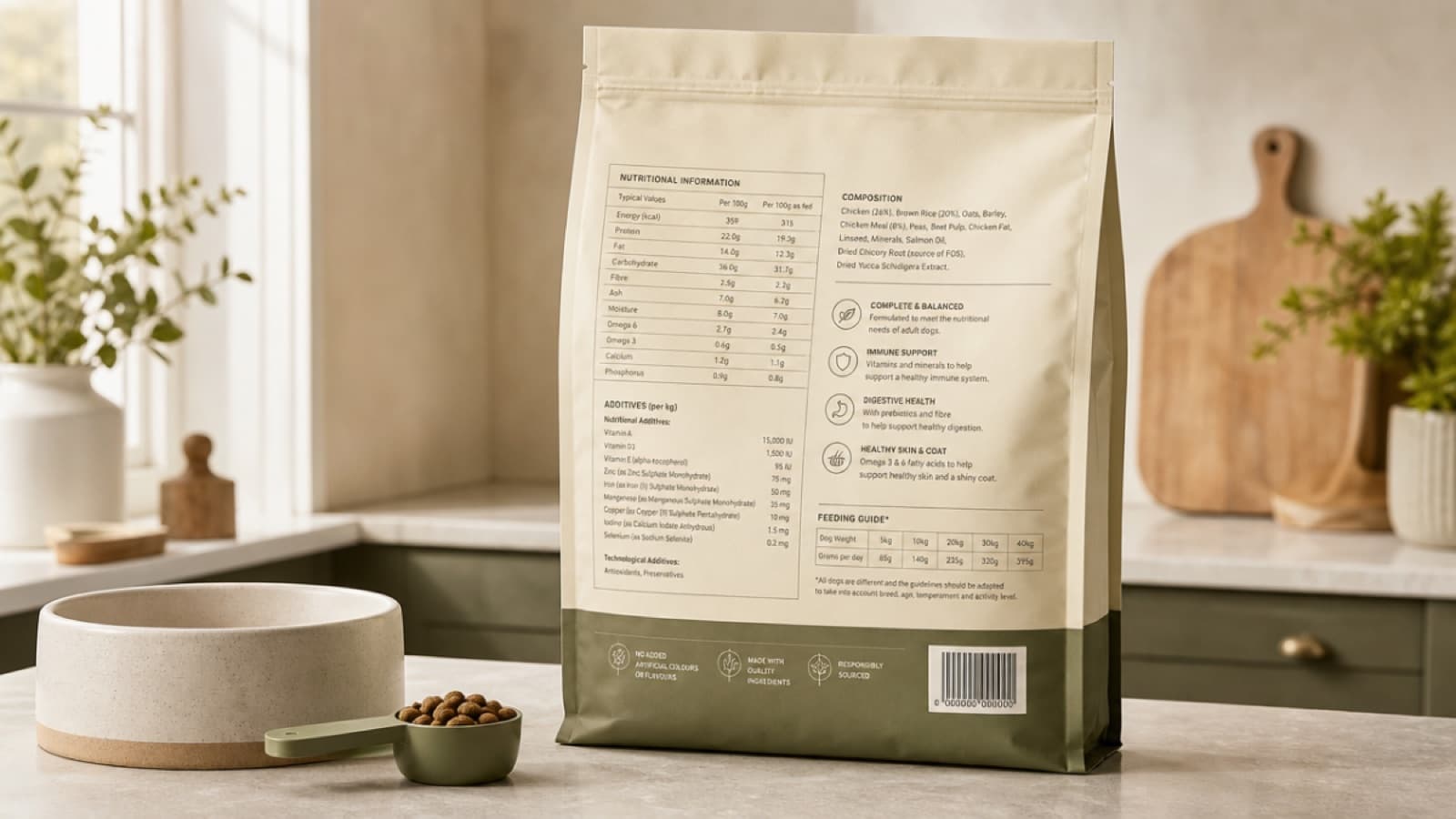
You will find it on the back or the side, in the small print under Composition, never in the photograph on the front. If the back of a bag still feels like a foreign language, our guide to reading a dog food label walks through the whole panel in order. Meat is the part people care about most, so it is worth understanding properly.
Why fresh meat shrinks between the mixer and the bowl
Fresh meat is mostly water. Cook it down into a dry kibble and almost all of that water is driven off, which means the chicken that weighed a lot going in weighs far less coming out. The percentage on the bag is real. The meat in the finished piece of kibble is a fraction of it.
Dried meat, listed as meal or as dried chicken, has already had its water removed before it is weighed. A smaller number next to a dried meat can therefore deliver more actual meat than a bigger number next to a fresh one. Neither is a trick. They are two different measuring points, and the label rarely explains which one you are looking at.
This is also why percentages read so differently across food types. A tin of wet food is largely water by design, so its headline figures sit in a different world from dry food, where the water has gone. Comparing a number on a tin with a number on a bag tells you very little on its own. The fair comparison is tin against tin, or bag against bag. Ideally you would match the life stage as well.
Named meat or category term: what the wording gives away
There is a real difference between a recipe that says chicken and one that says meat and animal derivatives. The first names the animal. The second is a legal category term covering parts of the animal beyond the muscle meat, and it does not have to say which animal or which parts. Both can be perfectly nourishing. Only one lets you know what you are actually feeding.
The same goes for percentages. Chicken, 26% dried chicken tells you the species and the share. Meat and animal derivatives, minimum 4% chicken tells you a lot less about the other 96%. When a maker knows its recipe well, it usually says so on the panel, which is why the wording is such a useful signal. Our brand pages are a good place to see how consistently a maker declares things right across its range.
What 4,983 UK recipes actually say about meat
We analysed 4,983 UK dog food recipes to see how makers really write this part of the label. 4,285 recipes open with a named meat, which is 87% of the 4,935 with a published ingredient list. Naming the meat first is simply the norm in this market.
The encouraging part is the detail that comes with it. Of the recipes that lead with a named meat, 92% also give a percentage, so nine times in ten you get a species and a share in the same breath. That is enough to compare two foods properly, as long as you are comparing like with like.
Category terms are less common than their reputation suggests. Derivatives open the ingredient list in 8% of recipes, and appear somewhere in the list in 17%. So around one recipe in six mentions them at all, and most of those mention them further down the list.
Does a bigger meat percentage mean a better bowl?
Not on its own. A high meat figure sitting above a run of vague fillers is a different proposition from a slightly lower one above named, recognisable ingredients. What follows the meat matters as much as the meat itself, and so does whether the recipe suits the dog in front of you. A working spaniel, a settled older lurcher and a puppy growing fast all want different things from the same shelf.
That is the honest limit of any single number. It is one input, not a verdict. If you would rather start from your dog than from the panel, the asks a few simple questions, from her age to any sensitivities. It then shortlists foods that fit what you describe. And if you want to know how we weigh meat alongside everything else, our scoring method sets it out in plain terms.
How to judge a meat claim in about thirty seconds
Turn the bag over and read the first two ingredients. Is the meat named by species, and does it carry a percentage? Then look at whether it says fresh or dried, because that tells you which measuring point you are dealing with. Finally, scan a few lines down for a second meat source, which often does more work in the finished food than the headline ingredient does.
Do that and you will read a panel faster than most people read the front of the bag. You do not have to do it alone, either. Every food in our reviews is scored on protein and processing, nutritional balance, transparency and value, with the composition read the same way for every product. So you can see how a recipe stacks up without decoding anything yourself.
Frequently asked questions
Is meat and animal derivatives bad for my dog?
No. It is a category term rather than a quality grade, and it covers nourishing parts of the animal that people do not usually eat. The drawback is information, not nutrition, because the term need not say which animal or which parts, so you cannot compare it properly with a named meat. In our analysis, derivatives appear somewhere in 17% of UK recipes and open the list in 8%.
How much meat should dog food have?
There is no single right figure, because the number is weighed before cooking and fresh meat is mostly water. A high fresh meat percentage and a lower dried meat percentage can end up in much the same place. Look for a named species with a percentage attached, then judge the rest of the list on its own merits. If your dog has a diagnosed condition, your vet comes first.
Is fresh chicken better than chicken meal?
Neither wins automatically. Fresh chicken is weighed with its water still in, so a large share of it shrinks a long way during cooking. Chicken meal is weighed dry, so a smaller share can put more meat protein in the bowl. Plenty of recipes use both on purpose. What matters more is that the species is named rather than hidden behind a category term.
Does a higher meat percentage mean more protein?
Not reliably. Protein in the finished food is shown in the analytical constituents panel, and that figure already accounts for cooking. A meat percentage in the composition list is a raw weight from before the food was made. Read the two together, because a big meat claim sitting next to an ordinary protein figure usually means the water has done a lot of the talking.