


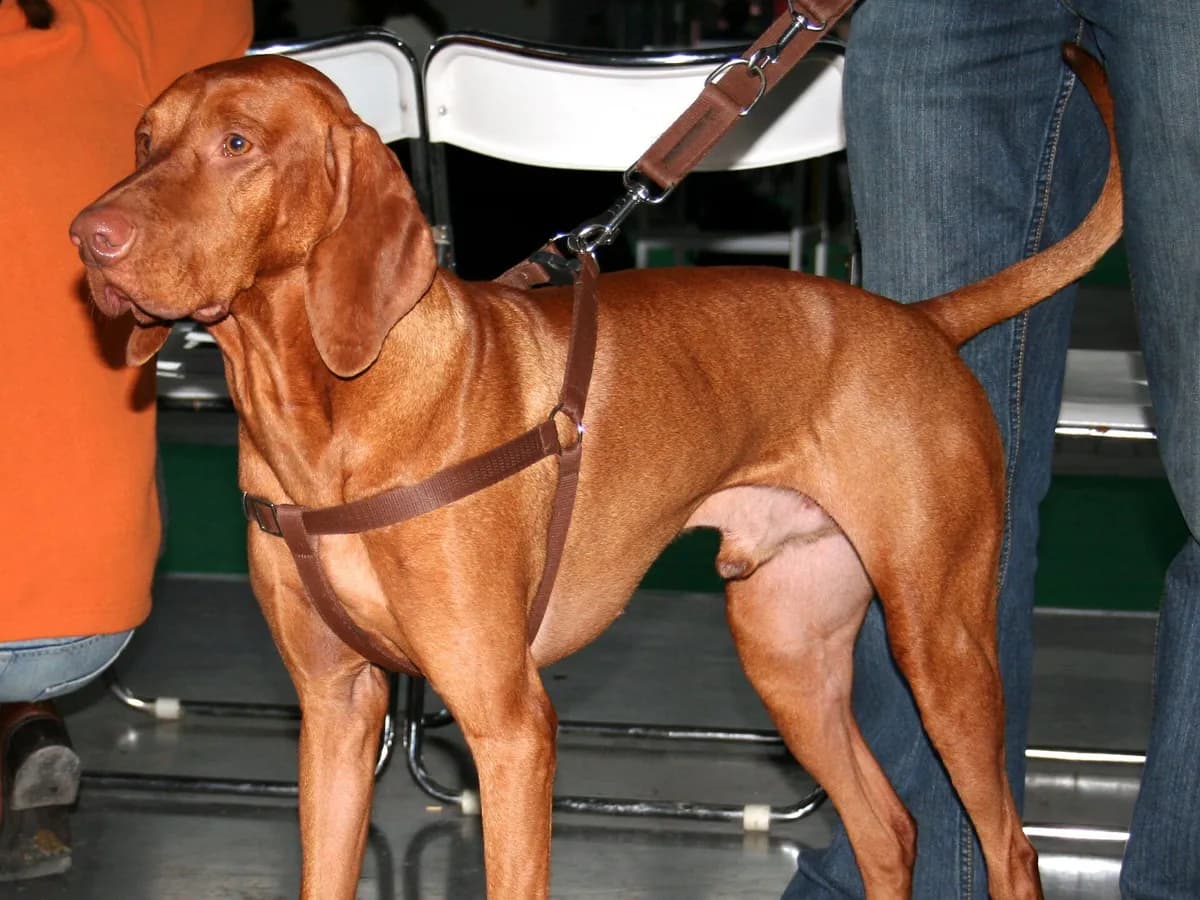

Most important facts
- Group
- Gundog
- Size
- Medium
- Weight
- 20–30 kg
- Lifespan
- 12–14 years
- Coat
- Short, dense
- Energy
- High
- Height
- 53–64 cm
- Colours
- Russet gold
- Shedding
- Moderate
- Est. feeding cost
- ~£1.31 a day
- Gear to consider
- Slow-feeder bowl, orthopaedic dog bed, no-pull harness
Typical dry food, adult
About the Hungarian Vizsla
The Hungarian Vizsla traces back many centuries as the russet hunting dog of the Magyar nobility, bred on the open plains of Hungary to point and retrieve for falconers and hunters. The breed came close to extinction after the Second World War, surviving through dogs smuggled out by fleeing families. Careful rebuilding restored it, and its striking colour and devoted temperament have since won it a worldwide following.
Affectionate to the point of being called a velcro dog, the Vizsla wants to be with its people constantly and doesn't suit being left alone for long stretches or kept outdoors. This closeness makes the breed wonderfully responsive to training and rewarding company, but it also means separation anxiety is a real and common issue to plan for from day one.
Bred as an all-round hunting companion, the Vizsla is intelligent, energetic and often sensitive to its handler's tone, responding far better to encouragement than harsh correction. The same drive that makes it a capable working gundog can tip into restlessness at home if exercise, training and mealtime routines aren't kept consistent and sufficiently demanding. A tired, well-fed Vizsla, by contrast, is one of the most affectionate dogs going.
Common health conditions
Things Hungarian Vizsla owners commonly watch for. Guidance, not veterinary advice.
Hip dysplasia
A malformed hip joint that can lead to early arthritis. Keep a Vizsla lean through puppyhood and feed a proper calcium-to-phosphorus balance with joint support.
Von Willebrand's disease
An inherited bleeding disorder affecting clotting. Choose breeders who screen for it, and tell your vet before any surgery or dental work.
Progressive retinal atrophy (PRA)
A gradual, inherited deterioration of the retina leading to vision loss. Choose DNA-tested breeding lines.
Epilepsy
Vizslas can be prone to idiopathic epilepsy, causing recurrent seizures. It's managed with lifelong medication, and a stable feeding routine helps keep everything else consistent.
Feeding a Hungarian Vizsla
Vizslas are high-drive, high-metabolism dogs, and an adult in regular work can need noticeably more calories than a similarly sized but less active breed. A good-quality food with solid protein supports lean muscle, but portions should flex with how much running, swimming or gundog work the dog is actually doing that week, checked against body condition.
Because the breed can be prone to a sensitive stomach and skin flare-ups linked to environmental allergies, many owners find a diet with limited, clearly listed ingredients and good-quality fats suits their Vizsla well. Slowing fast eaters with a slow-feeder bowl also helps reduce bloat risk, worth taking seriously in a deep-chested breed.
Every dog is different — weight, age and activity all shift what a Hungarian Vizsla needs. The turns these breed tendencies into a shortlist matched to your dog’s age, size, budget and needs.
Typical adult weight
20–30 kg
Est. daily calories
790–1,620 kcal
A broad guide for an average-activity adult in good body condition — not veterinary advice. Real needs vary with age, neutering, activity, health and body condition, so no two Hungarian Vizslas eat exactly the same. Get a personalised estimate or estimate feeding costs.


- Per day
- ~£1.31
- Per month
- ~£40
- Per year
- ~£479
A broad typical monthly budget guide, not a live price quote. Food format, calorie density, pack size and retailer pricing all change the real cost.
Find the right food for your Hungarian Vizsla
Foods ranked to your dog
Answer a few quick questions and the Food Finder ranks foods to your Hungarian Vizsla by score, price, life stage and fit.
Breed at a glance
- Exercise needs9/10
- Appetite7/10
- Trainability7/10
- Good with children8/10
- Shedding4/10
- Tolerates being alone2/10
The good & the worth-knowing
The good
- Deeply affectionate and bonds closely with its family
- Highly trainable and eager to work with the right handler
- An ideal companion for genuinely active, outdoorsy owners

Worth knowing
- Struggles badly with being left alone and is prone to separation distress
- Needs a serious daily exercise commitment, not just a short walk round the block
- Can be a determined counter-surfer and food thief if under-exercised or bored
Best matched accessories
All accessoriesThe collections that suit the breed, judged by the same independent standard.



Common owner questions
How much exercise does a Vizsla actually need?
Considerably more than a short daily walk. Most adults need well over an hour of proper off-lead running, plus mental stimulation, to settle happily indoors. Running and canicross suit the breed well, as does gundog training, and under-exercised Vizslas commonly develop destructive or anxious habits.
Are Vizslas fussy eaters?
Not typically. If anything they're keen, food-driven dogs, but a tendency towards a sensitive stomach means sudden food changes are best avoided. Introduce any new diet gradually, and use our Food Finder to identify options for sensitive digestion.
How can I tell if my Vizsla is a healthy weight?
Feel for the ribs easily under a thin layer, and look for a visible waist from above and a clear tuck from the side. Because hip health matters so much in this breed, keeping a Vizsla lean throughout life meaningfully reduces joint strain.
Do Vizslas cope well with being left alone?
Generally, no. This is one of the breed's best-known challenges, and many Vizslas find even short absences distressing without gradual training. Anyone considering the breed needs a realistic plan for company or daytime care.