
Most important facts
- Group
- Gundog
- Size
- Medium
- Weight
- 23–27 kg
- Lifespan
- 12–15 years
- Coat
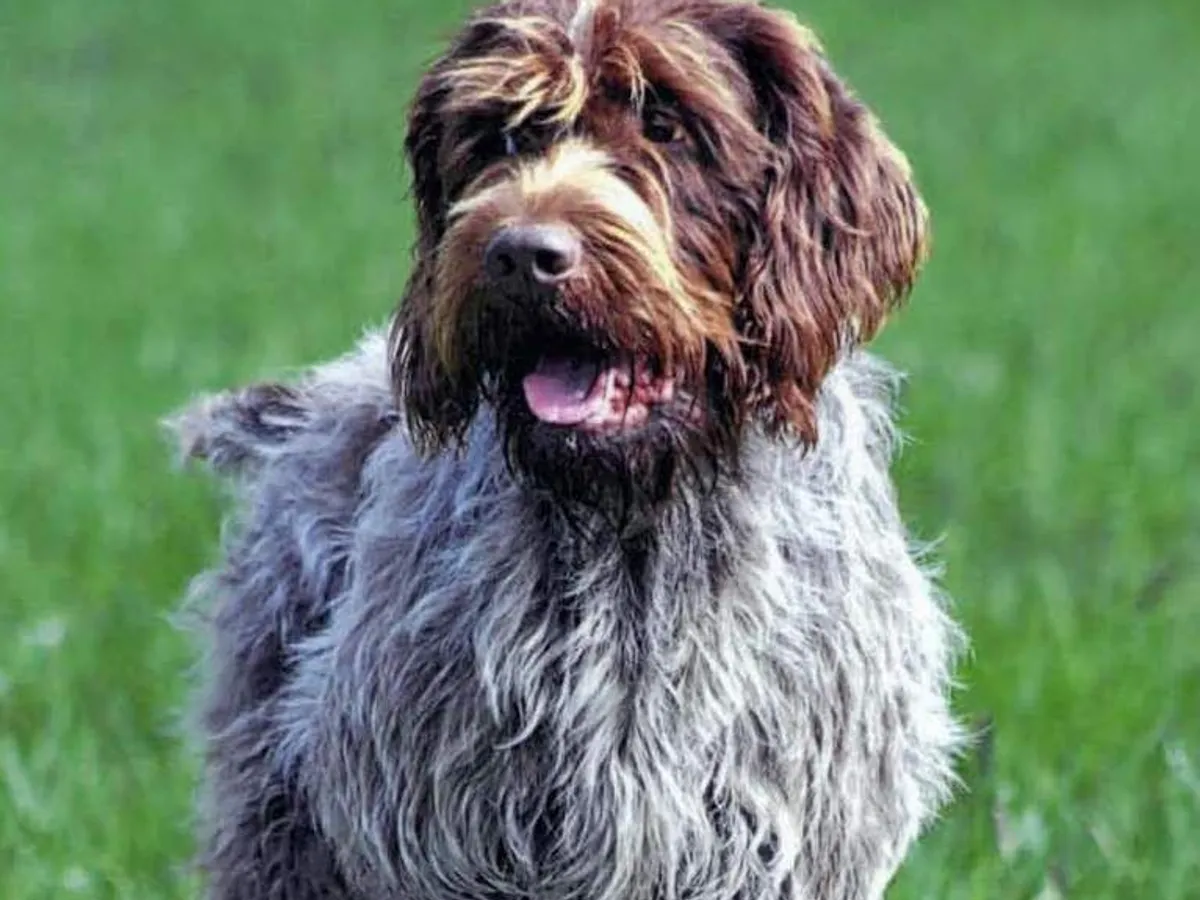
- Harsh
- Energy
- High
- Height
- 50–60 cm
- Colours
- Steel grey with brown patches
- Shedding
- Light
- Est. feeding cost
- ~£1.35 a day
- Gear to consider
- Slow-feeder bowl (bloat-prone build), field-ready harness or gundog lead, wire-coat grooming brush and stripping comb
Typical dry food, adult
About the Korthals Griffon
The Korthals Griffon carries the name of Eduard Korthals, a Dutch breeder who set out in the 1870s to create the perfect all-terrain rough-shooting dog. He worked in Germany and France, from a small founding kennel of griffon types. His methodical breeding produced a pointer-retriever with a weatherproof wire coat that France adopted as its own. It remains popular with continental hunters and a rarity in Britain.
Described in the Kennel Club standard as gentle and very loyal, the Korthals Griffon is a calm, dependable companion when its exercise and mental needs are met. It is naturally biddable and bonds closely with its handler, a trait rooted in its history as a versatile hunting dog worked at close quarters. It is happiest with its people, not kennelled apart.
The breed can be reserved with strangers and benefits from thorough early socialisation to build confidence. Its working drive means it thrives with a job to do, whether formal gundog work, scent games or structured training. A well-exercised, mentally engaged Griffon is typically settled and good-natured at home, including with children.
Common health conditions
Things Korthals Griffon owners commonly watch for. Guidance, not veterinary advice.
Hip and elbow dysplasia
Malformed joints often mean arthritis as the dog ages. Keep this active breed lean through puppyhood and adulthood.
Idiopathic epilepsy
An inherited seizure disorder that often first appears in young adulthood. Affected dogs usually need lifelong medication and regular veterinary monitoring.
Gastric dilatation-volvulus (bloat)
As a deep-chested breed, the Griffon carries some bloat risk. Feed smaller, measured meals via a slow-feeder bowl, and keep vigorous exercise well clear of mealtimes.
Ear infections
Low-set ears can trap moisture and debris after fieldwork or swimming. Dry and check the ears routinely, especially for a breed that loves water.
Eye conditions
Progressive retinal atrophy and entropion have been recorded in the breed. Choose breeders who screen parent dogs before mating.
Feeding a Korthals Griffon
The Korthals Griffon is a working gundog built for stamina and not for speed. It does best on a diet with good-quality, moderately high protein and fat, enough for long days of activity without tipping into excess weight. Review portions regularly against body condition, since worked weeks and rested weeks differ, and a working formula suits shooting-season months, stepped down out of season.
The breed is deep-chested and carries some bloat risk. Split the day's food into two measured meals and not one big one, use a slow-feeder bowl, and allow an hour's rest either side of vigorous exercise. The wiry coat and active lifestyle also benefit from a reliable source of omega fatty acids.
Every dog is different — weight, age and activity all shift what a Korthals Griffon needs. The turns these breed tendencies into a shortlist matched to your dog’s age, size, budget and needs.
Typical adult weight
23–27 kg
Est. daily calories
880–1,490 kcal
A broad guide for an average-activity adult in good body condition — not veterinary advice. Real needs vary with age, neutering, activity, health and body condition, so no two Korthals Griffons eat exactly the same. Get a personalised estimate or estimate feeding costs.
- Per day
- ~£1.35
- Per month
- ~£41
- Per year
- ~£493
A broad typical monthly budget guide, not a live price quote. Food format, calorie density, pack size and retailer pricing all change the real cost.
Find the right food for your Korthals Griffon
Foods ranked to your dog
Answer a few quick questions and the Food Finder ranks foods to your Korthals Griffon by score, price, life stage and fit.
Breed at a glance
- Exercise needs8/10
- Appetite7/10
- Trainability8/10
- Good with children8/10
- Shedding3/10
- Tolerates being alone3/10
The good & the worth-knowing
The good
- Intelligent and eager to please, responding well to consistent training
- Gentle, loyal temperament that tends to suit active families
- Low-shedding wiry coat compared with many gundog breeds
Worth knowing
- High daily exercise needs make the breed unsuitable for sedentary households
- Can be reserved with strangers and needs early, consistent socialisation
- Not a breed that settles well if left alone for long stretches
Best matched accessories
All accessoriesThe collections that suit the breed, judged by the same independent standard.
Common owner questions
How much exercise does a Korthals Griffon need?
Plan on an hour or two of proper activity a day as a minimum, ideally including off-lead running, scentwork or retrieving. This is a breed developed for full days in the field, so a couple of short walks will leave it under-stimulated.
Is the Korthals Griffon prone to weight gain?
It can be, particularly if activity drops but feeding stays the same. Because working days vary, adjust portions to the week's actual exercise and check body condition by feel, ribs easily felt and a waist visible from above.
What should I feed a Korthals Griffon puppy?
A puppy formula for large breeds, with calcium controlled and growth kept steady, protects developing hips and elbows. Our Food Finder can help match a suitable recipe.
Does the wiry coat need special feeding for skin health?
Not a special diet as such, but a complete food with a good omega-3 and omega-6 balance supports the coat and skin. That matters for a breed working through water and rough cover.