


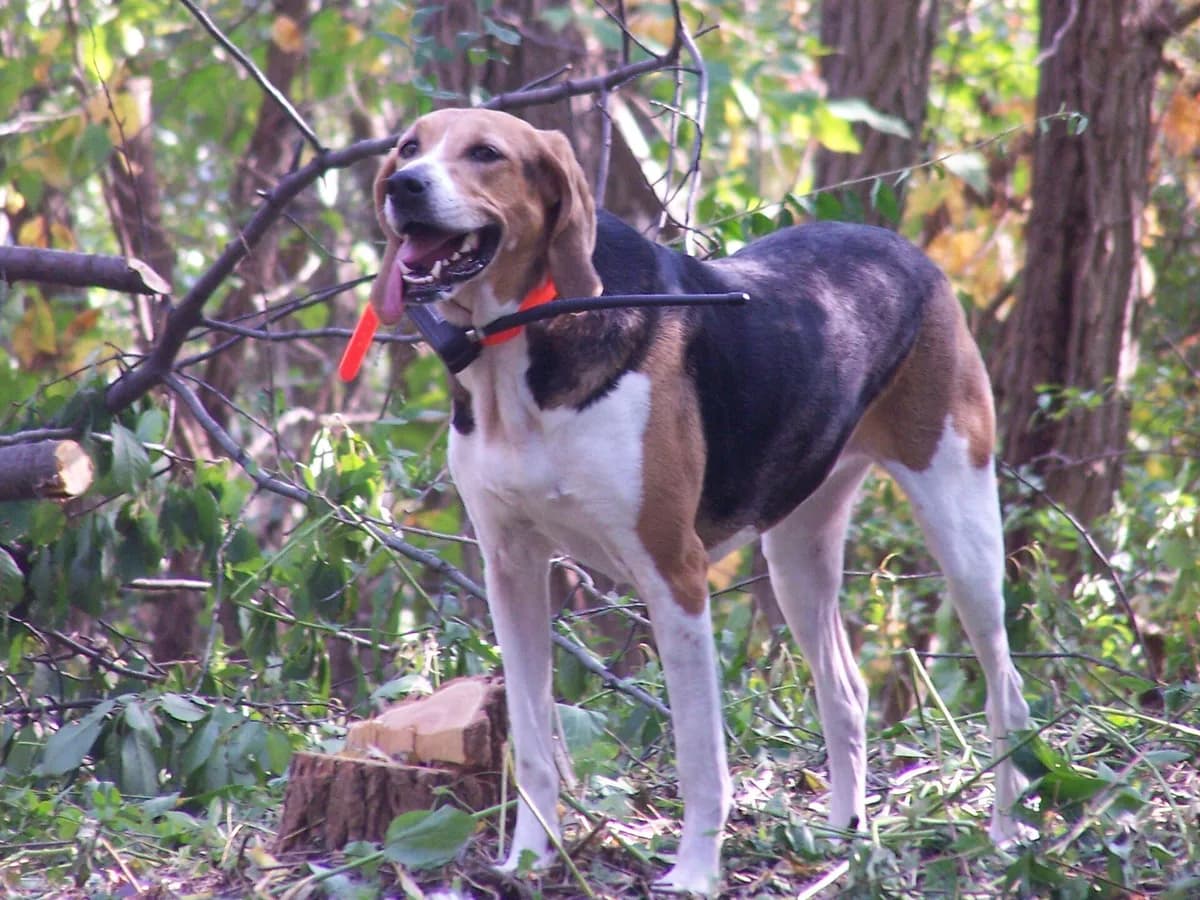

Most important facts
- Group
- Hound
- Size
- Large
- Weight
- 25–34 kg
- Lifespan
- 10–13 years
- Coat
- Short, dense
- Energy
- High
- Height
- 58–64 cm
- Colours
- Tricolour or any hound colour
- Shedding
- Moderate
- Est. feeding cost
- ~£1.47 a day
- Gear to consider
- Slow-feeder bowl, GPS tracking collar, durable outdoor/kennel bedding
Typical dry food, adult
About the Foxhound
The English Foxhound was developed from the seventeenth century onwards for organised fox hunting, bred with great care by hunts whose studbooks stretch back further than those of almost any other breed. Packs were prized for level size and voice, and hounds were bred to run together for hours over any country. Almost all Foxhounds today still live in working kennels rather than homes, which is why the breed remains a rare household companion.
Foxhounds are typically tolerant, good-natured and gentle, a legacy of being bred to live and work closely with other hounds. They are genuinely sociable dogs that get on well with people and other dogs, but they are also independent-minded and strongly driven by scent, which can make recall vanish the moment an interesting trail appears.
Because they were traditionally kept and fed as part of a large pack, Foxhounds can be fast, competitive eaters. In a home setting this is worth planning for. Feed in a calm, separate space and, in multi-dog households, keep mealtimes supervised to prevent squabbling and reduce gulping, which raises bloat risk in a deep-chested breed.
Common health conditions
Things Foxhound owners commonly watch for. Guidance, not veterinary advice.
Hip dysplasia
A common large-breed condition where the hip joint doesn't form snugly. Keep your Foxhound lean and choose a food with joint-support nutrients.
Gastric dilation-volvulus (bloat)
Like other deep-chested breeds, Foxhounds are at higher risk of this life-threatening condition. Two or three smaller meals are right for a Foxhound, and strenuous exercise waits until well after eating.
Ear infections
Long, floppy ears trap moisture and debris after a run through cover. Check and dry the ears regularly to prevent infection.
Weight gain in retirement
A breed built for hours of daily work can pile on weight once exercise drops off. Recalculate portions promptly rather than leaving them on autopilot.
Feeding a Foxhound
Bred to cover many miles a day at a working pace, the Foxhound has a high energy requirement and does best on an energy-dense complete food with good-quality protein to support hard-working muscles. Judge portions against the dog in front of you and the exercise it is actually getting that week, not a generic large-breed guideline.
As a large, deep-chested breed, Foxhounds carry a higher bloat risk, so two or three measured meals through the day suit them better than one large bowlful, with vigorous exercise kept away from mealtimes. A slow-feeder bowl helps a dog that gulps, and joint-supporting nutrients are worth prioritising given the workload these dogs are built for.
Every dog is different — weight, age and activity all shift what a Foxhound needs. The turns these breed tendencies into a shortlist matched to your dog’s age, size, budget and needs.
Typical adult weight
25–34 kg
Est. daily calories
940–1,770 kcal
A broad guide for an average-activity adult in good body condition — not veterinary advice. Real needs vary with age, neutering, activity, health and body condition, so no two Foxhounds eat exactly the same. Get a personalised estimate or estimate feeding costs.


- Per day
- ~£1.47
- Per month
- ~£45
- Per year
- ~£539
A broad typical monthly budget guide, not a live price quote. Food format, calorie density, pack size and retailer pricing all change the real cost.
Find the right food for your Foxhound
Foods ranked to your dog
Answer a few quick questions and the Food Finder ranks foods to your Foxhound by score, price, life stage and fit.
Breed at a glance
- Exercise needs10/10
- Appetite8/10
- Trainability5/10
- Good with children7/10
- Shedding5/10
- Tolerates being alone3/10
The good & the worth-knowing
The good
- Good-natured, gentle and rarely aggressive for a dog of this size
- Thrives with genuinely active owners who can match its stamina
- Short coat needs only weekly grooming

Worth knowing
- Needs well over two hours of vigorous exercise a day and plenty of secure space
- Strong hunting instinct makes recall unreliable off-lead near scent or livestock
- Bred to live and work in packs, so dislikes being left alone for long periods
Best matched accessories
All accessoriesThe collections that suit the breed, judged by the same independent standard.




Common owner questions
How much exercise does a Foxhound actually need?
Plan for well over two hours a day of proper activity, not just a stroll around the block. These are working pack hounds bred to run for hours, and they need secure space to do it in, since a strong scenting instinct makes recall unreliable off-lead.
Is a Foxhound a good family pet?
Foxhounds are typically good-natured, gentle and sociable, but their size, energy and pack instincts suit an experienced, active household with secure outdoor space. They're rarely a good fit for city living or long hours alone.
How much should I feed a Foxhound?
Feed to condition, since the amount a Foxhound needs shifts a lot with exercise. Splitting food into two or three meals a day helps guard against bloat in this deep-chested breed, and our Food Finder can help narrow down large-breed, high-energy recipes.
Does a Foxhound have any particular food needs?
There's no breed-specific health issue tied to diet, but two things matter in practice. Prioritise joint-supporting nutrition given the workload, and recalculate portions promptly if exercise drops, since these dogs put on weight quickly once the work stops.