



Most important facts
- Group
- Toy
- Size
- Toy
- Weight
- 2–5.4 kg
- Lifespan
- 13–15 years
- Coat
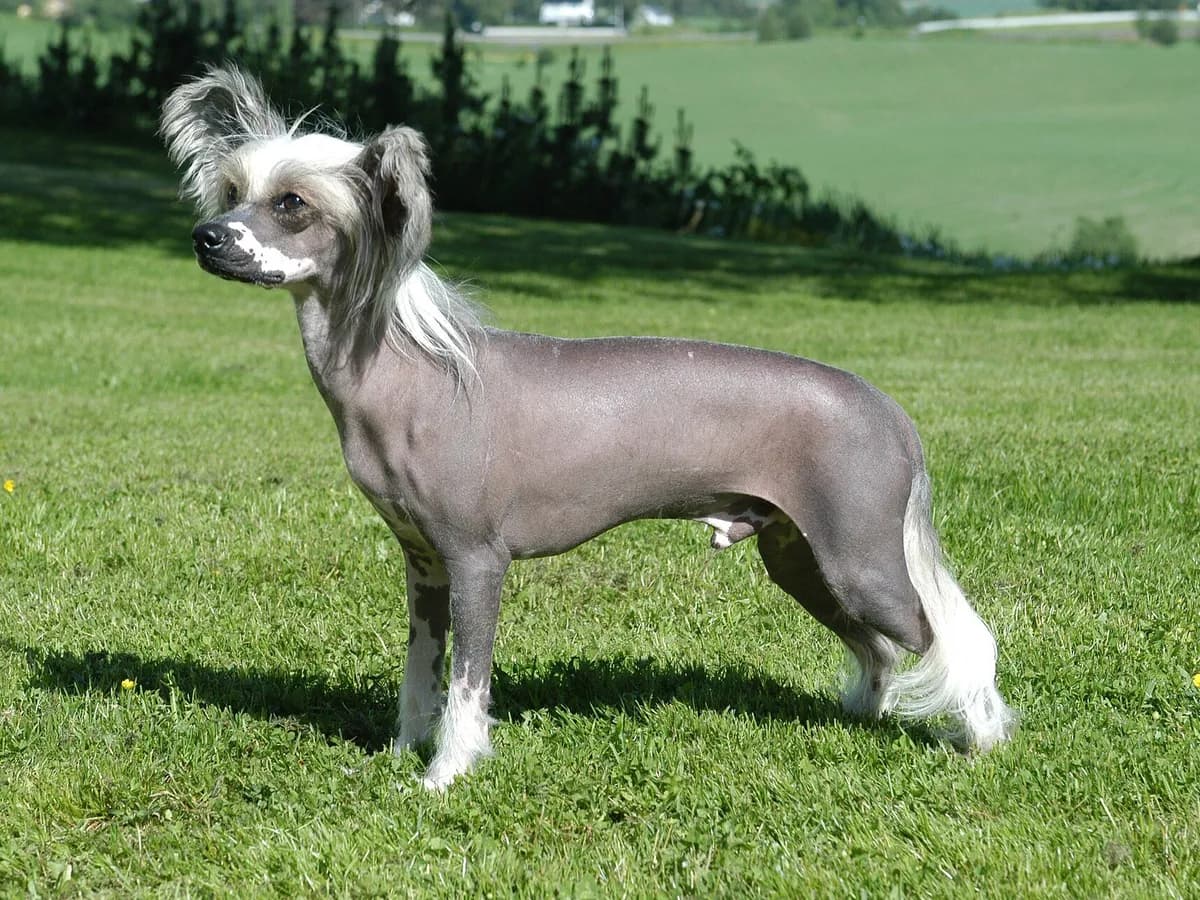
- Hairless (with tufts on head
- Energy
- Moderate
- Height
- 23–33 cm
- Colours
- Any colour or combination
- Shedding
- Light
- Est. feeding cost
- ~£0.33 a day
- Gear to consider
- UV-protective dog coat or jumper for the hairless variety, gentle soft-bristle brush for the Powderpuff coat, dog-safe moisturising balm
Typical dry food, adult
About the Chinese Crested
The Chinese Crested's origins are debated, but hairless dogs of its type are thought to have been carried on Chinese trading ships from the medieval period onwards. On board they earned their keep as ratters in cramped quarters. The breed as we know it was largely developed in Europe and America during the twentieth century, helped along by devoted fanciers, and both hairless and Powderpuff types can appear in the same litter.
Chinese Cresteds are affectionate and highly attached to their owners, often described as more cat-like than canine in the way they climb, perch and seek warmth. Alert and vocal towards visitors but rarely aggressive, they settle well into calm, attentive households and respond well to gentle, consistent training.
Close company is what this breed thrives on. Long periods alone can be a struggle, and separation anxiety sometimes follows. They generally do well with considerate older children and other dogs, though the hairless variety's delicate skin means rough play needs supervising. A settled routine helps this sensitive dog feel secure.
Common health conditions
Things Chinese Crested owners commonly watch for. Guidance, not veterinary advice.
Skin problems (dry skin, acne, sunburn)
The hairless variety has little natural protection, so skin can dry out or develop blemishes. Moisturise regularly and feed a diet with good omega oils.
Dental disease and early tooth loss
Hairless Cresteds often carry a genetic trait for fewer teeth, and early tooth loss is common. Prioritise dental-friendly kibble and regular brushing from puppyhood.
Patellar luxation
A slipping kneecap is common in toy breeds. Keep your dog lean by measuring portions rather than guessing.
Progressive retinal atrophy and primary lens luxation
Inherited eye conditions are seen in the breed. Ask breeders for screening results, and book a vet check for any sudden change in vision.
Legg-Calvé-Perthes disease
A degenerative hip condition occasionally seen in small breeds, causing lameness in young dogs. Keep weight healthy through puppyhood to reduce strain on developing joints.
Feeding a Chinese Crested
Hairless Cresteds can run slightly warmer in calorie needs than a coated breed of the same size, lacking the insulating fur that regulates temperature. A diet balanced in omega-3 and omega-6 oils supports skin in the hairless variety and coat in the Powderpuff, with small, evenly sized kibble suiting small mouths and sometimes irregular teeth.
Portion control matters more than the numbers suggest, as even small extras can tip a dog this size into being overweight and strain knees already prone to luxation. Feed to a visible waist and defined tuck, split meals across two servings a day, and choose a dental-friendly kibble texture to look after the teeth.
Every dog is different — weight, age and activity all shift what a Chinese Crested needs. The turns these breed tendencies into a shortlist matched to your dog’s age, size, budget and needs.
Typical adult weight
2–5.4 kg
Est. daily calories
140–400 kcal
A broad guide for an average-activity adult in good body condition — not veterinary advice. Real needs vary with age, neutering, activity, health and body condition, so no two Chinese Cresteds eat exactly the same. Get a personalised estimate or estimate feeding costs.


- Per day
- ~£0.33
- Per month
- ~£10
- Per year
- ~£122
A broad typical monthly budget guide, not a live price quote. Food format, calorie density, pack size and retailer pricing all change the real cost.
Find the right food for your Chinese Crested
Foods ranked to your dog
Answer a few quick questions and the Food Finder ranks foods to your Chinese Crested by score, price, life stage and fit.
Breed at a glance
- Exercise needs4/10
- Appetite5/10
- Trainability7/10
- Good with children6/10
- Shedding1/10
- Tolerates being alone3/10
The good & the worth-knowing
The good
- Low-shedding, which suits allergy-sensitive households, especially the hairless variety
- Affectionate and highly attuned to their owners, forming close bonds
- Compact size that suits flats, smaller homes and easy travel

Worth knowing
- Hairless skin needs daily care, including sun protection and moisturising
- Prone to dental problems, so tooth care needs to be routine rather than an afterthought
- Very people-orientated and can develop separation anxiety if regularly left alone
Best matched accessories
All accessoriesThe collections that suit the breed, judged by the same independent standard.




Common owner questions
How much should I feed my Chinese Crested?
There's no single number, since it depends on age, activity and coat type. Feed to body condition, looking for a waist and a slight tummy tuck, and our Food Finder can suggest a portion range for your dog's weight and activity.
Is the Chinese Crested hypoallergenic?
No dog is truly hypoallergenic, but the hairless variety produces less loose fur and dander than most breeds, which some allergy sufferers find easier to live with. Still, spend time with the breed before committing.
Why does my Chinese Crested need help staying warm?
Hairless dogs lose body heat faster than coated breeds, so use a jumper in cold weather and a warm, draught-free bed. Cold dogs may also seek extra food, so watch winter weight.
Are Chinese Cresteds fussy eaters?
Some can be selective, particularly if fed too many extras. Stick to a complete, balanced food on a predictable schedule, with switches kept to a minimum, which tends to produce a more reliable appetite over time.