


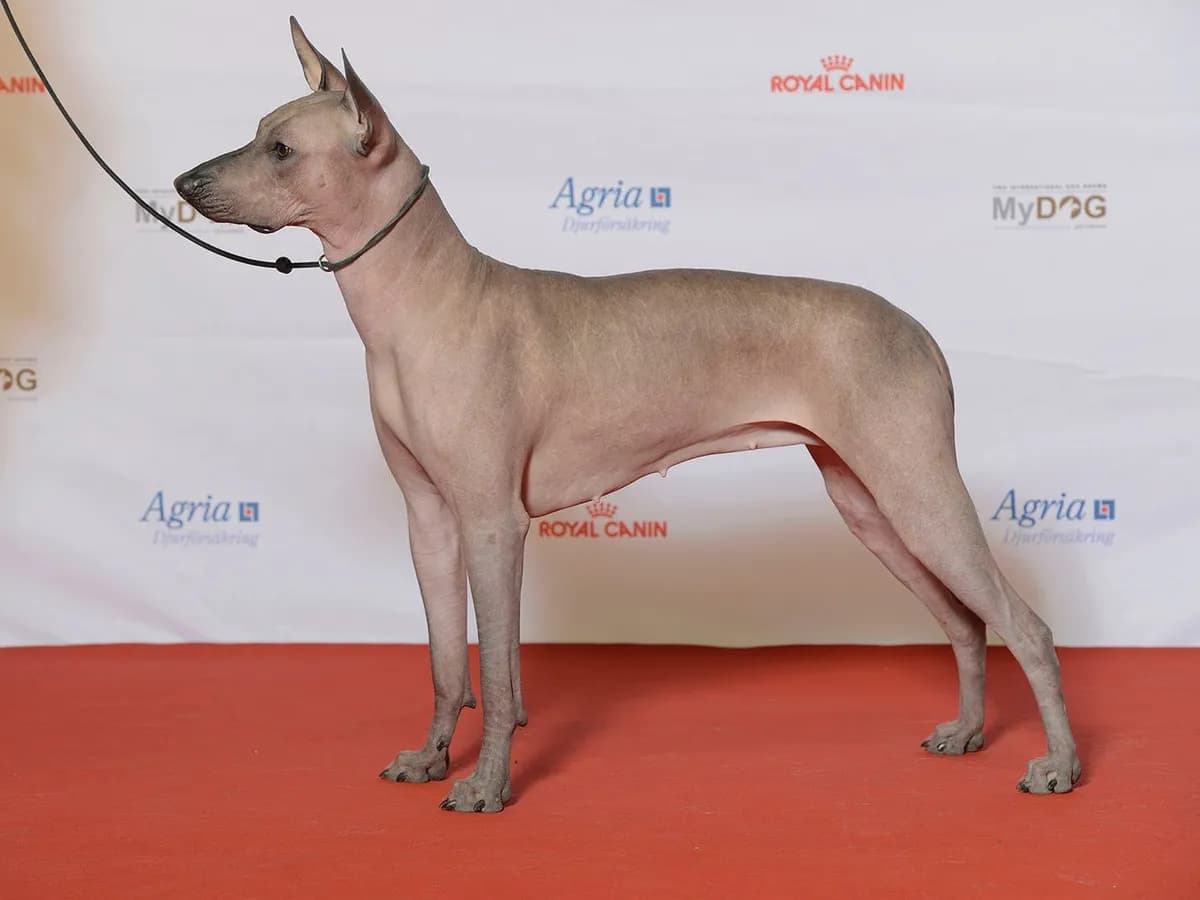

Most important facts
- Group
- Utility
- Size
- Medium
- Weight
- 4–25 kg
- Lifespan
- 12–15 years
- Coat
- Hairless with sparse tufts on the head and tail
- Energy
- Moderate
- Height
- 25–60 cm
- Colours
- Black, slate, bronze or red tones
- Shedding
- Light
- Est. feeding cost
- ~£0.64 a day
- Gear to consider
- UV-protective dog coat or jumper, pet-safe sunscreen, orthopaedic bed
Typical dry food, adult
About the Mexican Hairless
The Mexican Hairless, or Xoloitzcuintle, has lived alongside the peoples of Mesoamerica for at least three thousand years, named for the Aztec god Xolotl and believed to guide souls through the underworld. Archaeological figurines of the breed pre-date the Aztecs themselves. It came close to extinction in the twentieth century before Mexican fanciers rebuilt it, and it is now celebrated as the national dog of Mexico.
Alert and intelligent, Mexican Hairless dogs attach deeply to their families. Strangers get a reserved welcome, and that watchfulness makes them keen watchdogs. Early, ongoing socialisation helps them grow into calm, confident companions rather than nervous or overly vocal adults.
The breed thrives on routine and closeness to its people. Long stretches alone can make it anxious. Consistent daily structure, regular walks, settled mealtimes and reward-based training suit their sensitive nature, and food-motivated sessions build trust with a naturally cautious dog.
Common health conditions
Things Mexican Hairless owners commonly watch for. Guidance, not veterinary advice.
Skin conditions (acne, sunburn, dryness)
With no fur for protection, hairless Xolos are prone to sunburn, dry skin, acne and infections. Moisturise daily, use dog-safe sunscreen, and feed a diet that supports the skin.
Hypodontia (missing teeth)
A genuine breed trait linked to the hairless gene rather than a disease. Keep up extra dental hygiene and choose kibble textures that don't overwork the remaining teeth.
Patellar luxation
Toy and miniature Xolos in particular can have a kneecap that slips out of place. Keep dogs at a lean weight through accurate portioning.
Progressive retinal atrophy (PRA)
Vision fades gradually over time in this inherited condition. Choose breeders who screen for it, and adapt routines early if vision fades.
Feeding a Mexican Hairless
The Mexican Hairless is moderately active and spans three sizes, so it does well on a complete diet suited to its size and life stage. Feed two daily portions matched to actual exercise, not appetite. Keeping this breed lean also takes pressure off knees prone to luxation, and omega-3 and omega-6 oils help support skin condition, which matters more here than for most breeds.
Many Mexican Hairless dogs, particularly the hairless variety, are missing some teeth as a normal feature of the hairless gene, so the teeth that remain do more work and deserve protecting. Dental-friendly kibble textures, appropriate chews and a consistent brushing routine all help, and flag any missing or crowded teeth to your vet so feeding can be tailored.
Every dog is different — weight, age and activity all shift what a Mexican Hairless needs. The turns these breed tendencies into a shortlist matched to your dog’s age, size, budget and needs.
Typical adult weight
4–25 kg
Est. daily calories
240–1,250 kcal
A broad guide for an average-activity adult in good body condition — not veterinary advice. Real needs vary with age, neutering, activity, health and body condition, so no two Mexican Hairlesses eat exactly the same. Get a personalised estimate or estimate feeding costs.


- Per day
- ~£0.64
- Per month
- ~£19
- Per year
- ~£233
A broad typical monthly budget guide, not a live price quote. Food format, calorie density, pack size and retailer pricing all change the real cost.
Find the right food for your Mexican Hairless
Foods ranked to your dog
Answer a few quick questions and the Food Finder ranks foods to your Mexican Hairless by score, price, life stage and fit.
Breed at a glance
- Exercise needs5/10
- Appetite5/10
- Trainability8/10
- Good with children5/10
- Shedding1/10
- Tolerates being alone3/10
The good & the worth-knowing
The good
- Hairless coat sheds little to nothing, which suits allergy-conscious households
- Highly intelligent, alert and genuinely loyal once bonded to its family
- Comes in toy, miniature and standard sizes, so there's a fit for different households

Worth knowing
- Skin needs daily protection from sun, cold and harsh weather
- Wary of strangers and prone to anxiety if left alone too long
- Missing teeth mean dental care needs extra attention
Best matched accessories
All accessoriesThe collections that suit the breed, judged by the same independent standard.




Common owner questions
Do Mexican Hairless dogs need a special diet?
Not a special diet as such, but a complete food matched to their size and life stage. Set portions by their moderate exercise and not by a keen appetite. Look for good-quality protein and added omega fatty acids to support the skin, and our Food Finder can narrow down options.
Are Mexican Hairless dogs prone to putting on weight?
They can be, since their exercise needs are moderate, not high. Feed to body condition, checking you can feel but not see the ribs, and go easy on treats to keep the knees under less strain.
Why does my Xolo have missing teeth, and does it affect eating?
Missing teeth, or hypodontia, are a normal feature of the hairless gene and most dogs manage perfectly well. Choose a kibble texture your dog finds comfortable and keep up a dental hygiene routine to protect the teeth that remain.
How much exercise does a Mexican Hairless dog need?
Around 30 minutes a day for the smaller varieties, and up to about an hour for standard-sized dogs. Add mental stimulation such as training games, since this intelligent breed gets bored without it.
Similar breeds
Photo: Svenska Mässan from Sweden, CC BY 2.0, via Wikimedia Commons