


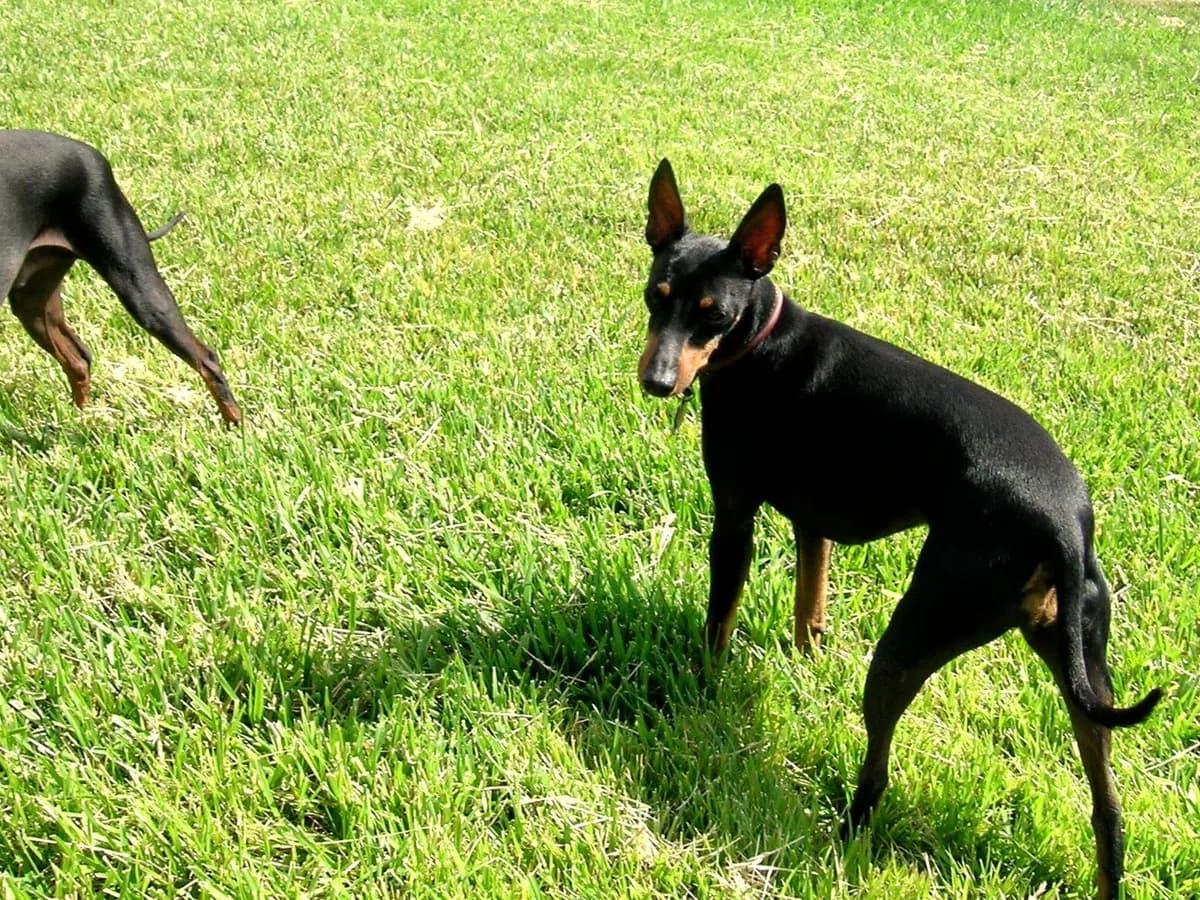

Most important facts
- Group
- Toy
- Size
- Toy
- Weight
- 1–3 kg
- Lifespan
- 11–13 years
- Coat
- Smooth or long-haired; a short
- Energy
- Moderate
- Height
- 20–28 cm
- Colours
- Black and tan, brown and tan, blue and tan or red
- Shedding
- Light
- Est. feeding cost
- ~£0.31 a day
- Gear to consider
- Small-breed step-in harness, digital gram scale for meals, warm coat for cold or wet walks
Typical dry food, adult
About the Russian Toy Terrier
The Russian Toy descends from the English Toy Terriers fashionable among the Russian aristocracy before the revolution, after which the little dogs were bred on in isolation and gradually became a breed of their own. The long-coated variety traces to a single Moscow-born dog in the 1950s. Barely known outside Russia until the 1990s, it is now among the smallest breeds on the Kennel Club register.
Lively, cheerful and devoted to their family, Russian Toys were originally bred as companions and small watchdogs, and they still bark readily at anything unfamiliar. They form close bonds with their owners and can become genuinely anxious if routines change suddenly or they are left alone for long stretches. Teach them to cope with being alone in small steps from puppyhood.
They tend to be reserved rather than outgoing with strangers and unfamiliar dogs, so early, gentle socialisation matters more here than with gregarious breeds. They are quick learners who enjoy short training sessions, and because rewards need to be tiny, splitting part of the measured food ration into training treats works better than adding snacks on top.
Common health conditions
Things Russian Toy Terrier owners commonly watch for. Guidance, not veterinary advice.
Patellar luxation
A dislocating kneecap is common in toy breeds. Keep a Russian Toy lean, measure meals rather than free-feeding, and use our Food Finder to check portion guidance.
Dental disease
Tiny jaws mean crowded teeth and faster tartar build-up. Brush daily and feed a complete diet with an appropriately sized kibble.
Hypoglycaemia in puppies
Very small puppies have limited energy reserves. Young Russian Toys should eat several small meals across the day.
Congenital portosystemic (liver) shunt
As with several toy breeds, shunts are seen more often than in larger dogs. If one is diagnosed, follow your vet's advice on a liver-support diet and monitoring.
Feeding a Russian Toy Terrier
A dog that may weigh only a kilogram or two has little margin for error, since a handful of extra kibble is a far larger share of daily calories than for a bigger breed. Weigh meals on a gram scale. Small, frequent meals suit their fast metabolism, and puppies should eat three to four times a day to guard against low blood sugar.
A complete small-breed diet with correctly sized kibble is easier for such a small mouth and supports dental health, given how crowded toy-breed teeth can be. Extra weight strains small joints and a luxating kneecap is a known risk, so measured feeding that keeps this dog lean is among the best things an owner can do.
Every dog is different — weight, age and activity all shift what a Russian Toy Terrier needs. The turns these breed tendencies into a shortlist matched to your dog’s age, size, budget and needs.
Typical adult weight
1–3 kg
Est. daily calories
80–260 kcal
A broad guide for an average-activity adult in good body condition — not veterinary advice. Real needs vary with age, neutering, activity, health and body condition, so no two Russian Toy Terriers eat exactly the same. Get a personalised estimate or estimate feeding costs.

- Per day
- ~£0.31
- Per month
- ~£9
- Per year
- ~£112
A broad typical monthly budget guide, not a live price quote. Food format, calorie density, pack size and retailer pricing all change the real cost.
Find the right food for your Russian Toy Terrier
Foods ranked to your dog
Answer a few quick questions and the Food Finder ranks foods to your Russian Toy Terrier by score, price, life stage and fit.
Breed at a glance
- Exercise needs5/10
- Appetite4/10
- Trainability7/10
- Good with children5/10
- Shedding3/10
- Tolerates being alone3/10
The good & the worth-knowing
The good
- Small enough to live comfortably in a flat and travel easily
- Affectionate, people-focused and eager to please in training
- Low food volume needed, so cost per meal is modest

Worth knowing
- Fragile build means falls, rough play or jumping off furniture can cause injury
- Can be wary of strangers and needs consistent early socialisation
- Prone to separation anxiety if left alone for long periods
Best matched accessories
All accessoriesThe collections that suit the breed, judged by the same independent standard.


Common owner questions
How much should I feed a Russian Toy Terrier?
Follow the feeding guide on a complete small-breed food, then adjust from there to a lean body condition. The chart is a starting point. Weighing food in grams beats using a scoop, and our Food Finder can help compare suitable diets.
Is the Russian Toy Terrier prone to being a fussy eater?
Some individuals can be selective, particularly if given a lot of table scraps early on. Stick to a consistent, palatable complete diet and avoid a rotating buffet of treats to settle eating habits over time.
Do Russian Toy Terriers need a lot of exercise?
About an hour of activity a day suits them best, with walks, play and short training games in the mix. Exercise needs are modest but shouldn't be skipped, as boredom shows up as barking or anxiety.
What health issues should I watch for in this breed?
Patellar luxation, dental crowding and, in puppies, low blood sugar are the main things vets flag in toy breeds like this one. Keep your dog lean through measured feeding and book regular veterinary check-ups.
Similar breeds
Photo: Kenneth R. Pergrem (krp), CC BY-SA 3.0, via Wikimedia Commons