


Most important facts
- Group
- Toy
- Size
- Toy
- Weight
- 3.5–4.5 kg
- Lifespan
- 12–15 years
- Coat
- Short
- Energy
- Moderate
- Height
- 25–30 cm
- Colours
- Red, or black, blue or chocolate with tan
- Shedding
- Light
- Est. feeding cost
- ~£0.36 a day
- Gear to consider
- Well-fitted harness, warm coat for cold walks, slow-feeder bowl
Typical dry food, adult
About the Miniature Pinscher
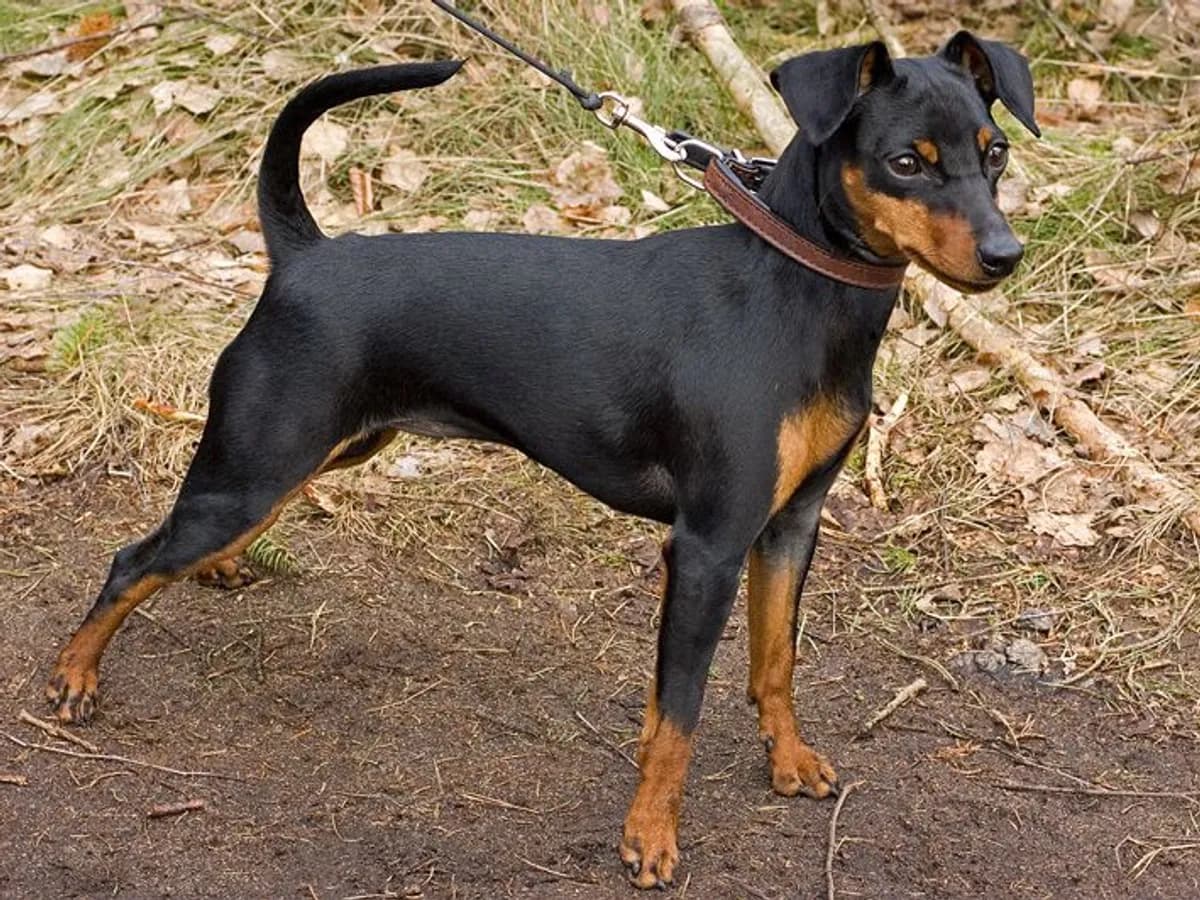
The Miniature Pinscher is an old German breed, developed as a fearless stable ratter and known at home as the Zwergpinscher, with the deer-like red variety once called the Reh Pinscher. Despite appearances it is not a shrunken Dobermann, as the little Pinscher is much the older breed of the two. Its distinctive high-stepping hackney gait remains a signature in the show ring.
Miniature Pinschers are fearless, alert and full of self-assurance, often behaving as though they are far larger than their few kilograms suggest. They are naturally inquisitive and enjoy exploring, playing and keeping busy, which makes consistent daily exercise and enrichment important rather than optional.
Their independent streak can make training more of a negotiation than a straightforward exercise, so patient, reward-based methods started early tend to work best. Measure food-based treats out of the daily ration, never on top of it. They form strong bonds with their household and can be wary of strangers, so early socialisation builds a confident adult.
Common health conditions
Things Miniature Pinscher owners commonly watch for. Guidance, not veterinary advice.
Luxating patella
A common toy-breed knee condition where the kneecap slips out of its groove. Keep this breed lean, and ask your vet to grade severity at a routine check.
Legg-Calvé-Perthes disease
A juvenile condition where blood supply to the top of the femur is disrupted, causing lameness in the first year. Have any persistent limp assessed by a vet promptly.
Progressive retinal atrophy and cataracts
Inherited eye conditions that can progress to vision loss. Choose health-tested parents and book annual eye checks.
Congenital heart defects (including patent ductus arteriosus)
Some Miniature Pinschers are born with a murmur or structural defect. Make sure a vet listens to the heart at the first puppy check.
Urolithiasis (bladder stones)
This breed can be prone to stone formation in the urinary tract. Keep water always available, and treat sudden straining to urinate as urgent.
Feeding a Miniature Pinscher
Miniature Pinschers are small, active dogs with a fast metabolism, but their portions are correspondingly tiny, so accurate weighing matters far more here than for a larger breed. A few extra grams a day add up quickly on a four-kilogram frame, and a quality complete diet for a small, energetic toy breed suits them well.
This breed can be prone to luxating patellas and Legg-Calvé-Perthes disease, so an owner's most useful job is keeping them lean throughout life. Their tendency towards urinary stone formation also makes fresh water and a consistently balanced diet worth prioritising, and any sudden change in thirst or toileting deserves a vet check.
Every dog is different — weight, age and activity all shift what a Miniature Pinscher needs. The turns these breed tendencies into a shortlist matched to your dog’s age, size, budget and needs.
Typical adult weight
3.5–4.5 kg
Est. daily calories
210–350 kcal
A broad guide for an average-activity adult in good body condition — not veterinary advice. Real needs vary with age, neutering, activity, health and body condition, so no two Miniature Pinschers eat exactly the same. Get a personalised estimate or estimate feeding costs.


- Per day
- ~£0.36
- Per month
- ~£11
- Per year
- ~£131
A broad typical monthly budget guide, not a live price quote. Food format, calorie density, pack size and retailer pricing all change the real cost.
Find the right food for your Miniature Pinscher
Foods ranked to your dog
Answer a few quick questions and the Food Finder ranks foods to your Miniature Pinscher by score, price, life stage and fit.
Breed at a glance
- Exercise needs5/10
- Appetite6/10
- Trainability5/10
- Good with children4/10
- Shedding2/10
- Tolerates being alone3/10
The good & the worth-knowing
The good
- Compact size suits smaller homes and flats without sacrificing personality
- Low-maintenance short coat needs minimal grooming
- Alert and lively, making an entertaining and devoted companion

Worth knowing
- Independent and can be stubborn, so training needs patience from puppyhood
- Prone to inherited joint, eye and heart conditions, so health-tested lines matter
- Small and fine-boned, so not always the easiest match for boisterous children
Best matched accessories
All accessoriesThe collections that suit the breed, judged by the same independent standard.
Common owner questions
How much should I feed a Miniature Pinscher?
A generic guideline won't do. Set portions from the dog's own weight and activity, since even small overfeeding shows quickly on a toy-sized frame. Weigh food and feed to a lean body condition to protect the joints, and our Food Finder can narrow down a suitable complete diet.
Are Miniature Pinschers fussy eaters?
Not typically, though their small stomachs mean the daily food often sits better split into two or three meals than served in one. If appetite changes suddenly, rule out dental discomfort or an underlying health issue rather than assuming pickiness.
Are Miniature Pinschers good with children?
They can do well in families with older, calmer children who understand how to handle a small dog gently, but their fine bones make them a poorer match for toddlers. Supervised, gentle time together works best.
Do Miniature Pinschers need a lot of exercise?
They are energetic little dogs that benefit from around 30 minutes of exercise plus mental stimulation daily, and their size does not make them low-maintenance.
Similar breeds
Photo: Sebastian Wallin. Sebastian Wallin. Sebwal, CC BY 3.0, via Wikimedia Commons