



Most important facts
- Group
- Toy
- Size
- Toy
- Weight
- 2–5 kg
- Lifespan
- 12–14 years
- Coat
- Long
- Energy
- Moderate
- Height
- 20–28 cm
- Colours
- White with patches of any colour
- Shedding
- Moderate
- Est. feeding cost
- ~£0.33 a day
- Gear to consider
- Small-breed slow-feeder bowl, soft step-in or chest-clip harness, fine-bristle grooming brush and comb
Typical dry food, adult
About the Papillon
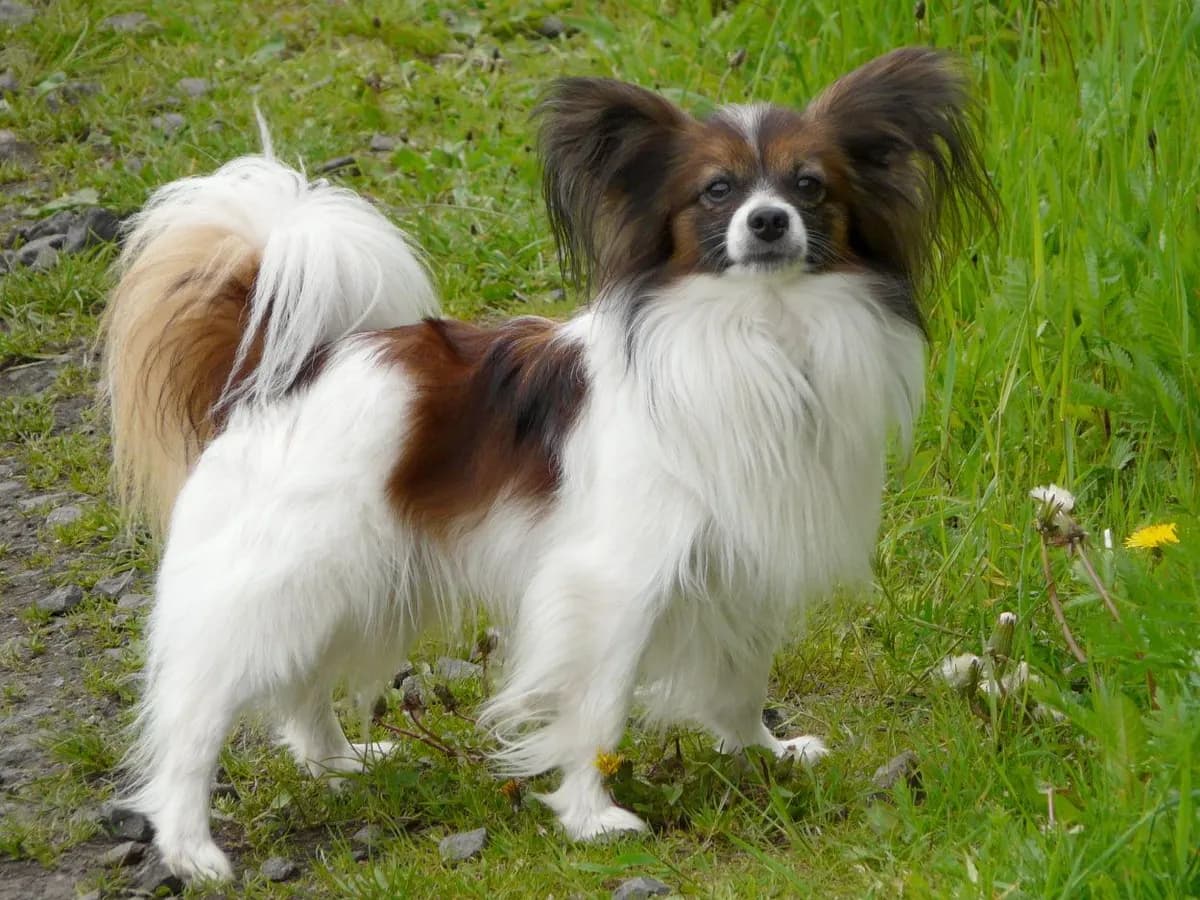
The Papillon descends from the toy spaniels that grace Renaissance portraits by Titian and his contemporaries, pampered in the courts of France and Spain for centuries. The original drop-eared type, still bred today as the Phalene, gave rise to the erect-eared fashion that earned the breed its French name, meaning butterfly. Legend counts Marie Antoinette among its devoted owners.
Papillons are lively, affectionate and notably intelligent, regularly excelling in obedience and agility despite their small size. Socialised well early on, they tend to be alert and confident, and they are typically eager to please. That makes training sessions, including calm behaviour around mealtimes, generally straightforward.
They form close bonds with their families and can be prone to following owners from room to room, which sometimes tips into separation anxiety if alone time isn't built up gradually. Their small size means they do best with gentle handling and supervision around very young children, and a settled routine with consistent mealtimes helps them feel secure.
Common health conditions
Things Papillon owners commonly watch for. Guidance, not veterinary advice.
Luxating patella
The kneecap can slip out of its groove, which causes more discomfort if a Papillon carries extra weight. Keep portions accurate to protect the joints.
Progressive retinal atrophy (PRA)
An inherited condition causing gradual deterioration of the retina. A breeder should health-test the parent dogs through Kennel Club and BVA schemes.
Von Willebrand's disease
An inherited clotting disorder that can cause excessive bleeding after injury or surgery. Ask a breeder about DNA testing.
Dental disease
Toy breeds often have crowded teeth, which traps plaque. Use dental-specific kibble textures and appropriately sized chews alongside regular brushing.
Feeding a Papillon
Papillons are a genuine toy breed, often weighing only two to five kilograms fully grown, so portion accuracy matters far more than for a larger dog. A gram scale rather than a scoop is the best way to measure food, since even a small daily excess adds up to meaningful weight gain on this tiny frame. Kibble size matters too, as large biscuits are genuinely difficult for a small jaw.
Because owners are managing such small portions, food quality and calorie density both count. A moderately calorie-dense complete food fed in two or three small meals a day suits their tiny stomachs better than one large meal and keeps energy steady. Some Papillons can be selective eaters, so a palatable, consistent recipe helps avoid tempting them with treats that undo good portion control.
Every dog is different — weight, age and activity all shift what a Papillon needs. The turns these breed tendencies into a shortlist matched to your dog’s age, size, budget and needs.
Typical adult weight
2–5 kg
Est. daily calories
140–370 kcal
A broad guide for an average-activity adult in good body condition — not veterinary advice. Real needs vary with age, neutering, activity, health and body condition, so no two Papillons eat exactly the same. Get a personalised estimate or estimate feeding costs.


- Per day
- ~£0.33
- Per month
- ~£10
- Per year
- ~£121
A broad typical monthly budget guide, not a live price quote. Food format, calorie density, pack size and retailer pricing all change the real cost.
Find the right food for your Papillon
Foods ranked to your dog
Answer a few quick questions and the Food Finder ranks foods to your Papillon by score, price, life stage and fit.
Breed at a glance
- Exercise needs4/10
- Appetite5/10
- Trainability8/10
- Good with children5/10
- Shedding5/10
- Tolerates being alone3/10
The good & the worth-knowing
The good
- Highly intelligent and responsive to reward-based training
- Adaptable to flats and smaller homes without a garden
- Long-lived for a dog, often reaching the mid-teens

Worth knowing
- Small size and delicate build mean rough handling or falls can cause injury
- May grow anxious when left on their own for long periods
- Toy-breed teeth are easily crowded, so dental care needs consistent attention
Best matched accessories
All accessoriesThe collections that suit the breed, judged by the same independent standard.

Common owner questions
How much should I feed a Papillon?
Because Papillons are so small, follow the feeding guide on the packaging for their actual weight rather than estimating, and check body condition by feel every few weeks. Under a light covering, the ribs stay easy to feel. Our Food Finder can help match a recipe and portion size to your dog's age and weight.
Are Papillons fussy eaters?
Some can be, particularly if treats or table scraps are offered regularly. A consistent, palatable complete food fed in small, regular meals tends to work better than switching foods frequently, which can encourage pickiness.
How much exercise does a Papillon need?
Around 30 minutes a day across two walks suits most Papillons well, along with some mental stimulation such as training games. They're energetic in short bursts but don't need long-distance exercise.
Do Papillons shed a lot?
They shed moderately year-round with a heavier seasonal blow, despite having no woolly undercoat. Two to three brushings a week keep the coat in good condition, and a diet with adequate omega fatty acids supports coat health from the inside.