


Most important facts
- Group
- Hound
- Size
- Large
- Weight
- 32–39 kg
- Lifespan
- 10–12 years
- Coat
- Short
- Energy
- High
- Height
- 62–72 cm
- Colours
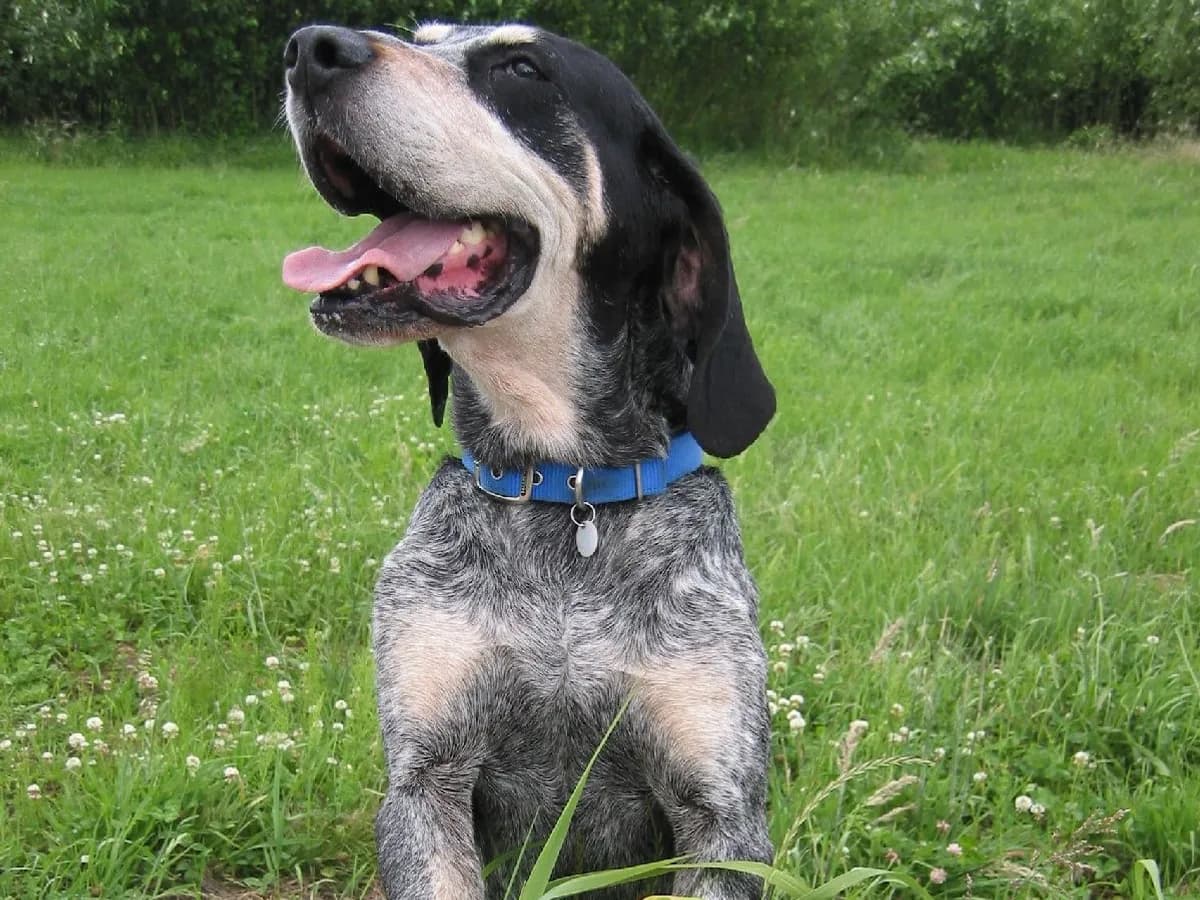
- Blue-mottled black and white with tan
- Shedding
- Moderate
- Est. feeding cost
- ~£1.71 a day
- Gear to consider
- Slow-feeder bowl, secure long-line lead, robust ID tag and GPS collar
Typical dry food, adult
About the Grand Bleu de Gascogne
The Grand Bleu de Gascogne is one of France's oldest scenthounds, descended from the St Hubert hounds of the medieval period and bred in Gascony for hunting wolf, boar and deer in large, slow-working packs. French nobility prized the breed for its deep voice and striking blue-mottled coat. It remains far more numerous in France and in American pack kennels than in Britain, where it is a genuine rarity.
The Grand Bleu de Gascogne is calm and even-tempered at home. It is an imposing size, and it is often described as gentle and patient. Bred to hunt in packs, it is a genuinely sociable hound that bonds closely with other dogs and does not thrive as a lone pet left to its own devices.
Its working heritage means a powerful, independent scenting drive is never far from the surface, and this breed will happily follow an interesting trail regardless of what its owner had planned. Secure boundaries, a consistent routine and plenty of physical and mental outlets keep this large, characterful hound settled.
Common health conditions
Things Grand Bleu de Gascogne owners commonly watch for. Guidance, not veterinary advice.
Hip and elbow dysplasia
A recognised risk in this large, heavy-boned hound. Keep puppies on a controlled-growth food and adults at a lean, healthy weight.
Gastric dilatation-volvulus (bloat)
The Grand Bleu is a large, deep-chested breed, and that carries a bloat risk. Keep the feeding pace slow, and offer the food as two or three smaller meals. Avoid vigorous exercise straight after eating.
Ear infections
Long, low-set, pendulous ears trap moisture and debris, especially after wet undergrowth. Check and dry the ears routinely after walks.
Dental wear and gum disease
Dental hygiene can be overlooked in working hounds. Offer appropriate chewing opportunities and brush regularly alongside a balanced diet.
Feeding a Grand Bleu de Gascogne
This is a large, athletic hound with genuine stamina, so daily energy needs are higher than body weight alone suggests once regular scenting and walking are factored in. A diet built around a named animal protein supports its muscle, while controlled fat and calories prevent the excess weight that loads hips and elbows. Portion to body condition, since working days and rest days differ considerably.
Because the breed is prone to bloat, how food is fed matters as much as what is fed. Give two or three smaller meals through the day and not one large sitting. Keep mealtimes calm, and rest your dog either side of vigorous exercise.
Every dog is different — weight, age and activity all shift what a Grand Bleu de Gascogne needs. The turns these breed tendencies into a shortlist matched to your dog’s age, size, budget and needs.
Typical adult weight
32–39 kg
Est. daily calories
1,130–1,970 kcal
A broad guide for an average-activity adult in good body condition — not veterinary advice. Real needs vary with age, neutering, activity, health and body condition, so no two Grand Bleu de Gascognes eat exactly the same. Get a personalised estimate or estimate feeding costs.

- Per day
- ~£1.71
- Per month
- ~£52
- Per year
- ~£623
A broad typical monthly budget guide, not a live price quote. Food format, calorie density, pack size and retailer pricing all change the real cost.
Find the right food for your Grand Bleu de Gascogne
Foods ranked to your dog
Answer a few quick questions and the Food Finder ranks foods to your Grand Bleu de Gascogne by score, price, life stage and fit.
Breed at a glance
- Exercise needs9/10
- Appetite7/10
- Trainability5/10
- Good with children7/10
- Shedding5/10
- Tolerates being alone3/10
The good & the worth-knowing
The good
- Loyal, even-tempered and generally gentle around familiar people
- Impressive stamina and scenting ability for owners who enjoy long, active days outdoors
- Distinctive, low-maintenance short coat that needs only weekly brushing
Worth knowing
- Needs at least two hours of varied daily exercise, including secure off-lead scenting time
- Strong-willed and independent, so recall and training take patience and consistency
- Not suited to being left alone for long periods, and can be vocal when bored
Best matched accessories
All accessoriesThe collections that suit the breed, judged by the same independent standard.
Common owner questions
How much exercise does a Grand Bleu de Gascogne need?
At least two hours a day, ideally split across walks and secure off-lead time where it can follow scent. This is a working scenthound at heart, and under-exercised dogs become vocal or destructive.
Is the Grand Bleu de Gascogne easy to train?
Not especially. They are intelligent but independent, bred to think for themselves while working a scent line far from a handler. Patient, reward-based training and rock-solid recall work in secure areas make the biggest difference.
How much should I feed a Grand Bleu de Gascogne?
Portion to body condition rather than a standard chart, since this breed's activity varies day to day. Feeding smaller meals two or three times a day also helps manage bloat risk. The Food Finder can match a diet to your dog's size and activity.
Does the Grand Bleu de Gascogne shed a lot?
Shedding is moderate and manageable with a weekly brush, though it increases during spring and autumn coat changes. The short coat needs little more than occasional bathing and regular ear checks.