



Most important facts
- Group
- Hound
- Size
- Medium
- Weight
- 18–27 kg
- Lifespan
- 12–14 years
- Coat
- Smooth-coated or feathered; short
- Energy
- High
- Height
- 58–71 cm
- Colours
- Cream, fawn, gold, grizzle or tricolour
- Shedding
- Light
- Est. feeding cost
- ~£1.24 a day
- Gear to consider
- Snug, well-fitted sighthound harness, warm winter coat for its thin frame and low body fat, slow-feeder or shallow multi-bowl for fussy or fast eaters
Typical dry food, adult
About the Saluki
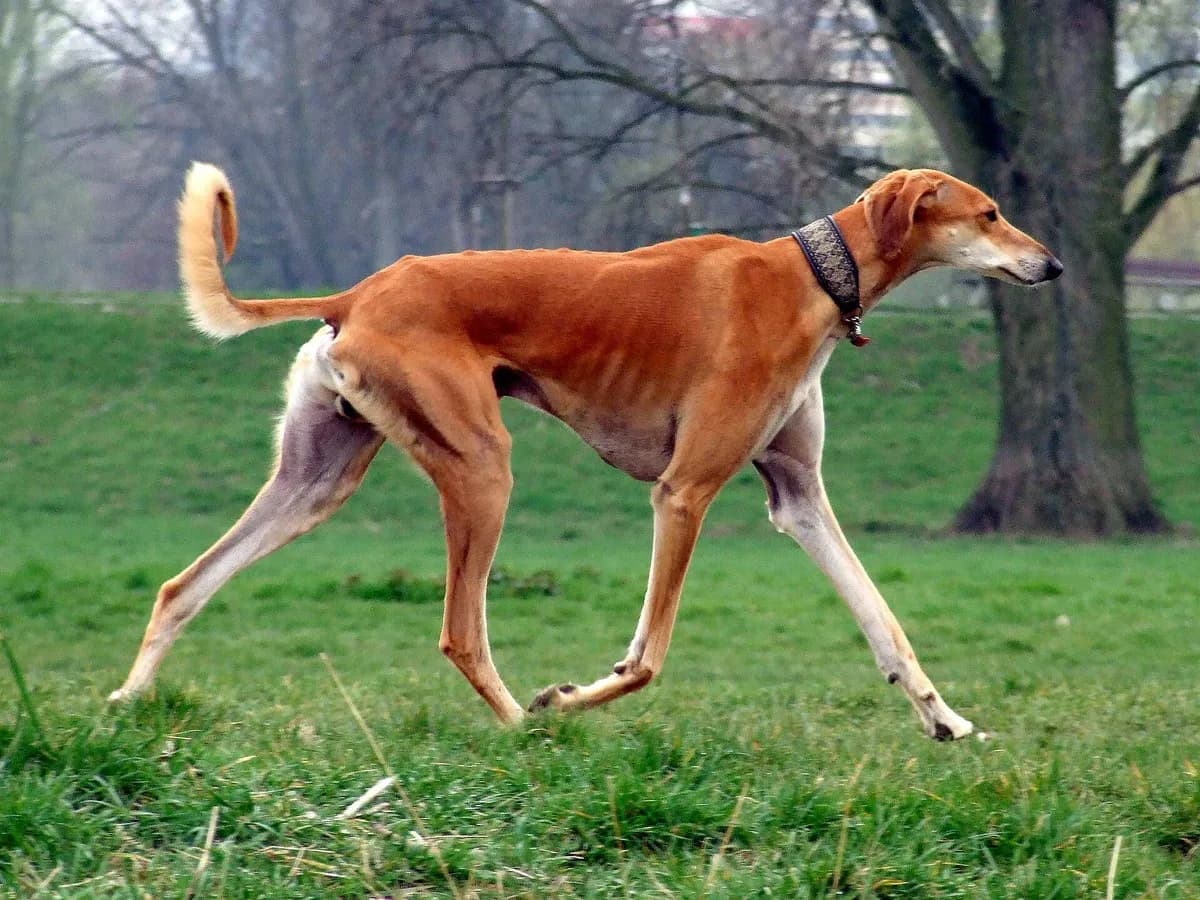
The Saluki is among the most ancient of all breeds, its likeness appearing on Sumerian carvings and Egyptian tomb paintings thousands of years old. Bedouin tribes prized it as the noble one, the only dog permitted inside the tent, gifted between chieftains but never sold. British officers brought the breed home from the Middle East in the nineteenth century, and its desert elegance has never left it.
Salukis are gentle and quiet, often reserved with strangers. Within their own family they are affectionate and deeply loyal. They are sensitive dogs that respond poorly to harsh handling, doing best with calm, consistent routines, and their independent nature means training rewards patience over repetition.
The breed's defining trait is an intense sighthound chase instinct, triggered by anything that moves quickly, from a cat to a bag in the wind. Training doesn't remove this entirely, so secure fencing and recall practice in enclosed spaces matter more than obedience drills.
Common health conditions
Things Saluki owners commonly watch for. Guidance, not veterinary advice.
Hip dysplasia
Joint laxity that can lead to early arthritis. Keep a Saluki lean throughout life and consider joint-support nutrients long term.
Heart disease (including dilated cardiomyopathy)
Salukis are among the sighthounds with a higher recorded risk of heart muscle disease. A cough or laboured breathing needs a vet promptly, and so does any drop in exercise tolerance.
Hypothyroidism
Reduced thyroid hormone can cause unexpected weight gain, low energy and coat changes in a naturally lean breed. Investigate any sudden shift in condition on an unchanged diet.
Bloat (gastric dilatation-volvulus)
Like other deep-chested hounds, Salukis carry an elevated bloat risk. Feed smaller meals more often, and avoid hard exercise straight after eating.
Haemangiosarcoma
A malignant tumour of blood vessel lining seen more often in this breed than average. Keep up regular vet checks to support earlier detection.
Feeding a Saluki
Salukis are lean by design, so owners often worry about keeping weight on and not about taking it off. The breed can still become overweight on the wrong diet. A diet with moderate-to-higher energy density suits their activity, with portions judged against body condition, as a clear waist and some rib is normal. Given the deep chest and bloat risk, split the daily allowance into two or more smaller meals and rest around eating.
Many Salukis are genuinely fussy eaters, sometimes turning food down when stressed, hot or over-exercised, so a palatable, consistent diet and a settled routine work better than frequent switching. Given the tendencies towards hip dysplasia and heart disease, a complete food with joint-supporting nutrients is a reasonable long-term choice.
Every dog is different — weight, age and activity all shift what a Saluki needs. The turns these breed tendencies into a shortlist matched to your dog’s age, size, budget and needs.
Typical adult weight
18–27 kg
Est. daily calories
730–1,490 kcal
A broad guide for an average-activity adult in good body condition — not veterinary advice. Real needs vary with age, neutering, activity, health and body condition, so no two Salukis eat exactly the same. Get a personalised estimate or estimate feeding costs.


- Per day
- ~£1.24
- Per month
- ~£38
- Per year
- ~£453
A broad typical monthly budget guide, not a live price quote. Food format, calorie density, pack size and retailer pricing all change the real cost.
Find the right food for your Saluki
Foods ranked to your dog
Answer a few quick questions and the Food Finder ranks foods to your Saluki by score, price, life stage and fit.
Breed at a glance
- Exercise needs9/10
- Appetite4/10
- Trainability5/10
- Good with children5/10
- Shedding3/10
- Tolerates being alone3/10
The good & the worth-knowing
The good
- Gentle, affectionate and quietly loyal with its own family
- Low-shedding, easy-care smooth coat option with no undercoat
- Impressively athletic with real staying power, for owners who love open-air exercise

Worth knowing
- Strong chase instinct means secure, fully enclosed fencing and a lead near roads are essential
- Needs a substantial daily exercise commitment, including regular safe off-lead running
- Can be reserved with strangers and is often a genuinely fussy eater
Best matched accessories
All accessoriesThe collections that suit the breed, judged by the same independent standard.




Common owner questions
How much exercise does a Saluki need?
Plenty. Built for sustained pursuit, a Saluki generally needs well over an hour of exercise daily, and gentle strolls alone will not do. Include secure off-lead running, with a fully enclosed space for that time.
Are Salukis fussy eaters?
Many are. Heat and stress can put a Saluki off its food, and so can hard exercise. A consistent, palatable diet and settled routine beat frequent switching. Our Food Finder can narrow down options for a fussy, lean sighthound.
What should I feed a Saluki to keep it a healthy weight?
Feed to body condition rather than a fixed amount, since Salukis are naturally lean and a visible waist is normal and healthy. Splitting meals into two or more smaller portions a day suits both their fussy appetite and their elevated bloat risk.
Do Salukis get cold easily?
Yes, their thin coat and low body fat mean they feel the cold more than many breeds, so a winter coat is worth considering. In colder months some Salukis need slightly more food to maintain condition.