
Most important facts
- Group
- Hound
- Size
- Large
- Weight
- 31–38 kg
- Lifespan
- 12–14 years
- Coat
- Short, dense and sleek
- Energy
- High
- Height
- 61–69 cm
- Colours
- Light wheaten to red wheaten
- Shedding
- Moderate
- Est. feeding cost
- ~£1.70 a day
- Gear to consider
- Slow-feeder bowl, robust flat lead and harness, durable chew-resistant toys
Typical dry food, adult
About the Rhodesian Ridgeback
The Rhodesian Ridgeback was developed in southern Africa by crossing European settlers' dogs with the ridge-backed hunting dogs of the Khoikhoi people. The result was a hound with the nerve to track and hold lions at bay for hunters, which earned it the nickname of the African Lion Hound. The breed standard was drawn up in Rhodesia in 1922, and the signature ridge of reversed hair remains its calling card.
Ridgebacks are loyal, intelligent and reserved with strangers, having been developed to guard the homestead as much as to hunt. Early, thorough socialisation is essential, as is a firm but fair training approach, since this is not a naturally biddable breed and harsh handling backfires with a dog this independent-minded.
At home, a well-exercised adult Ridgeback is typically placid and affectionate with its own family, often bonding strongly with children it has grown up with. Their prey drive and stamina mean daily off-lead exercise and enrichment matter as much as their food, and a settled routine, including regular mealtimes, keeps a large, strong-willed dog calm.
Common health conditions
Things Rhodesian Ridgeback owners commonly watch for. Guidance, not veterinary advice.
Dermoid sinus
A tube-like tract of skin tissue runs down to the spine. It affects a notable minority of Ridgeback puppies. Choose breeders who screen litters, as affected pups usually need early surgery.
Hip and elbow dysplasia
Malformed joints that lead to arthritis over time. Keep this fast-growing breed lean as a puppy and feed a controlled-growth large-breed diet.
Bloat (gastric dilatation-volvulus)
A life-threatening emergency more common in deep-chested breeds. Keep meals smaller and unhurried, and let food settle before any vigorous exercise.
Hypothyroidism
An underactive thyroid can slow metabolism and cause weight gain or lethargy. Monitor body condition and flag unexplained changes to a vet early.
Feeding a Rhodesian Ridgeback
The Ridgeback is large and deep-chested, so a diet formulated for large breeds suits it best, with controlled calcium and phosphorus during puppyhood to support even joint development and reduce dysplasia risk. Overfeeding a fast-growing puppy accelerates growth beyond what the skeleton can comfortably support, so weigh food and follow growth-chart guidance rather than free-feeding.
The deep chest also means bloat is a real risk, so two or three smaller meals through the day are safer than one large one, with vigorous exercise kept an hour away from eating. Adult Ridgebacks carry weight well when active but can run to fat if exercise drops, so adjust portions to activity and check body condition regularly.
Every dog is different — weight, age and activity all shift what a Rhodesian Ridgeback needs. The turns these breed tendencies into a shortlist matched to your dog’s age, size, budget and needs.
Typical adult weight
31–38 kg
Est. daily calories
1,100–1,930 kcal
A broad guide for an average-activity adult in good body condition — not veterinary advice. Real needs vary with age, neutering, activity, health and body condition, so no two Rhodesian Ridgebacks eat exactly the same. Get a personalised estimate or estimate feeding costs.
- Per day
- ~£1.70
- Per month
- ~£52
- Per year
- ~£620
A broad typical monthly budget guide, not a live price quote. Food format, calorie density, pack size and retailer pricing all change the real cost.
Find the right food for your Rhodesian Ridgeback
Foods ranked to your dog
Answer a few quick questions and the Food Finder ranks foods to your Rhodesian Ridgeback by score, price, life stage and fit.
Breed at a glance
- Exercise needs9/10
- Appetite8/10
- Trainability6/10
- Good with children7/10
- Shedding4/10
- Tolerates being alone5/10
The good & the worth-knowing
The good
- Loyal, affectionate family dog once well socialised
- Low-maintenance short coat with minimal grooming needs
- Athletic and versatile, suited to running, hiking and canine sports

Worth knowing
- Needs a confident, consistent owner from puppyhood, so not the easiest first dog
- Strong prey drive and independent streak mean recall can be hard-won
- Deep chest carries a bloat risk that owners need to actively manage at mealtimes
Best matched accessories
All accessoriesThe collections that suit the breed, judged by the same independent standard.
Common owner questions
How much exercise does a Rhodesian Ridgeback need?
Plan for at least an hour to 90 minutes of exercise a day, ideally including some off-lead running in a secure area, as this is a breed built for stamina and speed. A tired Ridgeback is a much easier housemate.
Are Rhodesian Ridgebacks prone to bloat?
Yes, the deep chest carries a higher risk of gastric dilatation-volvulus, a medical emergency. Serve two or three modest meals a day, use a slow feeder for gulpers, and avoid strenuous exercise straight after eating. These are all sensible precautions.
How much should I feed a Rhodesian Ridgeback puppy?
Choose a puppy food built for large breeds, with calcium and phosphorus controlled, and follow the pack guidance for their current weight. Rapid growth raises the risk of joint problems at this size. Our Food Finder can help match a growth-appropriate recipe.
Do Rhodesian Ridgebacks put on weight easily?
They can, particularly past their energetic adolescent phase or if exercise drops, so check body condition regularly by feeling for the waist and ribs. If weight creeps up, a lower-calorie recipe alongside consistent exercise usually brings things back into line.
Similar breeds
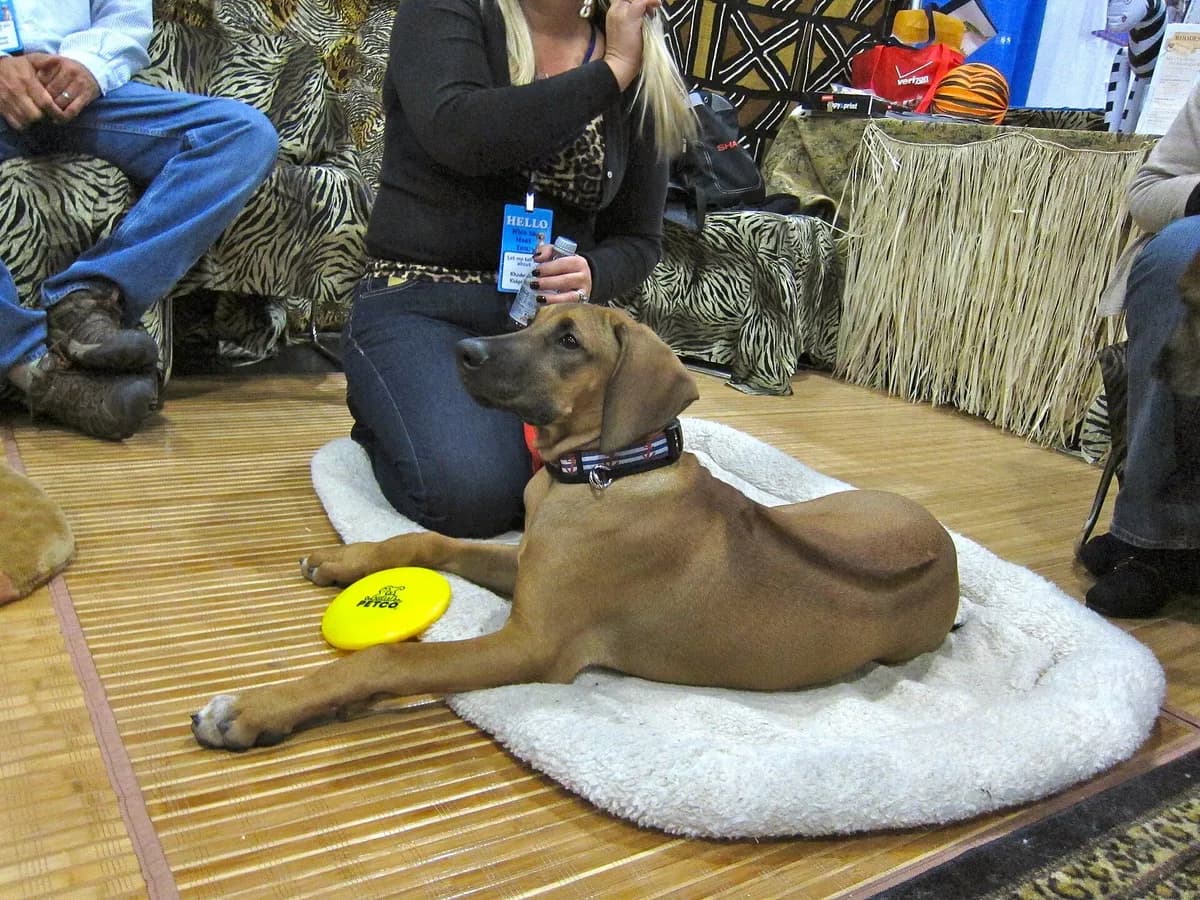
Photo: Pets Adviser from Brooklyn, USA, CC BY 2.0, via Wikimedia Commons