

Most important facts
- Group
- Working
- Size
- Large
- Weight
- 30–45 kg
- Lifespan
- 10–12 years
- Coat
- Short, sleek and dense
- Energy
- High
- Height
- 65–69 cm
- Colours
- Black, brown, blue or fawn with tan
- Shedding
- Moderate
- Est. feeding cost
- ~£1.71 a day
- Gear to consider
- Slow-feeder bowl, well-fitted winter coat, orthopaedic dog bed
Typical dry food, adult
About the Dobermann
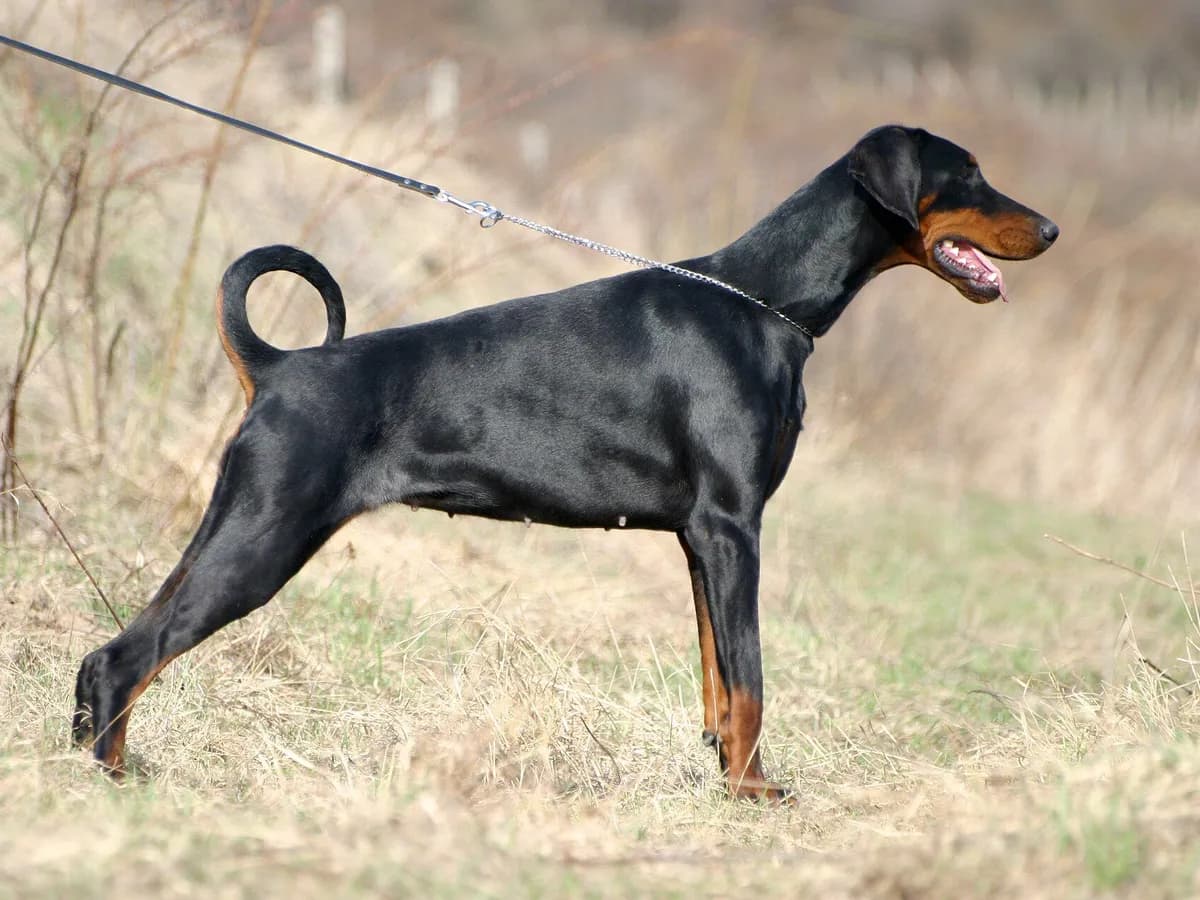
The Dobermann carries the name of Louis Dobermann, a tax collector from the German town of Apolda. In the late nineteenth century he set out to breed a dog capable of protecting him on his rounds. He is thought to have combined the Rottweiler, German Pinscher, Weimaraner and other local types. The breed's intelligence and loyalty saw it adopted worldwide for police, military and family guarding roles.
Dobermanns are alert and deeply loyal to their family, traits that made them a favourite for police and protection work. They are quick learners who respond best to confident, consistent, reward-based training, and they need an owner willing to put in early socialisation and ongoing mental stimulation.
Left under-exercised or under-stimulated, this is a breed that can become anxious and pushy, so daily structure matters as much as daily walks. With the right upbringing, Dobermanns are affectionate, devoted companions that bond closely with their family, though their size, energy and protective instincts suit experienced owners best.
Common health conditions
Things Dobermann owners commonly watch for. Guidance, not veterinary advice.
Dilated cardiomyopathy (DCM)
A heart-muscle disease with a high inherited prevalence in the breed. Ask your vet about annual cardiac screening from around three years old, and keep your Dobermann at a healthy weight.
Wobbler syndrome (cervical spondylomyelopathy)
Instability in the neck vertebrae that can cause weakness in the back legs. Feed a large-breed puppy diet that controls growth rate rather than encouraging fast growth.
Hip dysplasia
The hip joint forms poorly, and arthritis can follow. Look for BVA/KC scores in breeding dogs, and manage it through steady growth and a healthy adult weight.
Gastric dilatation-volvulus (bloat)
A deep chest raises the risk of this stomach twist, which is life-threatening. Feed two or more smaller meals a day, and let food settle before any vigorous exercise.
Von Willebrand's disease
An inherited bleeding disorder found in the breed. Choose a breeder who screens for it, and tell your vet before any surgery or dental treatment.
Feeding a Dobermann
Dobermanns are lean, muscular working dogs with a naturally high metabolism, so they benefit from a complete diet with good-quality protein to maintain muscle without excess fat. Because the breed is predisposed to dilated cardiomyopathy, work with your vet to make sure the diet meets recognised nutritional standards. Unbalanced home-prepared recipes are the risk here.
Dobermanns are deep-chested and at raised bloat risk, so they do best on two or more measured meals a day, ideally from a slow-feeder bowl. Give them a rest either side of vigorous exercise. Feed puppies a large-breed formula that controls growth rate, and keep adults lean throughout life to protect both joints and heart.
Every dog is different — weight, age and activity all shift what a Dobermann needs. The turns these breed tendencies into a shortlist matched to your dog’s age, size, budget and needs.
Typical adult weight
30–45 kg
Est. daily calories
1,080–2,190 kcal
A broad guide for an average-activity adult in good body condition — not veterinary advice. Real needs vary with age, neutering, activity, health and body condition, so no two Dobermanns eat exactly the same. Get a personalised estimate or estimate feeding costs.
- Per day
- ~£1.71
- Per month
- ~£52
- Per year
- ~£623
A broad typical monthly budget guide, not a live price quote. Food format, calorie density, pack size and retailer pricing all change the real cost.
Find the right food for your Dobermann
Foods ranked to your dog
Answer a few quick questions and the Food Finder ranks foods to your Dobermann by score, price, life stage and fit.
Breed at a glance
- Exercise needs9/10
- Appetite7/10
- Trainability9/10
- Good with children5/10
- Shedding5/10
- Tolerates being alone3/10
The good & the worth-knowing
The good
- Highly intelligent and trainable, excelling with consistent, reward-based work
- Deeply loyal and protective of its family once well socialised
- Low-maintenance short coat that needs only weekly brushing

Worth knowing
- Needs a serious daily exercise commitment, so isn't suited to sedentary households
- Prone to several inherited conditions, including a heart condition needing lifelong monitoring
- Thin coat offers little insulation, so needs extra protection in cold, wet weather
Best matched accessories
All accessoriesThe collections that suit the breed, judged by the same independent standard.

Common owner questions
How much exercise does a Dobermann need each day?
Most adults need an hour or two of varied exercise daily, including off-lead time in a secure area, plus mental work through training or games. Match food to activity and body condition, since an under-exercised Dobermann gains weight quickly on a working-dog portion.
Are Dobermanns prone to bloat, and does feeding style matter?
Yes, the deep chest brings a raised risk of gastric dilatation-volvulus. Feed two or more smaller meals a day from a slow-feeder bowl, avoid strenuous exercise after eating, and watch for restlessness or a swollen abdomen after meals.
What should I feed a Dobermann puppy?
Rapid growth is linked to joint problems such as hip dysplasia and wobbler syndrome, so pick a puppy food for large breeds that keeps growth steady. Our Food Finder can help compare large-breed puppy formulas.
Are Dobermanns good with children?
With careful socialisation from puppyhood, many Dobermanns are affectionate and protective around their own family's children, though their size and energy mean supervision still matters, particularly with younger children.
Similar breeds
Photo: Miroslav Cacik, Copyrighted free use, via Wikimedia Commons