

Most important facts
- Group
- Working
- Size
- Giant
- Weight
- 35–60 kg
- Lifespan
- 8–10 years
- Coat
- Short, dense
- Energy
- High
- Height
- 56–69 cm
- Colours
- Black and tan
- Shedding
- Moderate
- Est. feeding cost
- ~£2.02 a day
- Gear to consider
- Slow-feeder bowl, robust no-pull harness, durable chew toys
Typical dry food, adult
About the Rottweiler
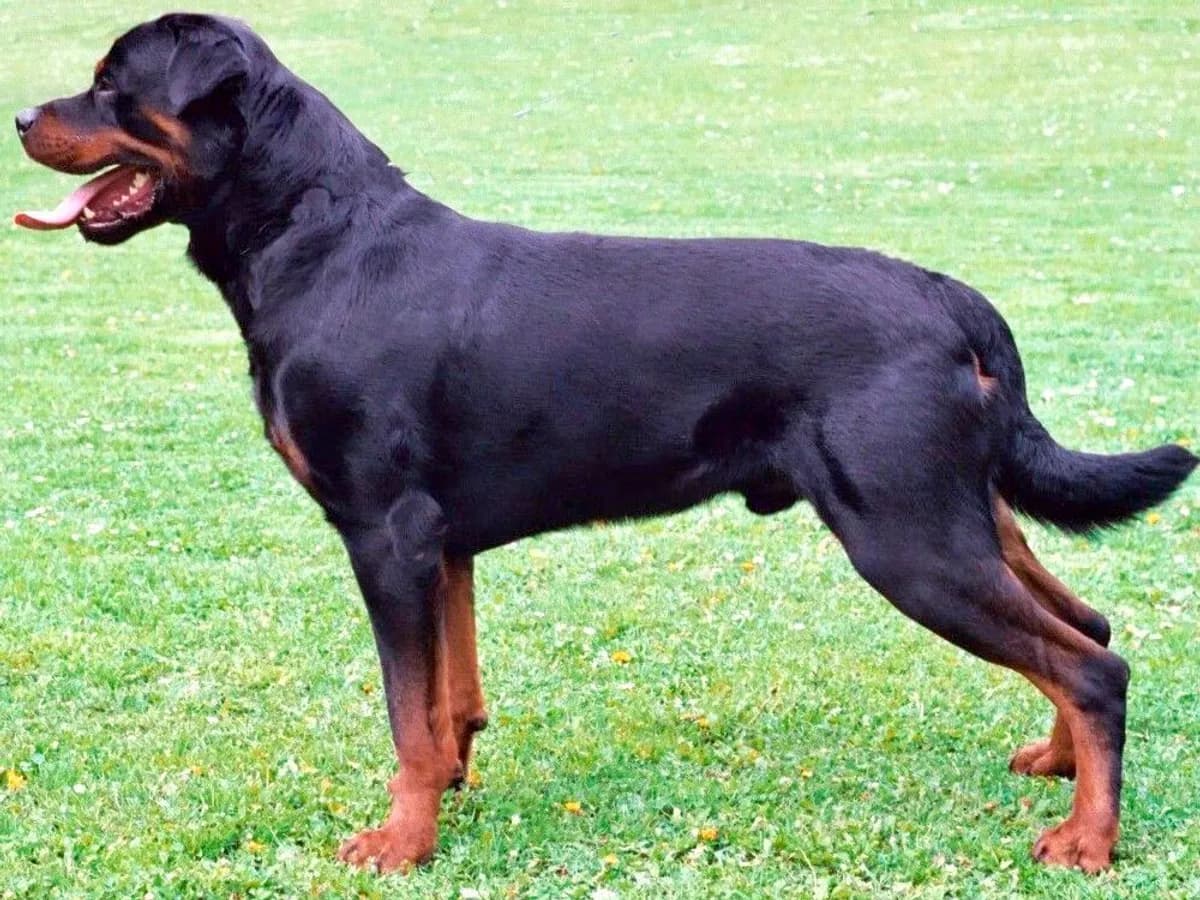
The Rottweiler descends from the droving dogs of the Roman legions, refined over centuries in the German market town of Rottweil. There the butchers' dogs drove cattle to market and reputedly carried the day's takings in purses tied to their collars. The railways nearly made the breed redundant before police and military service revived it in the early twentieth century.
Rottweilers are confident, intelligent and naturally protective dogs that retain a strong instinct to watch over their family and home. They form deeply loyal bonds with their household but can be reserved around strangers, so early, consistent socialisation and reward-based training are essential to raising a well-adjusted adult.
Their size, strength and guarding instincts mean Rottweilers do best with confident, experienced owners who provide structure and clear boundaries from puppyhood. Many thrive alongside older, dog-savvy children, and their strong food motivation makes mealtimes and food puzzles a useful training tool.
Common health conditions
Things Rottweiler owners commonly watch for. Guidance, not veterinary advice.
Hip and elbow dysplasia
Poorly formed hip or elbow joints that wear into arthritis as the years pass. Keep a Rottweiler lean, especially as a puppy, to reduce the load on developing joints.
Subaortic stenosis (heart)
A narrowing below the aortic valve that can cause a murmur or collapse. Choose breeders who screen stock through BVA and Kennel Club heart schemes.
Gastric dilatation-volvulus (bloat)
An emergency twisting of the stomach seen more often in deep-chested breeds. Split meals into smaller servings, use a slow-feeder bowl, and keep things restful around mealtimes.
Osteoarthritis/degenerative joint disease
One of the most commonly recorded disorders in UK Rottweilers. Maintain a lean body condition and a joint-support diet to manage wear on ageing joints.
Overweight and obesity
One of the most frequently recorded health problems in the breed, and a hearty appetite is behind it. Weigh meals and measure treats throughout life.
Feeding a Rottweiler
Rottweilers are large, muscular dogs with a robust appetite, and vets record excess weight among the most common conditions in the breed. Because they already carry substantial weight on joints prone to dysplasia, keeping them lean throughout life, rather than feeding to appetite, is one of the most protective things an owner can do. Feed puppies a large-breed formula with controlled calcium and phosphorus.
Rottweilers are deep-chested and carry a raised bloat risk. The day's food is better given as two or more smaller meals. A slow-feeder bowl reduces gulping, and vigorous exercise should stay an hour away from eating. Adults do well on a moderate-protein complete diet with added joint-support nutrients, with quantities checked regularly against body condition.
Every dog is different — weight, age and activity all shift what a Rottweiler needs. The turns these breed tendencies into a shortlist matched to your dog’s age, size, budget and needs.
Typical adult weight
35–60 kg
Est. daily calories
1,210–2,720 kcal
A broad guide for an average-activity adult in good body condition — not veterinary advice. Real needs vary with age, neutering, activity, health and body condition, so no two Rottweilers eat exactly the same. Get a personalised estimate or estimate feeding costs.


- Per day
- ~£2.02
- Per month
- ~£62
- Per year
- ~£739
A broad typical monthly budget guide, not a live price quote. Food format, calorie density, pack size and retailer pricing all change the real cost.
Find the right food for your Rottweiler
Foods ranked to your dog
Answer a few quick questions and the Food Finder ranks foods to your Rottweiler by score, price, life stage and fit.
Breed at a glance
- Exercise needs8/10
- Appetite8/10
- Trainability7/10
- Good with children6/10
- Shedding5/10
- Tolerates being alone3/10
The good & the worth-knowing
The good
- Deeply loyal and bonds closely with their family
- Intelligent and highly trainable with consistent, positive methods
- Low-maintenance short coat needing only weekly brushing

Worth knowing
- Needs an experienced, confident owner and thorough early socialisation
- Prone to joint problems and a shorter lifespan than many dogs of similar size
- Strong guarding instincts mean they're not the right fit for every household
Best matched accessories
All accessoriesThe collections that suit the breed, judged by the same independent standard.
Common owner questions
How much exercise does a Rottweiler need?
Rottweilers generally need at least two hours of exercise a day, split across walks, off-lead time in secure areas and mental stimulation such as training or scentwork. Adjust food intake alongside activity so they don't gain weight on quieter days.
Are Rottweilers prone to putting on weight?
Yes, excess weight is among the most commonly recorded conditions in Rottweilers seen by vets. Weighing out meals and limiting treats keep them in healthy condition, and our Food Finder can match a complete diet to their size and activity.
What should I feed a Rottweiler puppy?
We recommend a puppy formula for large breeds with calcium and phosphorus controlled, as it slows growth to a rate that's kinder to developing hips and elbows. Avoid free-feeding and stick to set meal times to build good habits early.
Are Rottweilers good family dogs?
With early socialisation, consistent training and an experienced owner, Rottweilers can be affectionate, loyal family dogs, and many do well with older, dog-savvy children. Given their size and protective instincts, supervise time with younger children.