


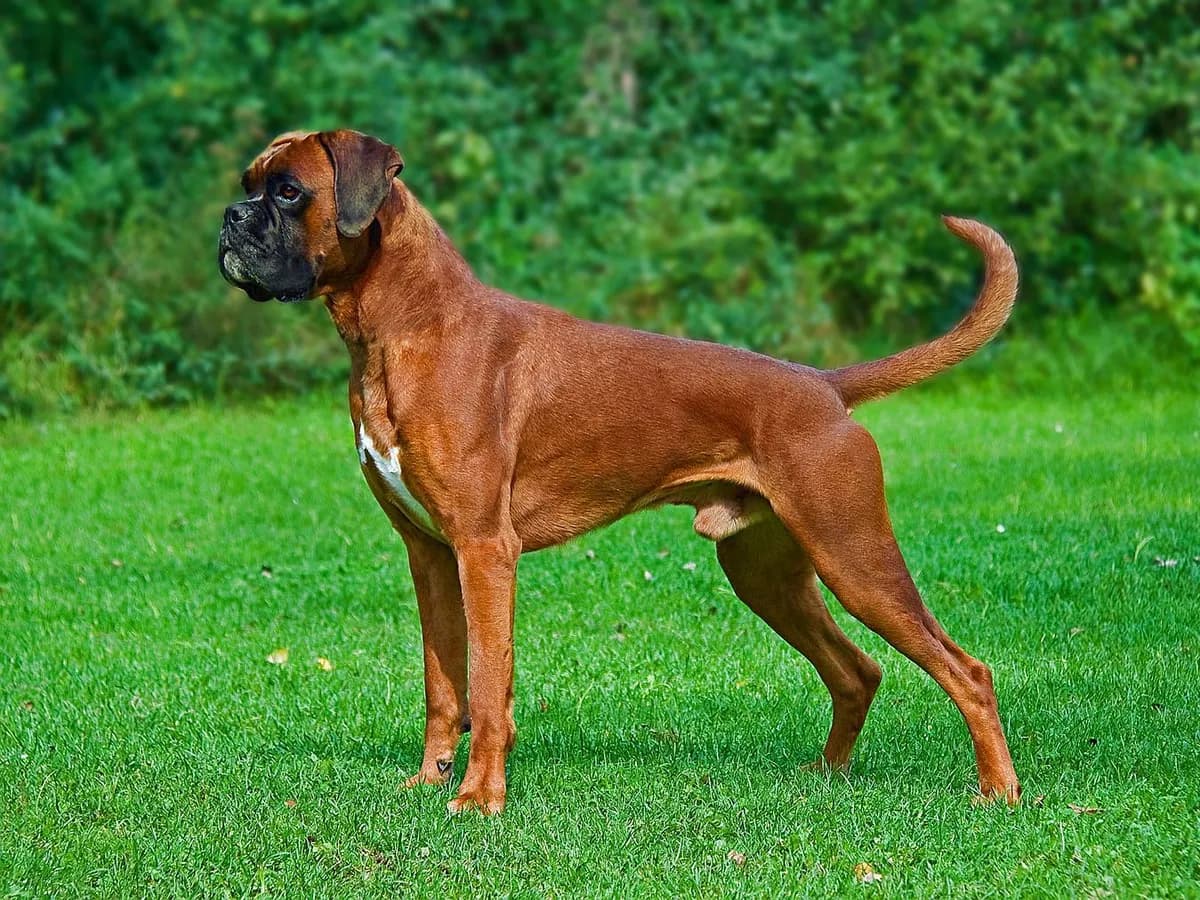

Most important facts
- Group
- Working
- Size
- Large
- Weight
- 25–32 kg
- Lifespan
- 10–12 years
- Coat
- Short
- Energy
- High
- Height
- 53–63 cm
- Colours
- Fawn or brindle, often with white
- Shedding
- Light
- Est. feeding cost
- ~£1.47 a day
- Gear to consider
- Slow-feeder bowl, durable chew toys, well-fitted harness
Typical dry food, adult
About the Boxer
The Boxer was developed in 1890s Munich from the Bullenbeisser, Germany's old boar-hunting mastiff, crossed with English Bulldog stock to make a trim, athletic working dog. It served as a messenger and guard dog through both world wars, which spread its reputation worldwide. The clownish streak is original to the breed, and no amount of soldiering ever trained it out.
Boxers are playful and endlessly people-oriented, keeping a puppyish enthusiasm well into adulthood. They are typically excellent with children when well socialised, and the energy level belongs in an active household that can meet it. The clowning is genuine and lifelong, and a bored Boxer will invent an audience if you don't provide one.
They can be strong-willed, particularly as boisterous adolescents, so consistent, positive training starts early. Deeply attached to their people, they cope badly with long hours alone, and the food should track what the dog actually does, not what the breed reputation suggests.
Common health conditions
Things Boxer owners commonly watch for. Guidance, not veterinary advice.
Hip dysplasia
A malformed hip joint that can lead to arthritis. Accurate portioning and a lean weight reduce the load.
Boxer cardiomyopathy (ARVC) and DCM
The breed carries specific predispositions to heart muscle disease, so regular vet checks matter and a healthy weight spares the heart.
Mast cell tumours and other cancers
Boxers see more of certain cancers than most breeds, so check for lumps regularly and keep up routine vet visits.
Gastric dilatation-volvulus (bloat)
A deep-chested breed at raised risk. Feed two or more smaller meals and keep vigorous exercise clear of mealtimes.
Feeding a Boxer
Muscular and energetic, Boxers still gain weight when intake outruns activity, so let the waistline check the portions and not the bag alone. The deep chest raises bloat risk. Break the day's food into two or more smaller meals, slow a gulper down and keep hard exercise away from mealtimes. Weigh the food rather than scooping, and split the treats out of the daily total.
Given the breed's known heart, cancer and skin tendencies, a diet built on quality animal protein with decent omega-3 levels supports coat, skin and general health. Watch the weight for life, because every spare kilo asks more of the joints and the heart.
Every dog is different — weight, age and activity all shift what a Boxer needs. The turns these breed tendencies into a shortlist matched to your dog’s age, size, budget and needs.
Typical adult weight
25–32 kg
Est. daily calories
940–1,700 kcal
A broad guide for an average-activity adult in good body condition — not veterinary advice. Real needs vary with age, neutering, activity, health and body condition, so no two Boxers eat exactly the same. Get a personalised estimate or estimate feeding costs.


- Per day
- ~£1.47
- Per month
- ~£45
- Per year
- ~£535
A broad typical monthly budget guide, not a live price quote. Food format, calorie density, pack size and retailer pricing all change the real cost.
Find the right food for your Boxer
Foods ranked to your dog
Answer a few quick questions and the Food Finder ranks foods to your Boxer by score, price, life stage and fit.
Breed at a glance
- Exercise needs8/10
- Appetite7/10
- Trainability6/10
- Good with children9/10
- Shedding3/10
- Tolerates being alone3/10
The good & the worth-knowing
The good
- Playful, loyal and wonderful with children
- An athletic partner for active owners
- A short, low-maintenance coat

Worth knowing
- Copes poorly with long stretches alone
- The short muzzle invites overheating
- Higher cancer and heart risks need monitoring
Best matched accessories
All accessoriesThe collections that suit the breed, judged by the same independent standard.



Common owner questions
How much should I feed my Boxer?
It depends on age, weight, activity and the food's calorie density, so the waistline is what to judge against. The Food Finder can match a suitable food and portion guide to your Boxer's size and life stage. Puppies do best on steady growth rather than fast.
Does feeding affect a Boxer's risk of bloat?
Yes. The deep chest raises the risk, so the day's food goes out as two or more smaller meals, a slow feeder helps a fast eater, and vigorous exercise stays away from mealtimes.
How much exercise does a Boxer need?
An hour or two of varied exercise and play a day is the minimum, plus mental stimulation. Adjust the food to how active yours actually is, or the weight arrives quietly. Warm days call for early walks and shade, because the short muzzle cools badly.
Are Boxers easy to train?
Clever and eager to please but strong-willed, especially through adolescence, so consistent reward-based training from puppyhood works best. Pay the training treats out of the daily allowance and the waistline stays honest. Short sessions beat long drills.