

Most important facts
- Group
- Utility
- Size
- Large
- Weight
- 21–35 kg
- Lifespan
- 12–14 years
- Coat
- Dense, curly
- Energy
- High
- Height
- 45–60 cm
- Colours
- All solid colours
- Shedding
- Light
- Est. feeding cost
- ~£1.33 a day
- Gear to consider
- Slicker brush and grooming comb, durable retrieving toys, slow-feeder bowl
Typical dry food, adult
About the Poodle
The Poodle began as a German duck-retrieving water dog, its name drawn from the German pudeln, to splash, before France adopted and refined it so thoroughly that it became the national dog. The famous clip started as function, keeping the joints and chest warm in cold water while freeing the legs to swim. Centuries as a circus performer and companion never blunted its working brain.
Poodles are sharp, quick-thinking dogs bred to work closely with people, originally as water retrievers. That intelligence means they pick up training fast, but also that they need a job, as a bored Poodle can become anxious, vocal or destructive. Pair daily exercise with puzzle feeders or scentwork.
They tend to be affectionate and sociable with their families, preferring to be included in daily life rather than left alone for long stretches. Consistent mealtimes and calm, unhurried feeding help this naturally alert breed feel settled.
Common health conditions
Things Poodle owners commonly watch for. Guidance, not veterinary advice.
Hip dysplasia
A joint condition affecting the hips, common in larger breeds. Accurate portioning keeps a Poodle lean and takes load off the joints.
Gastric dilatation-volvulus (bloat)
Deep-chested dogs like the Poodle are at higher risk of this emergency. Smaller meals, a slow-feeder bowl for fast eaters and quiet time after food all reduce the risk.
Addison's disease
An adrenal hormone disorder more common in Poodles than most breeds, with vague signs like intermittent vomiting or lethargy. Have persistent digestive upset checked by a vet rather than changing food alone.
Progressive retinal atrophy (PRA)
Sight fades gradually with this inherited eye condition. Before buying a puppy, look for parent dogs that have been health-tested and check the health scheme results.
Feeding a Poodle
Poodles are active, food-motivated dogs whose curly coat can disguise weight gain, so hands-on body condition checks matter more than eyeballing them. A complete diet with moderate-to-high protein suits their activity, with portions reviewed against actual exercise, since a Poodle running daily needs more than one on lead walks.
Because Poodles are a deep-chested breed with an elevated bloat risk, how they're fed matters as much as what they're fed. Give the daily ration as two or three smaller meals, put fast eaters on a slow-feeder bowl, and leave an hour either side of vigorous exercise. Hip dysplasia is a tendency in the breed, so calorie control through adolescence and joint-supporting nutrients are worth prioritising.
Every dog is different — weight, age and activity all shift what a Poodle needs. The turns these breed tendencies into a shortlist matched to your dog’s age, size, budget and needs.
Typical adult weight
21–35 kg
Est. daily calories
820–1,810 kcal
A broad guide for an average-activity adult in good body condition — not veterinary advice. Real needs vary with age, neutering, activity, health and body condition, so no two Poodles eat exactly the same. Get a personalised estimate or estimate feeding costs.


- Per day
- ~£1.33
- Per month
- ~£40
- Per year
- ~£485
A broad typical monthly budget guide, not a live price quote. Food format, calorie density, pack size and retailer pricing all change the real cost.
Find the right food for your Poodle
Foods ranked to your dog
Answer a few quick questions and the Food Finder ranks foods to your Poodle by score, price, life stage and fit.
Breed at a glance
- Exercise needs8/10
- Appetite6/10
- Trainability9/10
- Good with children7/10
- Shedding1/10
- Tolerates being alone3/10
The good & the worth-knowing
The good
- Highly intelligent and trainable, thriving on mental stimulation and structured activity
- Low-shedding coat that suits many owners who struggle with fur around the home
- Athletic and versatile, equally happy retrieving, swimming or working through agility

Worth knowing
- Grooming is a genuine ongoing commitment, with daily brushing plus regular professional clipping
- Needs a good hour or more of exercise and plenty of mental stimulation daily
- Prone to a spread of inherited conditions, including bloat, hip dysplasia and Addison's disease
Best matched accessories
All accessoriesThe collections that suit the breed, judged by the same independent standard.


Common owner questions
How much should I feed a Poodle?
It depends on their size and activity, as a Poodle doing an hour of running daily needs more than one on gentler walks. Feed to a lean, visible waist, not to the pack guideline exactly, and use our Food Finder to get a food and portion suited to your dog.
Are Poodles prone to bloat, and does feeding affect this?
Yes. As a deep-chested breed, Poodles carry a higher risk of gastric dilatation-volvulus than many breeds. Two or three smaller meals, a slow-feeder bowl for fast eaters, and rest around meals all help reduce the risk.
Do Poodles shed much?
Very little compared with most breeds. The curly coat sheds minimally but grows continuously, so it mats easily without daily brushing and regular professional clipping. That's different from being non-allergenic, and reactions still vary between allergy sufferers.
Are Poodles good with children and other pets?
Generally yes. Well-socialised Poodles tend to be sociable and eager to please, which makes them popular family dogs. Supervise time with young children, and keep treats consistent across the household so no one overfeeds.
Similar breeds
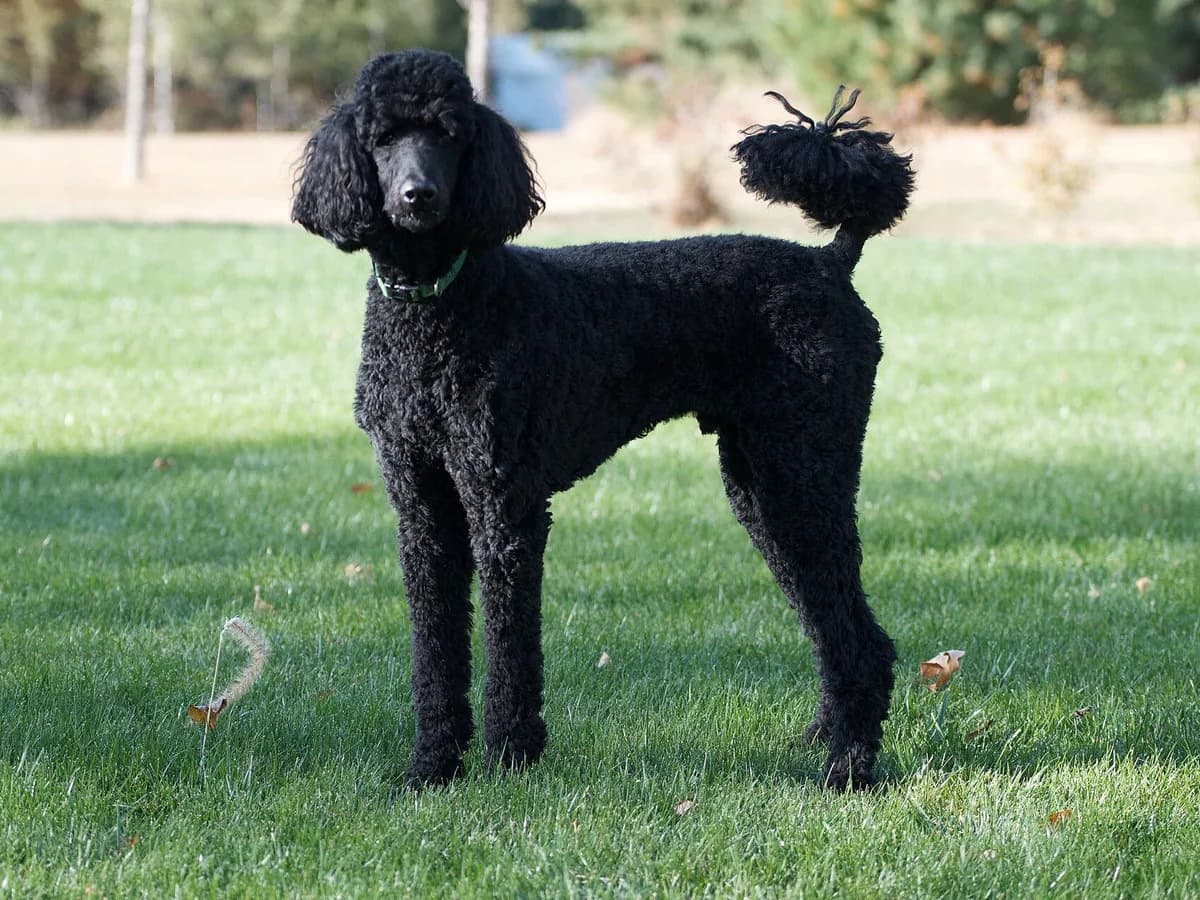
Photo: Tim Wilson from Blaine, MN, USA, CC BY 2.0, via Wikimedia Commons