


Most important facts
- Group
- Crossbreed
- Size
- Small
- Weight
- 3–7 kg
- Lifespan
- 12–15 years
- Coat
- Soft, curly to wavy
- Energy
- Moderate
- Height
- 23–30 cm
- Colours
- White, cream or apricot
- Shedding
- Light
- Est. feeding cost
- ~£0.38 a day
- Gear to consider
- Slicker brush and metal comb, lightweight no-pull harness, slow-feeder bowl or snuffle mat
Typical dry food, adult
About the Poochon
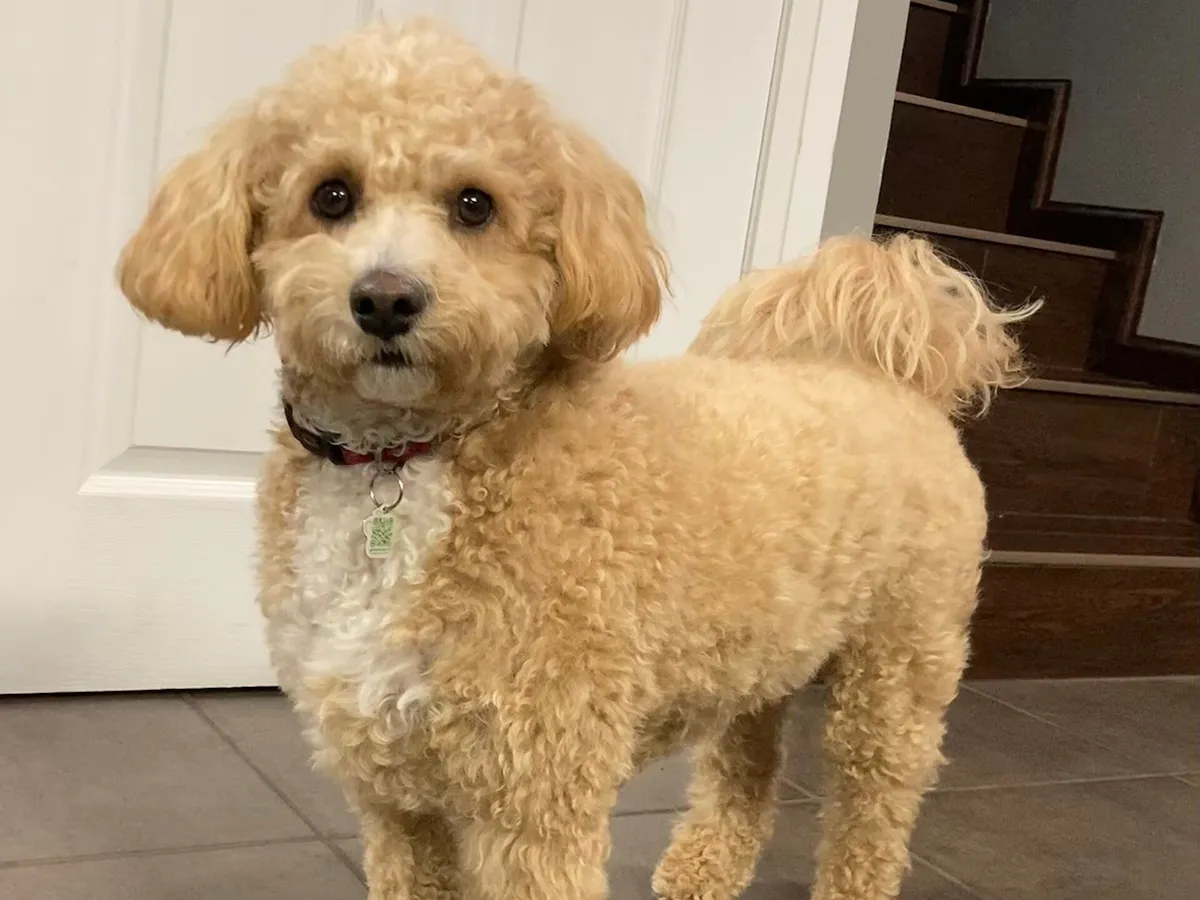
The Poochon, also known as the Bichpoo, is a designer cross between the Bichon Frise and a Toy or Miniature Poodle. It was first bred deliberately in Australia in the 1990s and quickly adopted by breeders in Britain and America. The aim was a small, cheerful companion pairing the Bichon's sunny sociability with the Poodle's cleverness and curl. The cross has no Kennel Club recognition, and no two litters come out quite alike.
Poochons are typically affectionate and eager to be involved in family life, a blend of the friendly Bichon temperament with Poodle intelligence. They bond closely with their owners, which makes them attentive, rewarding companions but can tip into clinginess or separation anxiety if alone time isn't introduced gradually from puppyhood.
Their trainability is generally high, and structured, reward-based sessions using part of the daily food allowance work well given how food-motivated they can be. Early socialisation channels their sociable nature positively around other dogs, visitors and children, and their moderate exercise needs make them adaptable to house or flat living with mental stimulation alongside walks.
Common health conditions
Things Poochon owners commonly watch for. Guidance, not veterinary advice.
Patellar luxation
Small crossbreeds with Poodle ancestry often get a kneecap that slips. Keep the Poochon lean and measure food rather than free-feeding.
Dental overcrowding and periodontal disease
Small jaws mean teeth sit close together and plaque builds quickly. Brush daily and use a dental-care diet or chews to slow tartar.
Ear infections
Floppy, hair-covered ear canals trap moisture and wax. Check regularly, and ask a vet or groomer about managing ear hair.
Progressive retinal atrophy (PRA)
Inherited from the Poodle side. Choose breeders who health-test parents, and report any night-vision changes to your vet promptly.
Atopic skin and allergies
Itchy skin and ear flare-ups are reasonably common. A consistent recipe with a well-defined protein source helps owners spot food-related flare-ups.
Feeding a Poochon
Poochons are small dogs with a correspondingly small daily calorie requirement, so it is easy to overfeed them by accident. A calorie-dense kibble fed by eye, not by weighed portion, is one of the quickest routes to a chunky Poochon. Weigh food to the packet guide, adjust for treats, and reassess body condition every few weeks to keep weight off knees prone to luxation.
Small-breed kibble with a smaller piece size suits their compact jaws and supports dental health, alongside brushing or dental chews. Because they can be prone to itchy skin and ear flare-ups, a diet with a single clearly named protein source makes it easier to identify and manage any food sensitivity. Consistent routines also suit their trainable temperament.
Every dog is different — weight, age and activity all shift what a Poochon needs. The turns these breed tendencies into a shortlist matched to your dog’s age, size, budget and needs.
Typical adult weight
3–7 kg
Est. daily calories
190–480 kcal
A broad guide for an average-activity adult in good body condition — not veterinary advice. Real needs vary with age, neutering, activity, health and body condition, so no two Poochons eat exactly the same. Get a personalised estimate or estimate feeding costs.
- Per day
- ~£0.38
- Per month
- ~£12
- Per year
- ~£139
A broad typical monthly budget guide, not a live price quote. Food format, calorie density, pack size and retailer pricing all change the real cost.
Find the right food for your Poochon
Foods ranked to your dog
Answer a few quick questions and the Food Finder ranks foods to your Poochon by score, price, life stage and fit.
Breed at a glance
- Exercise needs5/10
- Appetite6/10
- Trainability8/10
- Good with children7/10
- Shedding2/10
- Tolerates being alone3/10
The good & the worth-knowing
The good
- Low-shedding coat suits allergy-conscious households
- Affectionate, sociable temperament that generally does well with children
- Intelligent and food-motivated, making training relatively straightforward

Worth knowing
- Can develop separation distress if left alone for long periods
- Coat needs professional clipping every six to eight weeks to prevent matting
- Small jaws mean dental disease and tartar build-up need active management
Best matched accessories
All accessoriesThe collections that suit the breed, judged by the same independent standard.
Common owner questions
How much should I feed my Poochon?
Start from the feeding guide on the packet for your dog's current weight, then weigh portions and don't estimate by eye. Poochons are small enough that a few extra grams a day adds up. Check body condition monthly and use the Food Finder to match a recipe to their size and activity.
Do Poochons shed much?
Very little. Their curly, Poodle-influenced coat sheds minimally but mats easily, so it needs regular brushing at home and a professional clip roughly every six to eight weeks.
Are Poochons easy to train?
Generally yes. They inherit the Poodle's intelligence and eagerness to please, which makes food-based reward training effective. Just factor small training treats into the daily calorie allowance so meals stay balanced.
Can Poochons be left alone during the day?
Not for long stretches. This is a companion breed that can develop separation distress, so build up alone time gradually and use a puzzle feeder or snuffle mat for short absences to help them settle.
Similar breeds
Photo: JazzHandsIncarnate, CC BY-SA 4.0, via Wikimedia Commons