
Most important facts
- Group
- Working
- Size
- Giant
- Weight
- 50–70 kg
- Lifespan
- 8–10 years
- Coat
- Short, dense
- Energy
- Low
- Height
- 60–75 cm
- Colours
- Grey, blue, black or mahogany
- Shedding
- Light
- Est. feeding cost
- ~£2.30 a day
- Gear to consider
- Ground-level slow-feeder bowl, orthopaedic dog bed, heavy-duty flat collar and lead
Typical dry food, adult
About the Neapolitan Mastiff
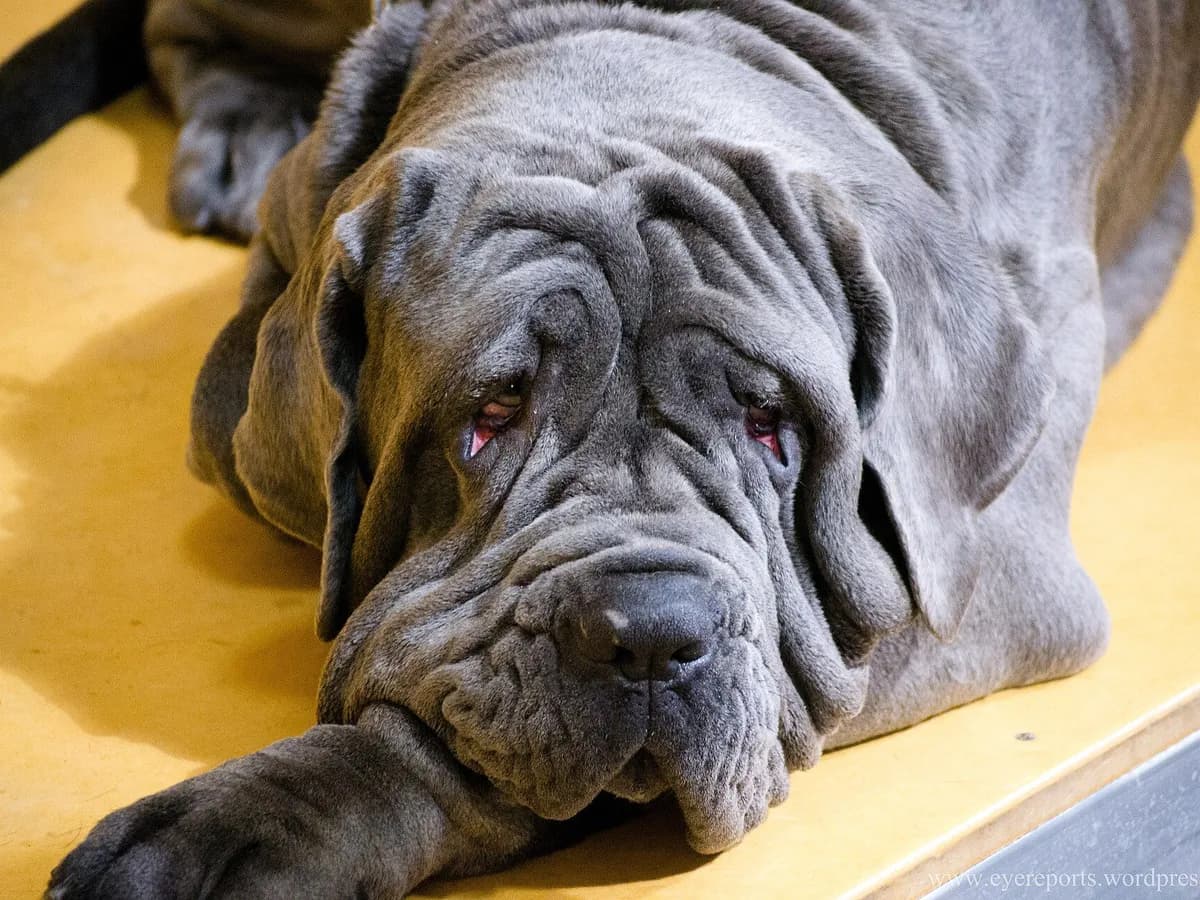
The Neapolitan Mastiff descends from the molosser guard dogs of ancient Rome, whose type survived for centuries on the farms and estates around Naples. The breed was rediscovered by the outside world at a Naples show in 1946, when the writer Piero Scanziani championed it and drew up the first standard. Its cascading wrinkles and watchful bulk have been unmistakable ever since, including a film turn as Hagrid's dog Fang.
Neapolitan Mastiffs are calm, dignified and deeply loyal to their families, with a natural wariness of strangers that suits their traditional guardian role. Indoors they are surprisingly low-key, content to settle heavily near their people rather than seek constant activity, matching a genuinely low exercise requirement for such a large dog.
Early socialisation and consistent, gentle handling matter given their sheer size and strength as adults. They can be stubborn, so build training around calm, reward-based routines and leave force out of it. Mealtimes are a useful, low-arousal way to reinforce basic manners without overexciting a dog this size.
Common health conditions
Things Neapolitan Mastiff owners commonly watch for. Guidance, not veterinary advice.
Gastric dilatation-volvulus (bloat)
As a large, deep-chested breed, they are at real risk of this life-threatening emergency. A ground-level slow-feeder bowl works best, with the day's food given as two or three smaller meals, and your dog should rest around mealtimes.
Hip and elbow dysplasia
Common in heavy, fast-growing large breeds. Keep puppies on a controlled-growth diet and avoid excess weight to protect developing joints.
Skin fold dermatitis
The loose, wrinkled skin and heavy jowls trap moisture and debris. Check and dry the folds daily to prevent soreness and infection.
Eyelid abnormalities (entropion/ectropion) and cherry eye
The excess facial skin can cause eyelids to roll in or sag outward, irritating the eye. Have a vet check the eyes at routine appointments.
Dilated cardiomyopathy
A weakening of the heart muscle seen in the breed. A lean body condition asks less of the heart, so keep weight firmly in check.
Feeding a Neapolitan Mastiff
The skeleton matures slowly in a giant breed like this, and growing too fast strains developing hips and elbows. Puppies do best on a giant-breed puppy food that keeps calcium and calories in check. Adults have a naturally low activity level for their size, making it easy to overfeed, so judge portions by body condition, with ribs easy to feel under that heavy skin.
The breed carries a known bloat risk. Serve two or three portions a day from a ground-level bowl and skip the single large meal. A slow-feeder helps any dog that gulps. Avoid vigorous play or walks straight after eating. A joint-supporting diet and a lean weight do more for this breed's comfort than any other feeding decision.
Every dog is different — weight, age and activity all shift what a Neapolitan Mastiff needs. The turns these breed tendencies into a shortlist matched to your dog’s age, size, budget and needs.
Typical adult weight
50–70 kg
Est. daily calories
1,580–2,370 kcal
A broad guide for an average-activity adult in good body condition — not veterinary advice. Real needs vary with age, neutering, activity, health and body condition, so no two Neapolitan Mastiffs eat exactly the same. Get a personalised estimate or estimate feeding costs.
- Per day
- ~£2.30
- Per month
- ~£70
- Per year
- ~£840
A broad typical monthly budget guide, not a live price quote. Food format, calorie density, pack size and retailer pricing all change the real cost.
Find the right food for your Neapolitan Mastiff
Foods ranked to your dog
Answer a few quick questions and the Food Finder ranks foods to your Neapolitan Mastiff by score, price, life stage and fit.
Breed at a glance
- Exercise needs3/10
- Appetite8/10
- Trainability4/10
- Good with children6/10
- Shedding3/10
- Tolerates being alone4/10
The good & the worth-knowing
The good
- Calm, low-energy temperament indoors once past puppyhood
- Deeply loyal and protective of its family
- Minimal coat grooming thanks to a short, smooth coat
Worth knowing
- Very heavy drooling and slobber, especially after eating or drinking
- Short lifespan for the size and effort of ownership
- Skin folds and joints need daily, lifelong maintenance and vet monitoring
Best matched accessories
All accessoriesThe collections that suit the breed, judged by the same independent standard.
Common owner questions
How much exercise does a Neapolitan Mastiff actually need?
Around an hour a day split into shorter, gentle walks is usually plenty for an adult. They are not an athletic breed, and puppies need exercise carefully restricted while their joints develop.
Why does my Neapolitan Mastiff drool so much, and does it affect feeding?
The loose lips and jowls mean drooling is normal and heaviest around mealtimes and after drinking. Keep a towel handy and use an easy-clean bowl. It doesn't reflect anything wrong with the diet.
How do I know if my Neapolitan Mastiff is a healthy weight?
Their heavy, wrinkled build makes it hard to judge by eye. Feel along the ribs and waistline regularly and adjust portions to keep them lean, as extra weight strains joints already supporting serious bulk. Our Food Finder can help match a diet to their current condition.
What should I feed to help reduce the risk of bloat?
Two or three smaller meals suit them better, fed from a slow-feeder bowl placed on the ground. Avoid exercise for an hour or two either side of meals. A vet can also discuss preventative gastropexy surgery for high-risk individuals.