


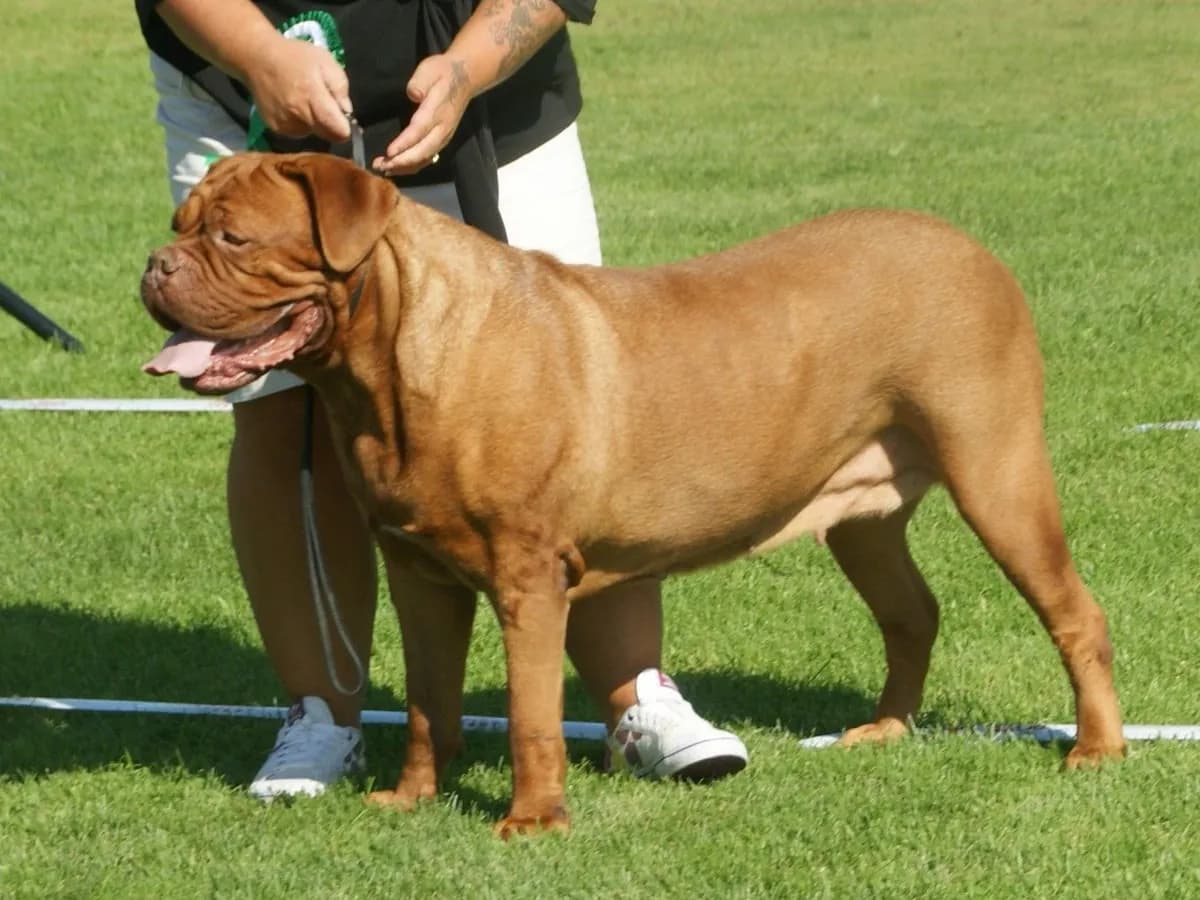

Most important facts
- Group
- Working
- Size
- Giant
- Weight
- 45–65 kg
- Lifespan
- 5–8 years
- Coat
- Short, fine
- Energy
- Moderate
- Height
- 58–68 cm
- Colours
- Shades of fawn, mahogany to light
- Shedding
- Moderate
- Est. feeding cost
- ~£2.22 a day
- Gear to consider
- Slow-feeder bowl, orthopaedic dog bed, wide-fit no-pull harness
Typical dry food, adult
About the Dogue de Bordeaux
The Dogue de Bordeaux is one of France's oldest breeds, with mastiff-type dogs recorded around Bordeaux for many centuries, employed to guard estates and vineyards, drive cattle and, in darker times, fight in pits. The modern breed was standardised in the late nineteenth century and nearly vanished after the Second World War before French enthusiasts revived it. The 1989 film Turner and Hooch introduced it to a worldwide audience.
Despite the imposing, wrinkled appearance, Dogues de Bordeaux are typically calm, affectionate and deeply loyal, often shadowing their owners around the house. They can be wary of strangers and other dogs, so early socialisation is important, and their sheer size and strength mean confident, consistent handling from puppyhood is essential.
This is not usually a breed for first-time owners. The stubborn streak needs patient, reward-based training, and the heavy drooling and occasional snoring are worth being prepared for. Fed and exercised sensibly, most settle into placid, home-loving companions that are gentle with familiar children, with play always supervised.
Common health conditions
Things Dogue de Bordeaux owners commonly watch for. Guidance, not veterinary advice.
Hip and elbow dysplasia
Joint conformation can be imperfect, as in most giant breeds. Keep a Dogue lean from puppyhood through adulthood to reduce strain on developing and ageing joints.
Cardiac disease (including sub-aortic stenosis and dilated cardiomyopathy)
Heart conditions are more prevalent in this breed than most. Book regular vet check-ups and maintain a healthy weight to spare the heart.
Skin fold dermatitis
Deep facial and body wrinkles trap moisture and debris. Clean and dry the folds daily, and feed a diet that supports healthy skin.
Brachycephalic-related breathing difficulty
The broad, shortened muzzle can restrict airflow. Avoid strenuous exercise in warm weather and slow down fast eaters to limit air-gulping.
Bloat (gastric dilatation-volvulus)
Deep-chested giants carry a higher bloat risk. Feed smaller, more frequent meals rather than one large bowl and rest your dog after eating.
Feeding a Dogue de Bordeaux
Dogues grow into a huge adult frame, so calcium and calories need holding in check through puppyhood. A large-breed puppy formula slows bone growth and protects developing joints. Overfeeding a Dogue puppy is one of the most common and avoidable contributors to later hip and elbow problems.
As adults they have a moderate appetite for their size and gain weight easily if exercise dips, so ribs should stay easy to feel and portions adjusted regularly rather than left on a fixed measure. Divide the day's food across two or more smaller meals, pick one that supports joints and heart, and keep vigorous exercise away from mealtimes.
Every dog is different — weight, age and activity all shift what a Dogue de Bordeaux needs. The turns these breed tendencies into a shortlist matched to your dog’s age, size, budget and needs.
Typical adult weight
45–65 kg
Est. daily calories
1,460–2,560 kcal
A broad guide for an average-activity adult in good body condition — not veterinary advice. Real needs vary with age, neutering, activity, health and body condition, so no two Dogue de Bordeauxes eat exactly the same. Get a personalised estimate or estimate feeding costs.


- Per day
- ~£2.22
- Per month
- ~£67
- Per year
- ~£810
A broad typical monthly budget guide, not a live price quote. Food format, calorie density, pack size and retailer pricing all change the real cost.
Find the right food for your Dogue de Bordeaux
Foods ranked to your dog
Answer a few quick questions and the Food Finder ranks foods to your Dogue de Bordeaux by score, price, life stage and fit.
Breed at a glance
- Exercise needs5/10
- Appetite6/10
- Trainability5/10
- Good with children6/10
- Shedding4/10
- Tolerates being alone3/10
The good & the worth-knowing
The good
- Deeply affectionate and loyal towards their family
- Naturally protective without being highly vocal
- Low grooming needs thanks to a short coat

Worth knowing
- Short lifespan compared with most breeds, so health monitoring needs to start early
- Heavy drooling and snoring that some owners find hard to live with
- Powerful, stubborn streak that needs confident, consistent handling
Best matched accessories
All accessoriesThe collections that suit the breed, judged by the same independent standard.


Common owner questions
How much should I feed a Dogue de Bordeaux?
Follow the feeding guide on a complete giant-breed food, adjusted to keep your Dogue lean, since excess weight strains the joints and heart. Splitting the daily allowance across two or more meals also reduces bloat risk. Our Food Finder can help match a food to their life stage and size.
Is the Dogue de Bordeaux prone to health problems?
Yes, this is one of the shorter-lived giant breeds, with a particular tendency towards heart disease, hip and elbow dysplasia and skin fold infections. Regular vet checks, a healthy weight and daily fold cleaning all help manage the risks.
How much exercise does a Dogue de Bordeaux need?
An hour a day is usually enough, spread over a couple of walks, with some training and play alongside. They are not a high-endurance breed and can overheat quickly with their short muzzle, so keep exercise moderate and out of the midday heat.
Do Dogues de Bordeaux put on weight easily?
Yes, many carry weight easily once past the puppy stage, so check body condition regularly and treat any fixed portion as a starting point. A giant-breed food fed to condition, and not by the bag guide alone, keeps weight healthier for the joints and heart.