

Most important facts
- Group
- Working
- Size
- Large
- Weight
- 32–47 kg
- Lifespan
- 12–15 years
- Coat
- Wiry, double-layered
- Energy
- High
- Height
- 60–70 cm
- Colours
- Black or pepper and salt
- Shedding
- Light
- Est. feeding cost
- ~£1.79 a day
- Gear to consider
- Slow-feeder or puzzle bowl (bloat prevention), durable chew and tug toys, sturdy no-pull harness
Typical dry food, adult
About the Giant Schnauzer
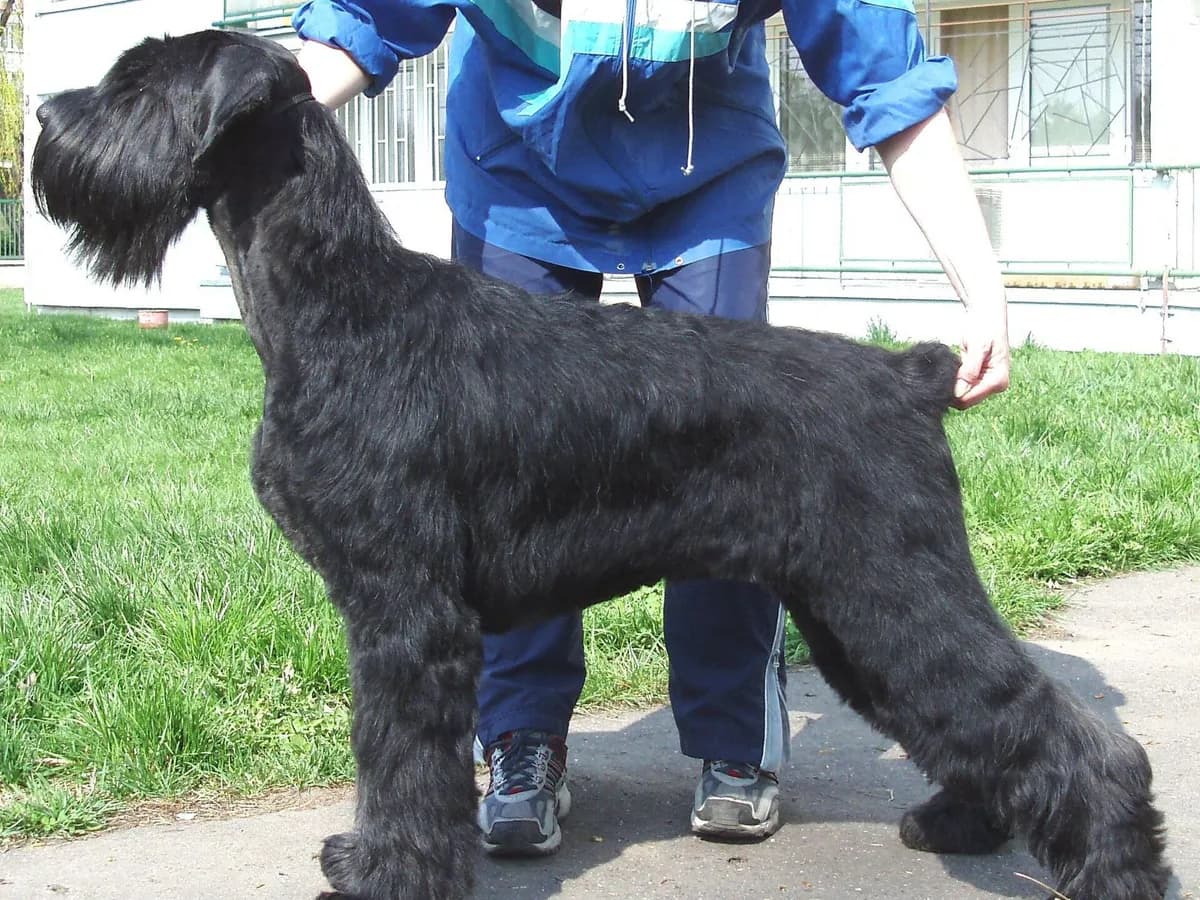
The Giant Schnauzer was developed in rural Bavaria as a cattle-droving and guard dog, created by crossing the standard Schnauzer with larger working breeds of the region. As droving declined it found new work guarding breweries and butchers' yards, and its intelligence later earned it a place in German police and military service. It remains a capable working dog as well as a devoted, if demanding, companion.
Bred to guard livestock and property, the Giant Schnauzer is watchful, confident and deeply loyal to its own family, though naturally reserved with strangers. This isn't a breed that switches off easily. It needs an owner with the time and experience to provide consistent guidance, since a bored Giant Schnauzer can become stubborn or destructive.
With proper socialisation from puppyhood, the breed tends to be affectionate and steady at home, doing best with older children who understand how to interact with a large, boisterous dog. Their intelligence makes them highly trainable in the right hands, and food-based reward training suits them well, provided treats are factored into daily feeding.
Common health conditions
Things Giant Schnauzer owners commonly watch for. Guidance, not veterinary advice.
Hip dysplasia
Loose joints of this kind often end in arthritis. Keep this large, active breed lean and feed joint-supporting nutrients to manage the strain on the hips.
Gastric dilatation-volvulus (bloat)
The deep chest here brings a real risk of this stomach twist, which is life-threatening. Give two or three smaller meals from a slow-feeder bowl, and keep your dog resting around mealtimes.
Hypothyroidism
Weight gain and a dull coat in middle age can point to an underactive thyroid. Report unexplained weight changes to your vet, as diet alone won't correct a hormonal cause.
Dilated cardiomyopathy
A heart-muscle condition seen in the breed. Discuss diet quality and any heart-support nutrients with your vet as part of overall management.
Feeding a Giant Schnauzer
A Giant Schnauzer's energy needs are substantial but shouldn't be met with oversized single meals. This is a deep-chested breed at recognised bloat risk. Give two or three modest meals from a slow-feeder bowl, and keep strenuous exercise a clear hour from mealtimes. A complete diet with moderate, balanced protein and fat suits its steady working energy.
Because the breed is prone to hip dysplasia, a food with an appropriate calcium and phosphorus balance and joint support is worth prioritising, particularly through the rapid puppy growth phase. Aim for ribs you can feel under the hand but cannot see, and use the Food Finder to match a diet to this breed's size and activity.
Every dog is different — weight, age and activity all shift what a Giant Schnauzer needs. The turns these breed tendencies into a shortlist matched to your dog’s age, size, budget and needs.
Typical adult weight
32–47 kg
Est. daily calories
1,130–2,260 kcal
A broad guide for an average-activity adult in good body condition — not veterinary advice. Real needs vary with age, neutering, activity, health and body condition, so no two Giant Schnauzers eat exactly the same. Get a personalised estimate or estimate feeding costs.


- Per day
- ~£1.79
- Per month
- ~£55
- Per year
- ~£655
A broad typical monthly budget guide, not a live price quote. Food format, calorie density, pack size and retailer pricing all change the real cost.
Find the right food for your Giant Schnauzer
Foods ranked to your dog
Answer a few quick questions and the Food Finder ranks foods to your Giant Schnauzer by score, price, life stage and fit.
Breed at a glance
- Exercise needs8/10
- Appetite7/10
- Trainability7/10
- Good with children6/10
- Shedding2/10
- Tolerates being alone3/10
The good & the worth-knowing
The good
- Loyal, protective and deeply bonded to its family
- Highly intelligent with strong working ability and trainability
- Low-shedding wiry coat that suits some allergy-conscious households
Worth knowing
- Needs an experienced, consistent handler who can match its intelligence and strong will
- High daily exercise and mental-stimulation requirements of two hours or more
- The wiry coat needs regular stripping or clipping to stay in good condition
Best matched accessories
All accessoriesThe collections that suit the breed, judged by the same independent standard.
Common owner questions
How much should I feed a Giant Schnauzer?
Portion by what your dog weighs now and how active it is at this age, and check body condition regularly by feeling for the ribs. Splitting the daily total into two or three meals helps manage bloat risk. The Food Finder can suggest a starting point for this breed's size.
Are Giant Schnauzers prone to bloat?
Yes, gastric dilatation-volvulus is a real risk in this deep-chested breed, a medical emergency. Feeding smaller, more frequent meals, using a slow-feeder bowl, and avoiding vigorous exercise straight after eating are the main precautions.
Do Giant Schnauzers need a lot of exercise?
Yes, most do best with well over an hour of exercise a day, plus thinking work like training games or scentwork. An under-exercised Giant Schnauzer can become bored and destructive, so activity should factor into how much you feed.
Are Giant Schnauzers easy to train?
They're highly intelligent but strong-willed, so they respond best to an experienced owner using consistent, reward-based methods from puppyhood. Food-motivated training works well, provided treats come out of the day's overall allowance.