

Icepaw
Icepaw Reset Pure 23/11 review
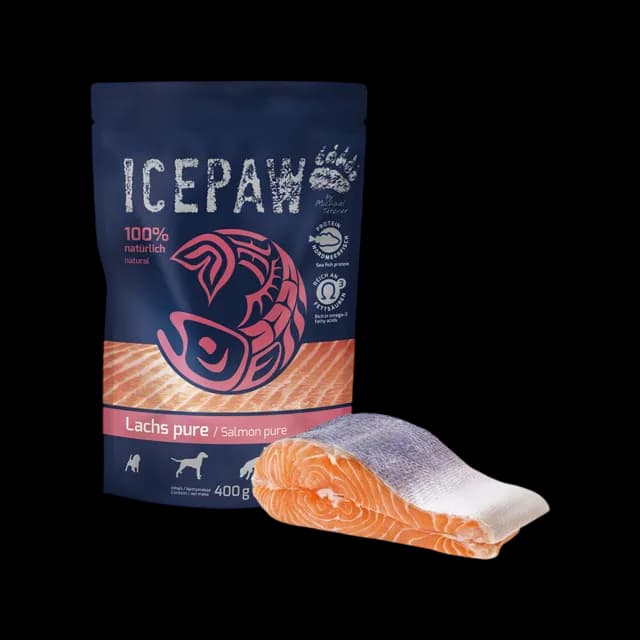
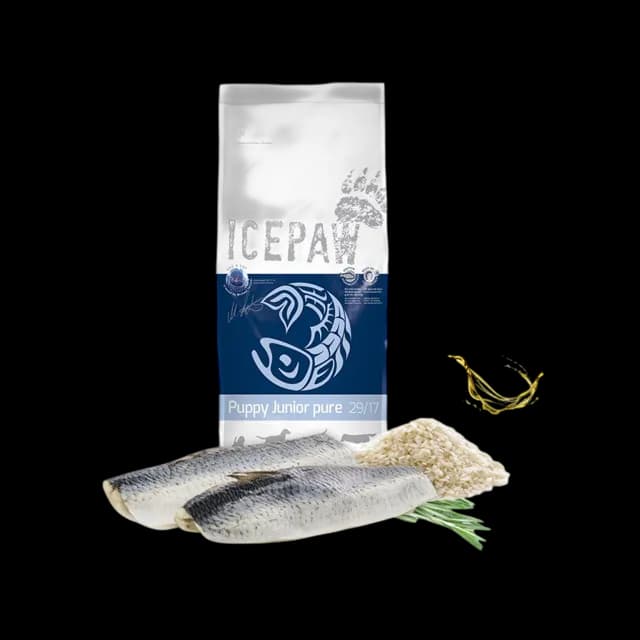
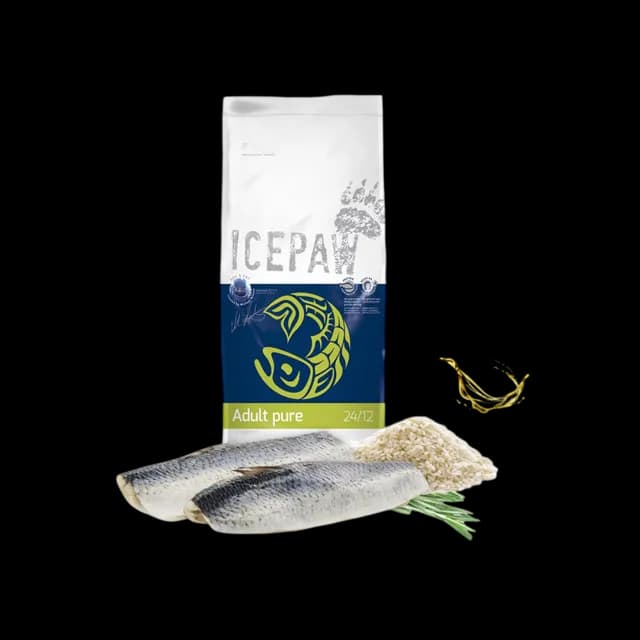
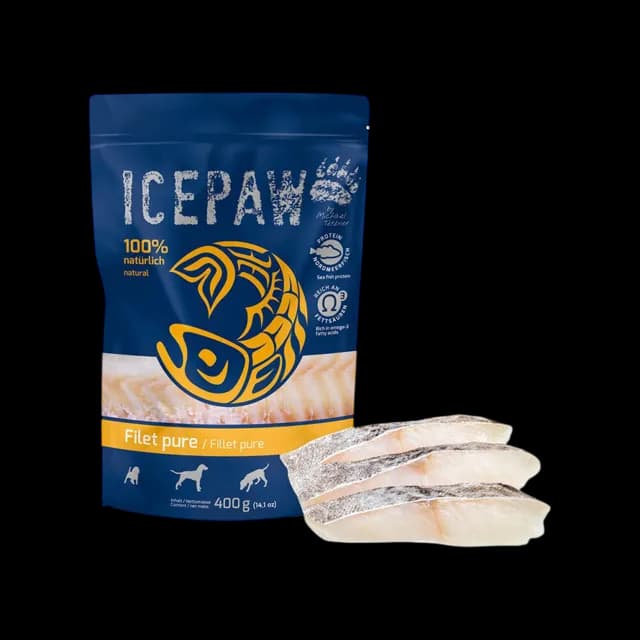
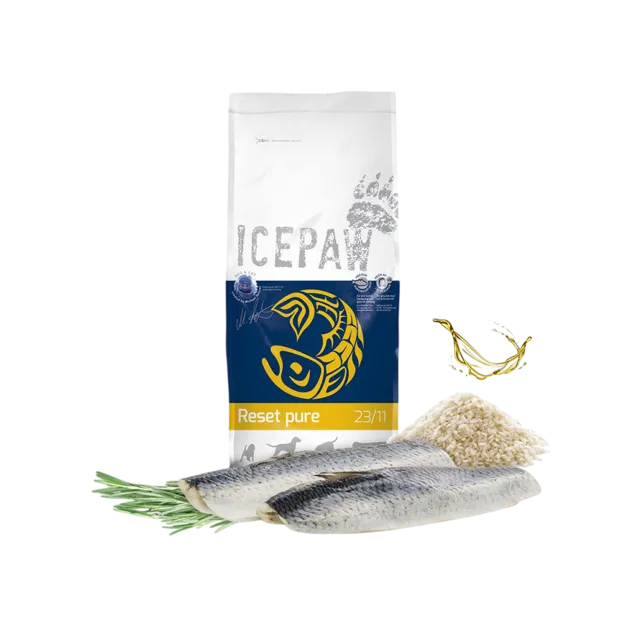
Icepaw Reset Pure 23/11 takes the same short fish and rice recipe and eases it down a notch, protein to 23% and fat to 11%. Herring fish meal at 23% is still the only named animal, and salmon oil at 4% still carries the marine fats. The vitamin and mineral panel is the same thorough one, right down to a cobalt entry. It finishes in our Average band.
Our view
Likely to suit
When you want a leaner everyday bowl without swapping your dog onto something unfamiliar, this keeps things simple.
- Dogs that need fewer calories per mouthful, with fat at 11% and energy at 339 kcal per 100 grams
- Fish eaters, since herring meal is the one named animal in the recipe
- Owners who would rather have a short list of familiar ingredients than a long tail of botanicals
- Dogs whose coats answer to marine oils, with salmon oil at 4% declared on the label
Worth watching
A leaner recipe brings a few consequences with it, and they are worth reading first.
- Ruling one particular meat in or out is beyond this label, since the animal fat comes with no species attached
- Three rice entries between them carry most of the bowl, and carbohydrate finishes at 51.9% of dry matter
- Protein converts to 25.3% of dry matter, gentle for a dry food, which is worth watching on a dog doing a full day's work
- The glucosamine here is declared at 0.01%, a token amount rather than a joint programme
Written by our editorial team. Independent guidance, not veterinary advice.
How this scores
How we scoreThe Details
Dog fit
When you want a leaner everyday bowl without swapping your dog onto something unfamiliar, this keeps things simple. A leaner recipe brings a few consequences with it, and they are worth reading first.
Dry
Adult
Toy
Herring
The score, in context
Our reading places this in our Average band, one step below the Good band the median adult dry food occupies.
What holds it there is easy enough to point at. Rice in three grinds does a great deal of the carrying, carbohydrate ends up above the 46.2% typical of an adult dry food, and the fat goes unnamed. What it gets right is a single named fish at the front, moisture declared on the label and an additive panel dosed line by line.
What's in it
Ingredients, as declared: Fish meal (herring) 23%, rice 22%, rice flour 22%, animal fat, broken rice 6%, salmon oil 4%, dried beet pulp, linseed oil 0.20%, glucosamine HCI 0.01%, yucca schidigera 0.01%
Named ingredients
Nutritional additives
Vitamin a 18000 I.e. Vitamin D3 1800 I.e. Vitamin E 330 mg, Vitamin B1 8.6 mg, Vitamin B2 12.9 mg, Vitamin B6 4.6 mg, Vitamin B12 72 Mcg, Taurin 2000 mg, Vitamin C 200 mg, Choline Chloride 960 mg, D Pantothenic Acid 24 mg, Nicotinic Acid 54 mg, Folic Acid 1.4 mg, Biotin 480 Mcg, Iron as Iron-II-Sulphate (E1) 91 mg, Zinc as Zinc Sulphate (E6) 160 mg, Manganese as Manganese-II-Oxide (E5) 33 mg, Copper as Copper-II-Sulphate, Pentahydrate (E4) 16 mg, Cobalt as Cobalt-II-Sulphate (E3) 1 mg, Iodine as Potassium Iodide (E2) 1.5 mg, Selenium as Sodium Selenite (E8) 0.3 mg.
Ingredient notes
The whole animal story is herring fish meal at 23%. Naming the fish, when the label could have said fish meal and stopped, is a good habit to see. Fish meal is a concentrated way to buy protein, most of its water having left before it reaches the mixer. Herring brings its own oils along with it.
Rice does the rest of the work: rice at 22%, rice flour at 22% and broken rice at 6%. Broken rice is simply grain that fractured during milling, nutritionally the same as the whole thing. As cereals go, rice is one of the gentler ones for a dog to break down. The consequence is carbohydrate at 51.9% of dry matter, above what an adult dry food usually runs.
Protein at 23% and fat at 11% are what set this apart from the fuller version of the recipe, converting to 25.3% and 12.1% of dry matter. That makes for a gentler bowl. It is useful for the dog who gains weight just looking at a biscuit, and a reason to keep the scoop honest for the one that burns through everything it eats.
Salmon oil at 4% and linseed oil at 0.20% supply the omega 3s, marine and plant respectively, and dried beet pulp adds the fibre that holds a stool together. Yucca schidigera at 0.01% is the familiar small entry aimed at stool odour rather than nutrition.
The vitamin and mineral panel is thorough for a recipe this short. Taurine at 2000mg per kilo, vitamin E at 330mg, vitamin C at 200mg and a full B group are all printed with figures beside them, vitamin B12 included at 72 micrograms. Cobalt appears at 1mg, which plenty of labels leave out. Selenium comes as sodium selenite at 0.3mg, the form the great majority of kibbles use.
The gap is the same one the range carries throughout: animal fat, with no species named. On a label where everything else is specific it stands out, and it matters only if you are working to keep a particular meat out of your dog's diet.
Price and value
£9.83 a kilo, sold in a 2kg bag.
Take a 15kg adult in moderate condition needing around 840 kcal a day (110 × bodyweight^0.75, the standard maintenance estimate) and the daily figure comes to about £2.43, on roughly 248 grams of food. The label carries no portion table of its own, so weigh it out and watch the waistline for the first fortnight.
Nutritional analysis
Declared analysis
Estimated using Modified Atwater factors*
23%
11%
3.5%
6.3%
9%
Dry weight
25.3%
12.1%
3.8%
6.9%
51.9%
As-fed composition
Estimated breakdown of the finished product by ingredient category, from the declared ingredient list and ingoing weights. These are estimates, not measurements.
23%
62.9%
14.1%
Pricing & size
- Pack size
- 2 kg
- Retailer pricing
- Coming soon
Live retailer pricing is not yet available for this food. Prices, cost per day and where to buy will appear here once retailer data is live.
Ingredients and nutrition are taken from manufacturer data. Retailer pricing is not yet live for this food.
Related dog food guides
Ranked shortlists that include foods like this one.