


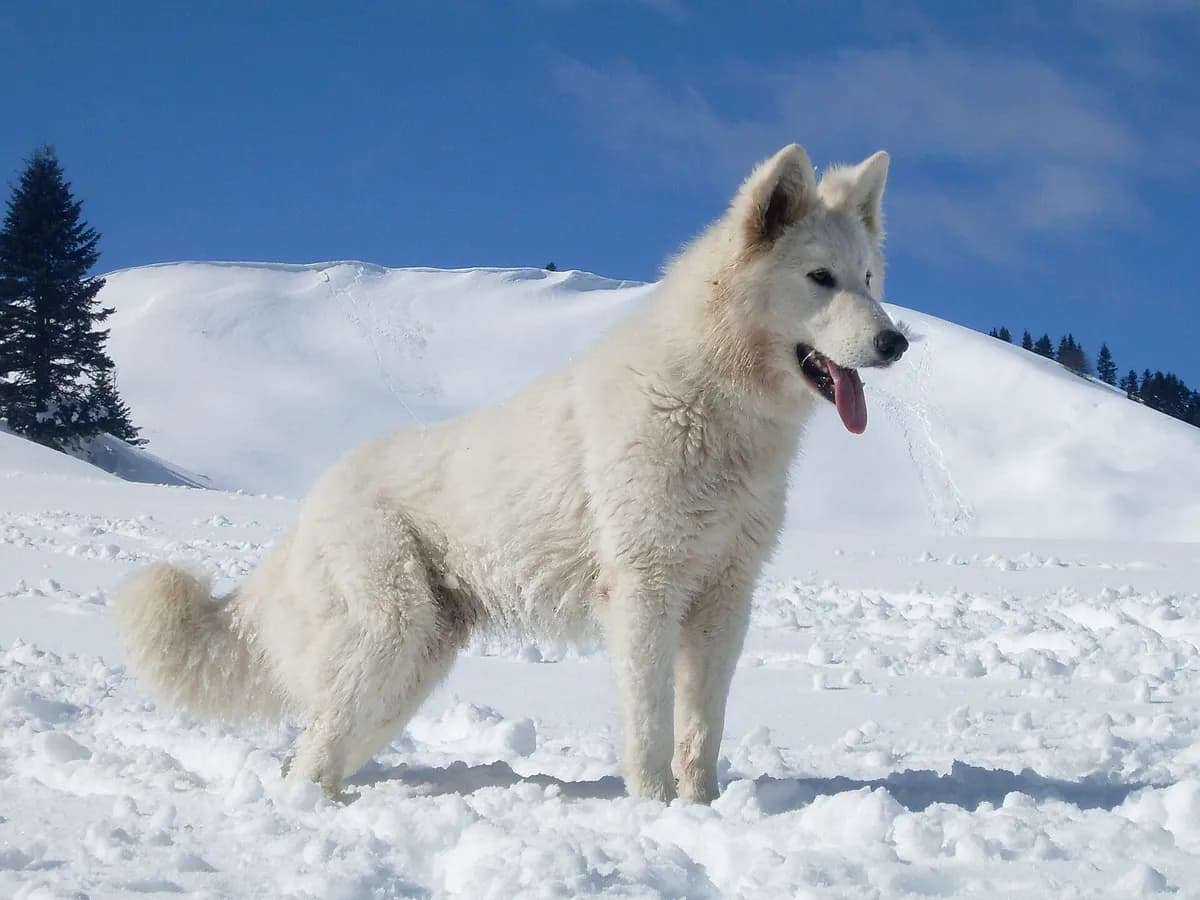

Most important facts
- Group
- Pastoral
- Size
- Large
- Weight
- 25–40 kg
- Lifespan
- 12–14 years
- Coat
- Medium-length
- Energy
- High
- Height
- 53–66 cm
- Colours
- White
- Shedding
- Heavy
- Est. feeding cost
- ~£1.49 a day
- Gear to consider
- Undercoat deshedding brush, joint supplement, slow-feeder bowl
Typical dry food, adult
About the White Swiss Shepherd
The White Swiss Shepherd descends from the white-coated German Shepherd lines barred from the German show ring in the 1930s. American and Canadian fanciers kept them going before the dogs returned to Europe, where Swiss breeders developed the modern breed from an imported dog named Lobo. International recognition came in 2003 and Kennel Club recognition in 2017, making it one of the newest breeds on the register.
White Swiss Shepherds are typically confident, intelligent and affectionate, forming close bonds with their family and generally showing a gentler, less guarding-oriented temperament than some German Shepherd lines. They are quick learners who enjoy having a job, whether formal training, agility or structured daily routines, and are sociable with people they know.
This is not a breed suited to being left to its own devices for long, as their intelligence and strong attachment mean boredom can lead to anxiety or destructive behaviour. Early socialisation, consistent training and plenty of outlets channel their energy positively, supported by a predictable routine.
Common health conditions
Things White Swiss Shepherd owners commonly watch for. Guidance, not veterinary advice.
Hip and elbow dysplasia
Choose parents screened through BVA and KC hip and elbow schemes, and keep this fast-growing breed lean as a puppy without excess calcium or energy intake.
Degenerative myelopathy (DM)
A progressive spinal cord condition seen in the wider German Shepherd gene pool, usually from around eight years. A DNA test is available, so choose tested breeding stock.
Bloat (gastric dilatation-volvulus)
As a large, deep-chested breed, White Swiss Shepherds carry an elevated bloat risk. Feed two or more smaller meals, slow the feeding pace, and rest around mealtimes.
Skin and digestive sensitivity
Some individuals show food-related skin irritation or loose stools. Keep the diet consistent with a clearly listed protein source, and change foods gradually.
Feeding a White Swiss Shepherd
White Swiss Shepherds are large, athletic dogs with genuine working energy. Most adults do well on a food with moderate-to-high protein and a fat level matched to the activity they actually get. This is a deep-chested breed with elevated bloat risk. Strenuous exercise stays an hour away from eating, and the day's food comes as two or three smaller meals.
Growth needs particular care, as this large breed can put on size quickly, and controlling growth rate with a large-breed puppy formula reduces strain on developing hips and elbows. In adulthood, ribs should be easy to feel but not see, with portions adjusted promptly if weight creeps on, and sensitive dogs often do best on a diet with a single clear protein source.
Every dog is different — weight, age and activity all shift what a White Swiss Shepherd needs. The turns these breed tendencies into a shortlist matched to your dog’s age, size, budget and needs.
Typical adult weight
25–40 kg
Est. daily calories
940–2,000 kcal
A broad guide for an average-activity adult in good body condition — not veterinary advice. Real needs vary with age, neutering, activity, health and body condition, so no two White Swiss Shepherds eat exactly the same. Get a personalised estimate or estimate feeding costs.


- Per day
- ~£1.49
- Per month
- ~£45
- Per year
- ~£544
A broad typical monthly budget guide, not a live price quote. Food format, calorie density, pack size and retailer pricing all change the real cost.
Find the right food for your White Swiss Shepherd
Foods ranked to your dog
Answer a few quick questions and the Food Finder ranks foods to your White Swiss Shepherd by score, price, life stage and fit.
Breed at a glance
- Exercise needs8/10
- Appetite7/10
- Trainability9/10
- Good with children7/10
- Shedding7/10
- Tolerates being alone3/10
The good & the worth-knowing
The good
- Highly trainable and eager to work, thriving on structured activity and mental stimulation
- Loyal, affectionate family companion, typically gentle and patient with children
- Striking, distinctive appearance with a low tendency towards reactivity

Worth knowing
- High daily exercise and mental stimulation needs, so not a breed for sedentary households
- Seasonal heavy shedding from the double coat requires regular brushing
- Strong family bond can tip into separation distress if left alone without preparation
Best matched accessories
All accessoriesThe collections that suit the breed, judged by the same independent standard.




Common owner questions
How much exercise does a White Swiss Shepherd need?
Plan on an hour or two of varied exercise a day as a minimum, with free running and mental work such as scent games. Size meals to that activity level and not to the breed's athletic looks.
Are White Swiss Shepherds prone to bloat?
Yes, their large, deep chest puts them in a higher-risk group for gastric dilatation-volvulus. Feeding smaller, more frequent meals, slowing down fast eaters, and avoiding exercise immediately after food are practical ways to reduce the risk.
Do White Swiss Shepherds shed a lot?
They carry a dense double coat and shed year-round with heavier seasonal blowouts, so regular brushing, more often in spring and autumn, keeps loose hair manageable. Our Food Finder can also flag coat-supporting foods if shedding seems excessive.
What should I feed a White Swiss Shepherd puppy?
Growth rate and calcium intake matter for this fast-growing breed, so use a large-breed puppy food to protect developing hips and elbows. Check portions against your puppy's current weight rather than adult target weight.