

Most important facts
- Group
- Pastoral
- Size
- Large
- Weight
- 23–34 kg
- Lifespan
- 12–14 years
- Coat
- Long
- Energy
- Moderate
- Height
- 51–61 cm
- Colours
- Sable and white, tricolour or blue merle
- Shedding
- Heavy
- Est. feeding cost
- ~£1.44 a day
- Gear to consider
- Slicker brush and undercoat rake, well-fitted harness for lead-work, weatherproof coat or towel for wet-weather walks
Typical dry food, adult
About the Rough Collie
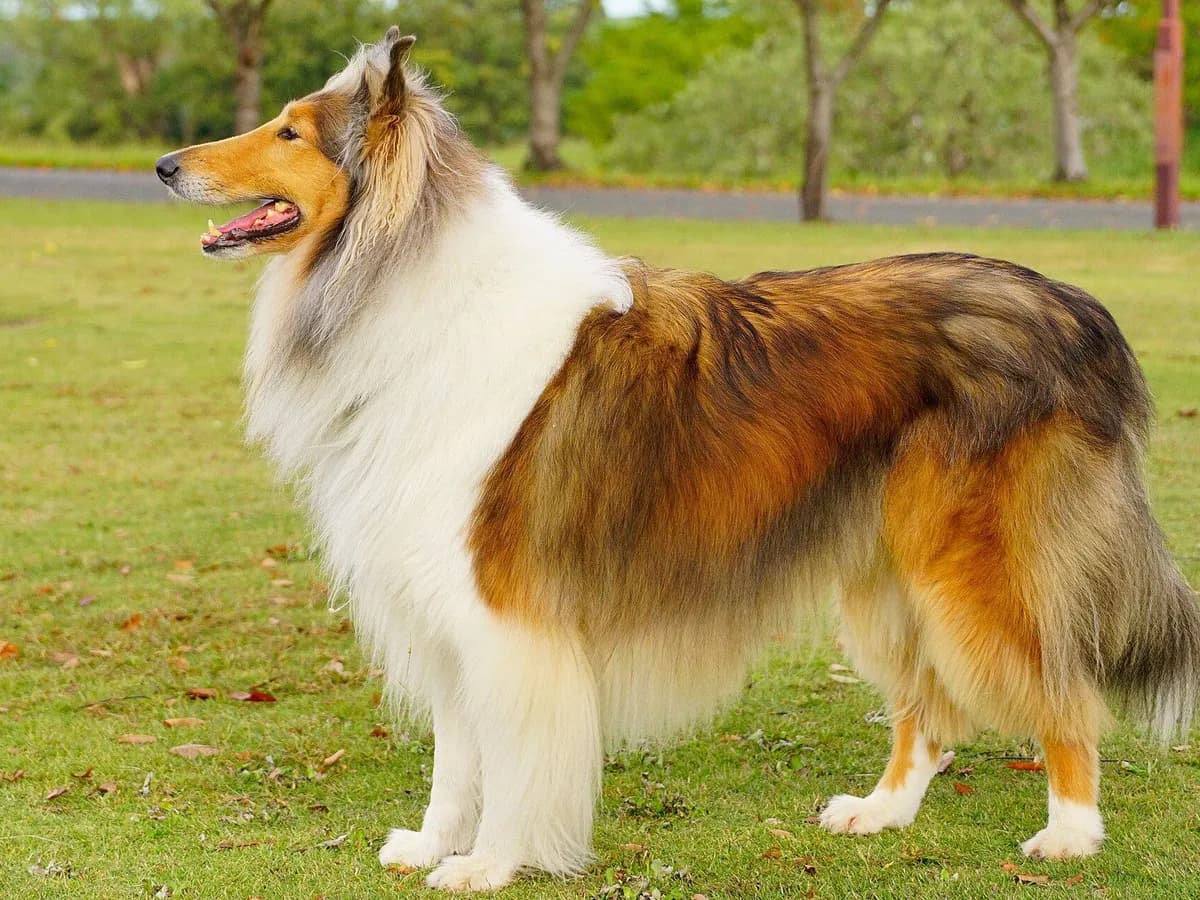
The Rough Collie herded sheep in the Scottish Highlands and Borders for generations before Queen Victoria fell for the breed at Balmoral and made it fashionable in Victorian drawing rooms. Global fame arrived with Lassie, whose films and television series fixed the breed's image as the loyal, clever family guardian for half a century. Most owners will tell you the reputation is deserved.
The Rough Collie is best known for its gentle nature and deep loyalty to its family, a temperament popularised accurately, by most owners' accounts, by Lassie. They tend to be intelligent and eager to please, making them quick to train, and they're naturally watchful without being aggressive once introduced to strangers.
This is a breed that bonds closely and prefers company, so long stretches regularly left alone don't suit them and can bring on vocal or anxious behaviour. Their herding ancestry means many are sound-sensitive and highly attuned to household routine, including feeding times, so a consistent daily schedule brings out the best in their biddable temperament.
Common health conditions
Things Rough Collie owners commonly watch for. Guidance, not veterinary advice.
Collie eye anomaly (CEA)
An inherited condition affecting development of the eye, present from birth. Choose breeders who screen for it, as it cannot be corrected later.
Progressive retinal atrophy (PRA)
A separate inherited eye disease causing gradual vision loss. DNA testing in breeding stock is the main safeguard.
MDR1 gene mutation
Many Rough Collies carry a gene variant that makes them oversensitive to certain common medications and wormers. Always tell your vet the breed before any prescription.
Hip dysplasia
A recognised risk in this larger, active breed. Feed for controlled growth in puppyhood and keep adults lean to protect the joints.
Feeding a Rough Collie
Despite their herding heritage, most Rough Collies today lead a fairly moderate-activity family life, so energy intake should match the dog in front of you rather than the breed's history. A complete food with moderate protein and fat, fed in portions weighed to body condition, suits most adults. The thick double coat hides early weight gain, so regular hands-on rib checks matter more than with a short-coated breed.
Because hip dysplasia is a recognised risk, puppies do best on a food formulated for larger-breed growth, with calories and calcium held down to avoid over-rapid growth. Adults often benefit from joint-support nutrients and omega-3s for the coat, and owners should flag the MDR1 gene mutation to their vet before starting any new supplement or medication.
Every dog is different — weight, age and activity all shift what a Rough Collie needs. The turns these breed tendencies into a shortlist matched to your dog’s age, size, budget and needs.
Typical adult weight
23–34 kg
Est. daily calories
880–1,580 kcal
A broad guide for an average-activity adult in good body condition — not veterinary advice. Real needs vary with age, neutering, activity, health and body condition, so no two Rough Collies eat exactly the same. Get a personalised estimate or estimate feeding costs.
- Per day
- ~£1.44
- Per month
- ~£44
- Per year
- ~£527
A broad typical monthly budget guide, not a live price quote. Food format, calorie density, pack size and retailer pricing all change the real cost.
Find the right food for your Rough Collie
Foods ranked to your dog
Answer a few quick questions and the Food Finder ranks foods to your Rough Collie by score, price, life stage and fit.
Breed at a glance
- Exercise needs6/10
- Appetite6/10
- Trainability8/10
- Good with children8/10
- Shedding9/10
- Tolerates being alone4/10
The good & the worth-knowing
The good
- Gentle, affectionate and deeply loyal to their family
- Intelligent and quick to learn, responding well to consistent, positive training
- Alert and watchful without typically being aggressive, a reassuring presence at home

Worth knowing
- Sheds heavily and continuously, with a much heavier seasonal blow, so grooming is a real commitment
- Bonds closely with family and can become vocal or anxious if regularly left alone
- Many carry the MDR1 gene, needing extra caution around certain medicines and wormers
Best matched accessories
All accessoriesThe collections that suit the breed, judged by the same independent standard.
Common owner questions
How much should I feed a Rough Collie?
There's no single number that fits every dog. Portion by your Collie's actual weight and activity, then adjust as you go by feeling for a defined waist and ribs you can feel but not see. Our Food Finder can help match a suitable food and starting portion to your dog's size and life stage.
Are Rough Collies prone to putting on weight?
They can be, partly because that dense coat makes early weight gain hard to spot by eye. Regular hands-on condition checks, a food matched to their actual activity level, and consistent portioning rather than free-feeding all help keep them at a healthy weight.
How much grooming does a Rough Collie need?
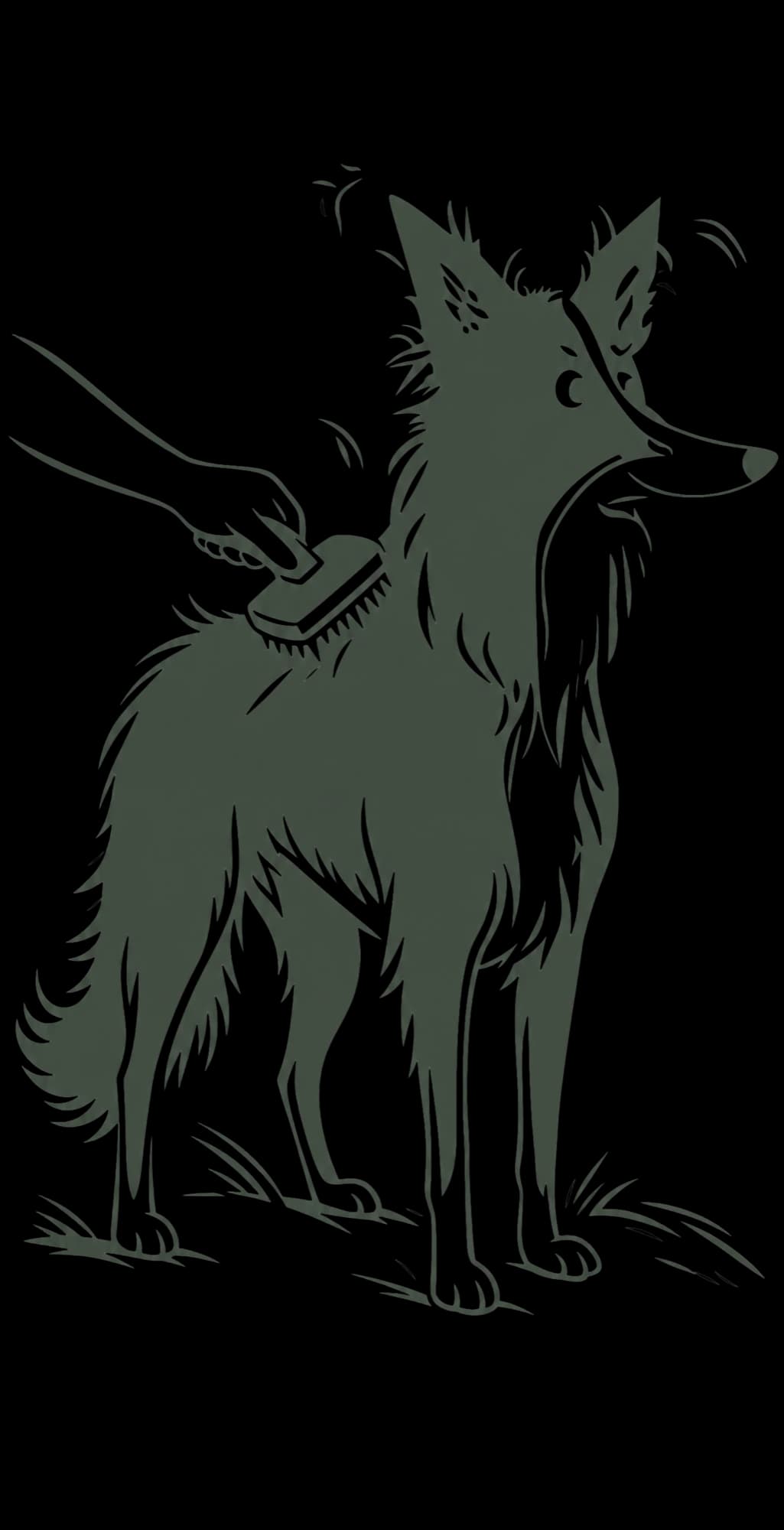
A lot. Daily brushing is realistic to prevent matting behind the ears, legs and britches, with a more thorough session weekly and considerably more during the twice-yearly coat blow.
Are Rough Collies good with children?
Generally yes. They're typically gentle and patient, and they often do particularly well with older children who understand calm handling. As with any breed, supervise time with very young children.