


Most important facts
- Group
- Terrier
- Size
- Small
- Weight
- 6–9 kg
- Lifespan
- 12–15 years
- Coat
- Harsh
- Energy
- Moderate
- Height
- 25–28 cm
- Colours
- White
- Shedding
- Light
- Est. feeding cost
- ~£0.58 a day
- Gear to consider
- Slicker brush and grooming comb, secure/escape-proof harness, durable chew and puzzle toys
Typical dry food, adult
About the West Highland Terrier
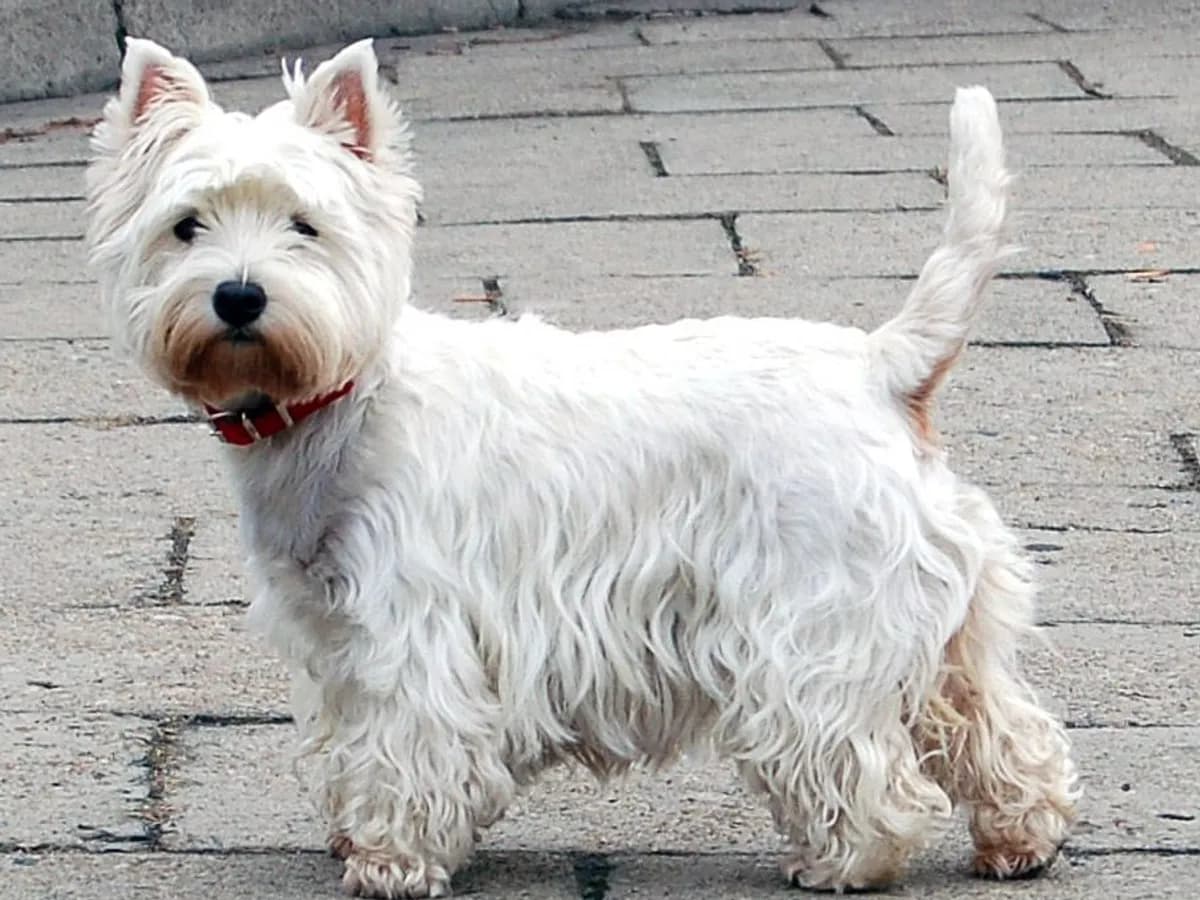
The West Highland White Terrier owes its snowy coat to tragedy. Tradition tells that Colonel Malcolm of Poltalloch bred only white dogs after a reddish terrier of his was shot in error for a fox. The Westie shares its roots with the Cairn and Scottie in the Highlands' vermin-hunting terriers. It went on to become one of Britain's favourite small dogs and an advertising icon for everything from dog food to whisky.
Bred originally to hunt small vermin in the Scottish Highlands, the Westie is alert, brave and impressively self-assured for its size. They're affectionate and devoted to their family, often forming a strong bond with their owner, but they keep a genuinely independent, sometimes stubborn streak that reflects their working terrier roots.
That same food motivation which makes training rewarding, as Westies respond well to treat-based positive reinforcement, is also why weight creep is a common issue in the breed. Early socialisation is worthwhile given their strong prey drive around smaller pets, and consistent, calm handling channels their confident, occasionally vocal nature into good manners.
Common health conditions
Things West Highland Terrier owners commonly watch for. Guidance, not veterinary advice.
Skin allergies (atopic dermatitis)
Westies are prone to itchy, inflamed skin. Feed a diet rich in omega-3 and omega-6 fatty acids, chosen with the vet, alongside any prescribed treatment.
Craniomandibular osteopathy ("lion jaw")
An inherited bone disorder affecting the jaw in puppies, causing pain and difficulty eating. Offer soft or soaked food temporarily while it resolves with age.
Luxating patella
A kneecap that pops out of its groove. Keep a Westie at a lean, healthy weight to reduce the strain on the joint.
Idiopathic pulmonary fibrosis ("Westie lung")
A progressive breathing condition seen more often in this breed. Maintain a healthy weight to avoid extra demand on the lungs and heart, and flag any persistent cough.
Feeding a West Highland Terrier
Westies are a small breed with moderate energy needs, and they do well on an energy-dense complete food in carefully measured small-breed portions. Their compact size means even a few extra treats or table scraps tip the scales quickly. Splitting daily food into two meals suits their fast metabolism and helps curb the food-driven begging this breed is known for.
Skin allergies are common in Westies, and many owners find a diet with good levels of omega-3 and omega-6 fatty acids supports a healthier coat and skin barrier. Take veterinary advice on the choice if flare-ups occur. Because the breed can also develop joint issues such as luxating patella, keeping them lean through accurate feeding is one of the most effective things an owner can do.
Every dog is different — weight, age and activity all shift what a West Highland Terrier needs. The turns these breed tendencies into a shortlist matched to your dog’s age, size, budget and needs.
Typical adult weight
6–9 kg
Est. daily calories
320–580 kcal
A broad guide for an average-activity adult in good body condition — not veterinary advice. Real needs vary with age, neutering, activity, health and body condition, so no two West Highland Terriers eat exactly the same. Get a personalised estimate or estimate feeding costs.


- Per day
- ~£0.58
- Per month
- ~£18
- Per year
- ~£210
A broad typical monthly budget guide, not a live price quote. Food format, calorie density, pack size and retailer pricing all change the real cost.
Find the right food for your West Highland Terrier
Foods ranked to your dog
Answer a few quick questions and the Food Finder ranks foods to your West Highland Terrier by score, price, life stage and fit.
Breed at a glance
- Exercise needs6/10
- Appetite8/10
- Trainability6/10
- Good with children6/10
- Shedding3/10
- Tolerates being alone4/10
The good & the worth-knowing
The good
- Affectionate, loyal companion with a big, confident personality
- Low-shedding wiry coat can suit owners managing mild allergies
- Compact size makes them adaptable to smaller homes while still hardy and active

Worth knowing
- Wiry coat needs regular brushing and professional stripping or trimming roughly every six weeks
- Independent, feisty terrier streak can make training a battle of wills without consistency
- Can be vocal and quick to react to other small animals given their hunting instincts
Best matched accessories
All accessoriesThe collections that suit the breed, judged by the same independent standard.



Common owner questions
How much exercise does a Westie actually need?
Around an hour a day is typical, split between lead walks and safe off-lead time, plus some digging or sniffing games to satisfy their terrier instincts. They're energetic for their size despite being a small dog.
Are West Highland Terriers good with children?
Often yes with proper socialisation, but their feisty, independent streak means time with very young children should be supervised, as Westies won't always tolerate rough handling.
Why does my Westie always seem hungry?
Terriers are notoriously food-motivated, and because Westies are small, it takes very little extra food to cause weight gain. Feed to their body condition rather than the bag guidelines alone, and our Food Finder can help match portions to their size and activity.
What's the best food for a Westie prone to skin problems?
Look for a complete food with good omega-3 and omega-6 fatty acid levels, and consider a sensitive-skin or limited-ingredient formula if allergies are suspected, always alongside your vet's guidance. Try the Food Finder to filter for skin-and-coat-friendly options.
Similar breeds
Photo: Christopher Walker from Krakow, Poland, CC BY 2.0, via Wikimedia Commons