
Most important facts
- Group
- Terrier
- Size
- Small
- Weight
- 8.5–10.5 kg
- Lifespan
- 12–14 years
- Coat
- Wiry, dense double coat
- Energy
- Moderate
- Height
- 25–28 cm
- Colours
- Black, wheaten or brindle
- Shedding
- Light
- Est. feeding cost
- ~£0.66 a day
- Gear to consider
- Slow-feeder bowl, weatherproof coat, grooming/stripping kit
Typical dry food, adult
About the Scottish Terrier
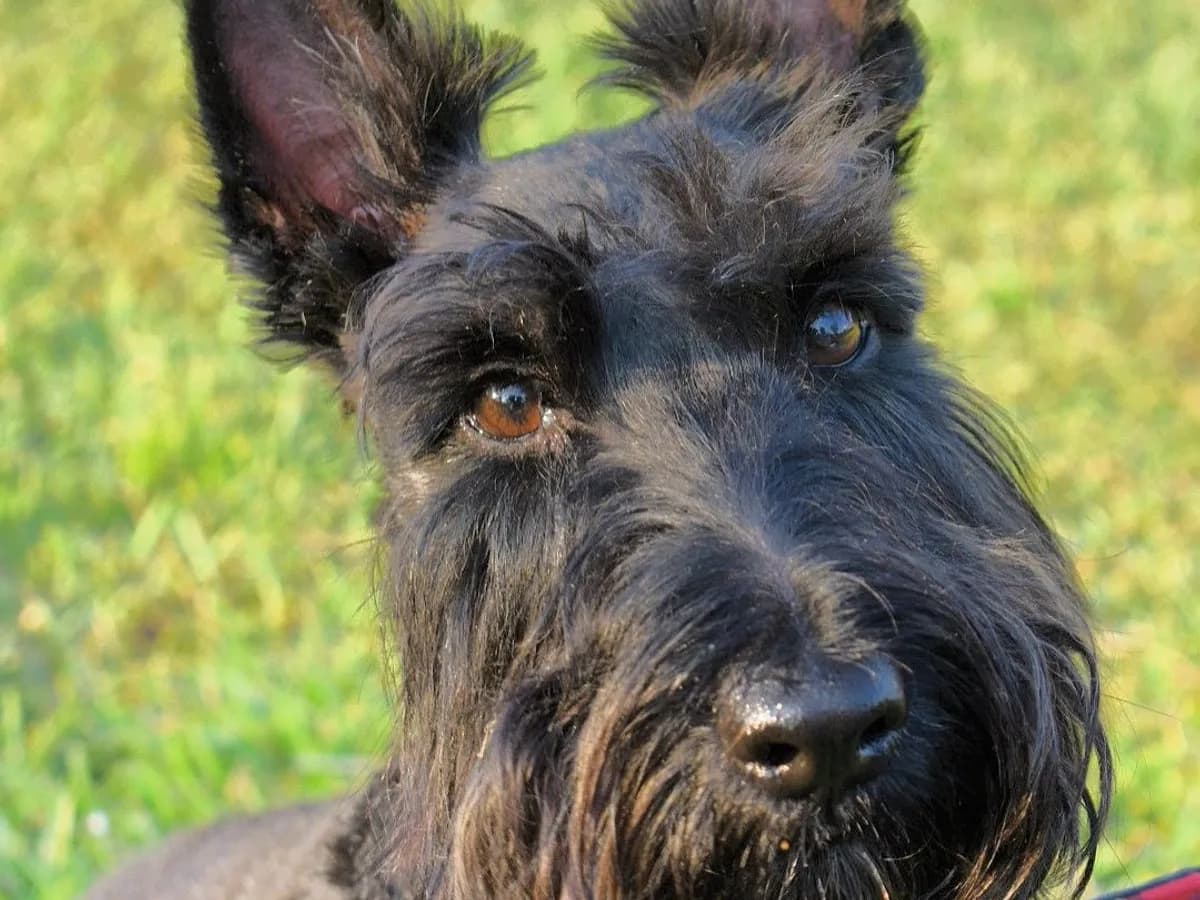
The Scottish Terrier, once known as the Aberdeen Terrier, worked the Highlands for generations digging out foxes, badgers and rats from the rocky cairns. Its unmistakable silhouette carried it to twentieth-century fame as President Roosevelt's beloved companion Fala and as the little dog token on the Monopoly board. The character behind the beard remains resolutely its own.
Dignified and independent, reserved with strangers but deeply loyal to their own family, the Scottish Terrier carries itself with a quiet self-assurance that belies its size. Bred to work alone underground, Scotties are natural problem-solvers who like to make their own decisions, a trait that calls for patient, reward-based training.
Beneath the dignified exterior is a genuinely affectionate companion that thrives on routine and close contact with its people, though it can be wary of unfamiliar faces and dogs without early socialisation. That food motivation makes Scotties keen learners but also prone to accepting every treat on offer, so firm house rules around scraps matter.
Common health conditions
Things Scottish Terrier owners commonly watch for. Guidance, not veterinary advice.
Von Willebrand's Disease
An inherited bleeding disorder affecting clotting. Choose health-tested breeders, and make sure your vet knows before any surgery.
Scottie Cramp
A breed-specific muscle disorder causing temporary cramping and an odd gait during excitement. It isn't painful, but mention it to your vet if seen.
Patellar Luxation
Kneecaps that slip out of place are relatively common in small terriers. Portion food accurately, because a lean Scottie carries less strain.
Bladder Cancer (Transitional Cell Carcinoma)
Scottish Terriers carry one of the highest breed risks of this urinary cancer. Have any urinary changes in an older dog investigated promptly.
Cushing's Syndrome
Overproduction of cortisol is seen more often in this breed and can affect appetite, thirst and weight. Follow a vet-guided diet as part of management.
Feeding a Scottish Terrier
A Scottish Terrier's compact, short-legged build means energy requirements are lower than the confident personality suggests, and it is easy to overfeed a dog this size. A measured, calorie-appropriate small-breed kibble fed in accurate, weighed portions keeps a Scottie at the lean, muscular condition the breed standard calls for, taking pressure off knees prone to luxation.
Because bladder cancer and Cushing's syndrome are both seen disproportionately in this breed, a steady, healthy bodyweight is more than a waistline concern, supporting organ health into the senior years. A coat-supporting diet with balanced omega fatty acids also helps manage the skin allergies the breed can be prone to.
Every dog is different — weight, age and activity all shift what a Scottish Terrier needs. The turns these breed tendencies into a shortlist matched to your dog’s age, size, budget and needs.
Typical adult weight
8.5–10.5 kg
Est. daily calories
420–650 kcal
A broad guide for an average-activity adult in good body condition — not veterinary advice. Real needs vary with age, neutering, activity, health and body condition, so no two Scottish Terriers eat exactly the same. Get a personalised estimate or estimate feeding costs.


- Per day
- ~£0.66
- Per month
- ~£20
- Per year
- ~£239
A broad typical monthly budget guide, not a live price quote. Food format, calorie density, pack size and retailer pricing all change the real cost.
Find the right food for your Scottish Terrier
Foods ranked to your dog
Answer a few quick questions and the Food Finder ranks foods to your Scottish Terrier by score, price, life stage and fit.
Breed at a glance
- Exercise needs6/10
- Appetite6/10
- Trainability5/10
- Good with children6/10
- Shedding2/10
- Tolerates being alone6/10
The good & the worth-knowing
The good
- Loyal, devoted and highly individual character that forms strong bonds with its family
- Low-shedding wiry coat that suits many allergy-conscious households
- Confident, big-dog presence and personality in a genuinely small, manageable size
Worth knowing
- Independent and often stubborn, so training needs patience, consistency and rewards
- Prone to putting on weight easily, given short legs and only moderate exercise needs
- Wiry double coat needs regular hand-stripping or professional grooming every couple of months
Best matched accessories
All accessoriesThe collections that suit the breed, judged by the same independent standard.
Common owner questions
How much exercise does a Scottish Terrier need?
Most Scotties do well on about an hour a day over a couple of walks, plus sniffing and digging time in a secure garden. Because they're only moderately active, matching food intake to actual exercise rather than a standard chart is the best way to prevent gradual weight gain.
What should I feed a Scottish Terrier to avoid weight gain?
A measured small-breed food, fed in weighed portions, keeps calorie intake predictable. Regular weigh-ins and portion adjustments to keep ribs easily felt matter more than the brand, and our Food Finder can match a diet to their needs.
Are Scottish Terriers easy to train?
They're intelligent but independent, and were bred to make their own decisions when working underground, so training goes better with short, reward-based sessions and realistic expectations rather than expecting instant obedience.
Do Scottish Terriers have particular health screening needs?
Reputable breeders test for Von Willebrand's disease, and given the breed's notably high risk of bladder cancer, stay alert to any urinary changes from middle age onwards and discuss screening options at routine check-ups.