
Most important facts
- Group
- Terrier
- Size
- Small
- Weight
- 12–18 kg
- Lifespan
- 12–15 years
- Coat
- Long
- Energy
- Moderate
- Height
- 25–26 cm
- Colours
- Black, grey, fawn or cream with black points
- Shedding
- Light
- Est. feeding cost
- ~£0.93 a day
- Gear to consider
- Soft-bristle grooming brush and metal comb, well-fitted harness rather than a collar, slow-feeder bowl
Typical dry food, adult
About the Skye Terrier
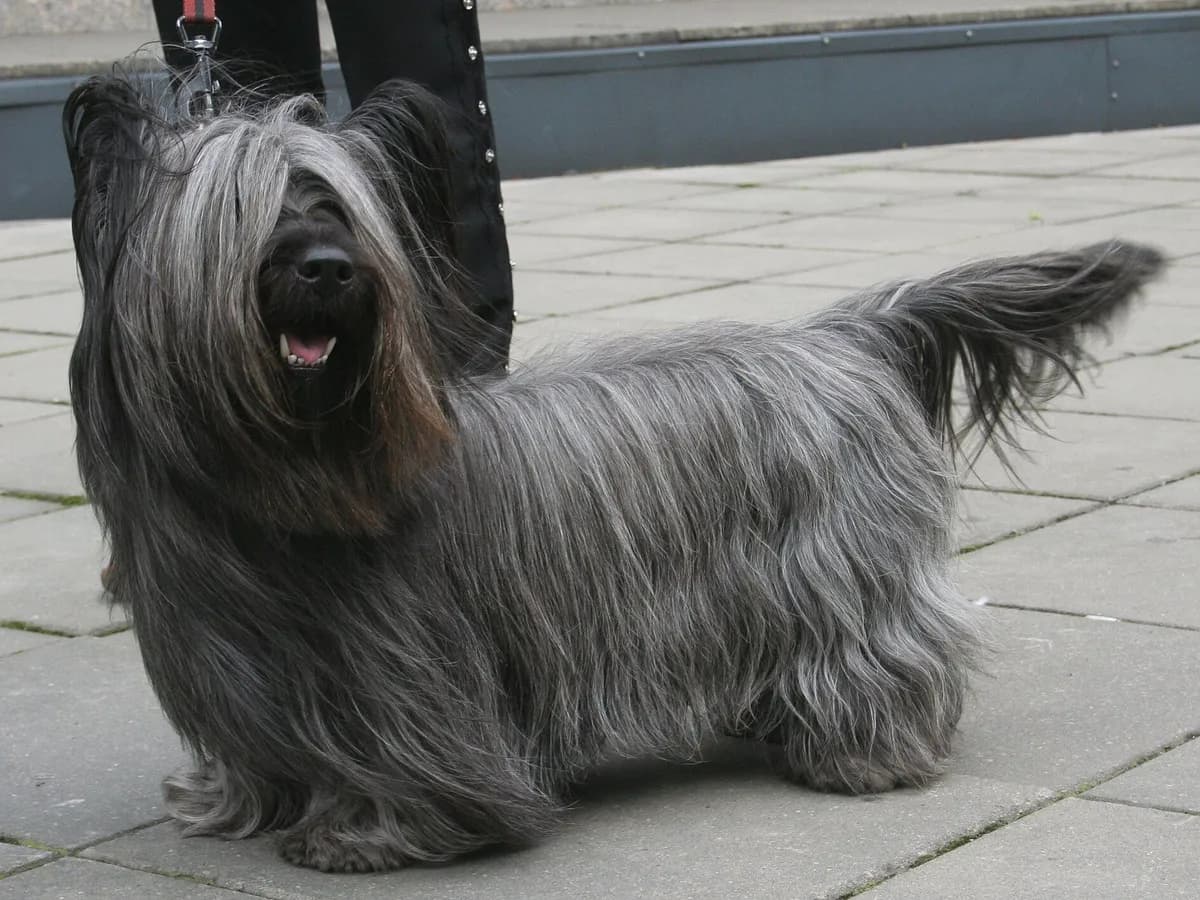
The Skye Terrier is an ancient breed from the Isle of Skye, prized by Highland families for working fox and otter among the rocks, and later beloved of Queen Victoria's court. Its most celebrated member is Greyfriars Bobby, the Edinburgh dog said to have kept watch over his master's grave for fourteen years. Today it is one of Britain's most endangered native breeds.
The Skye Terrier's own breed standard describes it as a one-man dog, distrustful of strangers, never vicious. That is a fair summary of a breed deeply loyal to its own family but reserved with people it doesn't know. This isn't nervousness so much as a watchful, dignified independence.
Because of this reserve, early and ongoing socialisation is important to help a Skye Terrier grow into a confident, well-adjusted adult rather than an overly wary one. Like most terriers it is intelligent and can be independent-minded in training, so short, consistent, reward-based sessions, including calm behaviour around mealtimes, work better than repetitive drilling.
Common health conditions
Things Skye Terrier owners commonly watch for. Guidance, not veterinary advice.
Intervertebral disc disease (IVDD)
The Skye's long back and short legs mean spinal discs can degenerate early. Keep the dog lean, as excess weight adds load through the back.
Hepatitis
The breed has a recognised predisposition to liver inflammation. Watch for reduced appetite, lethargy or yellowing gums and report them promptly to a vet.
Renal dysplasia
An uncommon inherited kidney condition seen in the breed. Choose breeders who follow kidney screening advice, and keep the diet consistent and balanced.
Cancer, including haemangiosarcoma
Skye Terriers are recorded among the breeds more frequently affected by this aggressive cancer. Keep up regular vet checks and have any new lump or unexplained lethargy investigated promptly.
Feeding a Skye Terrier
Skye Terriers are a small breed with a moderate energy requirement, so it's easy to overfeed them relative to how little exercise they actually need. The long back and short legs put the breed at raised risk of intervertebral disc disease. Keeping a dog at a lean, well-defined body condition throughout life is one of the most protective things an owner can do.
A complete diet with moderate calorie density suits most adult Skye Terriers better than a high-energy formula. Weigh portions out and adjust them against regular body condition checks, and do not feed by eye. Given the breed's noted predisposition to liver and kidney conditions, keep the diet consistent, and mention any loss of appetite or change in thirst to a vet promptly.
Every dog is different — weight, age and activity all shift what a Skye Terrier needs. The turns these breed tendencies into a shortlist matched to your dog’s age, size, budget and needs.
Typical adult weight
12–18 kg
Est. daily calories
540–980 kcal
A broad guide for an average-activity adult in good body condition — not veterinary advice. Real needs vary with age, neutering, activity, health and body condition, so no two Skye Terriers eat exactly the same. Get a personalised estimate or estimate feeding costs.
- Per day
- ~£0.93
- Per month
- ~£28
- Per year
- ~£340
A broad typical monthly budget guide, not a live price quote. Food format, calorie density, pack size and retailer pricing all change the real cost.
Find the right food for your Skye Terrier
Foods ranked to your dog
Answer a few quick questions and the Food Finder ranks foods to your Skye Terrier by score, price, life stage and fit.
Breed at a glance
- Exercise needs5/10
- Appetite5/10
- Trainability5/10
- Good with children5/10
- Shedding3/10
- Tolerates being alone4/10
The good & the worth-knowing
The good
- Devoted, loyal companion once bonded to its family
- Distinctive, elegant appearance with a flowing double coat
- Naturally watchful, and an attentive companion at home
Worth knowing
- Naturally reserved and wary of strangers, so needs consistent early socialisation
- Prone to back problems given its long spine, so lean body condition matters
- Long double coat needs several grooming sessions each week to stay free of mats
Best matched accessories
All accessoriesThe collections that suit the breed, judged by the same independent standard.
Common owner questions
How much should I feed a Skye Terrier?
Feed to a lean, well-defined waist rather than a fixed amount, as this breed's long spine is strained by extra weight more than most. Weigh out portions of a food suited to a small, moderately active adult, and use the Food Finder to compare options.
Are Skye Terriers prone to back problems?
Yes. The breed's long, low body shape means the discs in its spine can degenerate earlier than in other dogs. Keep the dog lean, avoid repeated jumping on and off furniture, and use ramps or steps where possible to protect the back.
How much exercise does a Skye Terrier need?
A moderate amount, typically two shortish walks a day plus some free time in a secure garden. Its low-slung build means high-impact exercise or repeated jumping isn't ideal, so steady, varied walks suit it better than intense play sessions.
Are Skye Terriers good with children and other pets?
They can be, but they're a naturally reserved, one-owner breed, so early and consistent socialisation is important. With familiar children they tend to be loyal and settled, but they aren't an instantly outgoing breed with visitors.