
Most important facts
- Group
- Terrier
- Size
- Small
- Weight
- 7–9 kg
- Lifespan
- 12–14 years
- Coat
- Hard, wiry double coat
- Energy
- Moderate
- Height
- 27–31 cm
- Colours
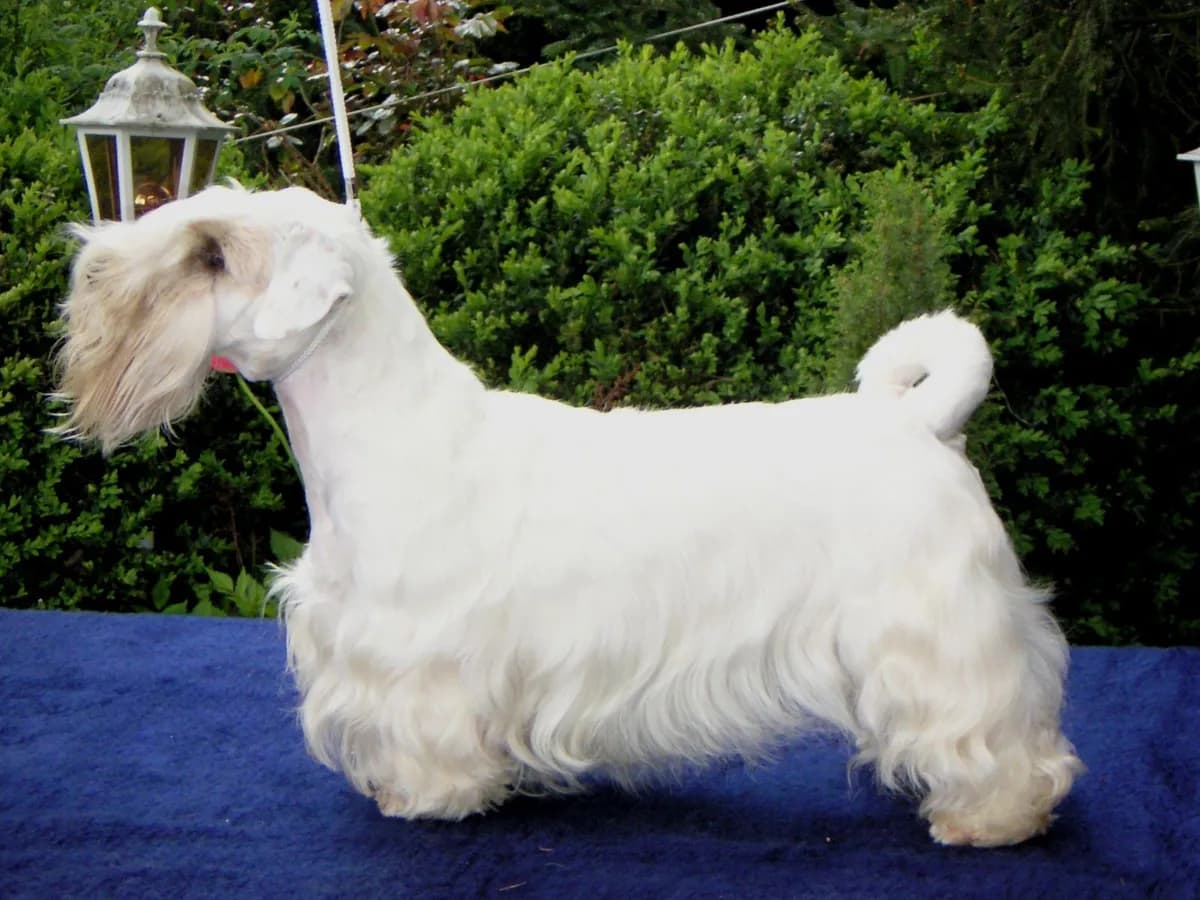
- White, plain or with head markings
- Shedding
- Light
- Est. feeding cost
- ~£0.61 a day
- Gear to consider
- Slow-feeder bowl, hand-stripping/grooming kit, well-fitted harness
Typical dry food, adult
About the Sealyham Terrier
Captain John Edwardes created the Sealyham Terrier at Sealyham House in Pembrokeshire during the second half of the nineteenth century. He bred it white so the hounds wouldn't mistake it for the quarry when it worked otter and badger. Between the wars it became a Hollywood darling, kept by Alfred Hitchcock among others. Today it is one of Britain's most endangered native breeds.
Sealyham Terriers were bred to work fearlessly against badgers, otters and foxes, and that grit still shows in a confident, independent-minded companion. They tend to be devoted to their family, often reserved with strangers, and can be vocal watchdogs, alerting to visitors with more enthusiasm than most owners expect from such a small dog.
That independent streak means training rewards patience, consistency and food-based motivation far more than repetition, with short, engaging sessions using part of the daily allowance working better than long drills. Given a job to do, whether scentwork or a varied walk, Sealyhams are settled, good-natured companions, though early socialisation keeps their terrier assertiveness in check.
Common health conditions
Things Sealyham Terrier owners commonly watch for. Guidance, not veterinary advice.
Primary lens luxation (PLL)
The lens slips out of place in this inherited eye condition, which can lead to painful glaucoma. Choose DNA-tested breeders and watch for sudden eye redness or discomfort.
Retinal dysplasia
The breed is reported at higher-than-average rates for this developmental eye condition. Book annual eye checks even in dogs that seem to see well.
Dental disease
Like many small terriers, Sealyhams are prone to tartar and gum disease. Brush daily and choose a kibble sized and textured to encourage chewing.
Obesity
A sturdy, low-slung build and a keen appetite mean weight creeps on easily. Measure meals and check body condition rather than trusting the bag's headline figures.
Feeding a Sealyham Terrier
Sealyhams are a low, sturdily built breed with a modest exercise requirement, so it is easy to overshoot their energy needs on a standard small-breed diet. Feeding to a visible waist and a felt-but-not-seen ribcage matters more than sticking rigidly to pack guidelines, and treats used in training or grooming sessions should be counted within the daily allowance.
Because dental disease and tartar build-up are common in the breed, a kibble with a texture and size that encourages proper chewing, or a diet formulated to support dental health, is a sensible starting point. A good-quality, appropriately portioned complete food alongside occasional dental chews supports both a healthy weight and cleaner teeth.
Every dog is different — weight, age and activity all shift what a Sealyham Terrier needs. The turns these breed tendencies into a shortlist matched to your dog’s age, size, budget and needs.
Typical adult weight
7–9 kg
Est. daily calories
360–580 kcal
A broad guide for an average-activity adult in good body condition — not veterinary advice. Real needs vary with age, neutering, activity, health and body condition, so no two Sealyham Terriers eat exactly the same. Get a personalised estimate or estimate feeding costs.
- Per day
- ~£0.61
- Per month
- ~£19
- Per year
- ~£222
A broad typical monthly budget guide, not a live price quote. Food format, calorie density, pack size and retailer pricing all change the real cost.
Find the right food for your Sealyham Terrier
Foods ranked to your dog
Answer a few quick questions and the Food Finder ranks foods to your Sealyham Terrier by score, price, life stage and fit.
Breed at a glance
- Exercise needs5/10
- Appetite7/10
- Trainability5/10
- Good with children6/10
- Shedding2/10
- Tolerates being alone4/10
The good & the worth-knowing
The good
- Distinctive, characterful terrier with a loyal, affectionate nature towards its family
- Low-shedding wiry coat that suits owners managing allergies or hair around the home
- Compact size suits a range of homes, including those without a large garden
Worth knowing
- Needs regular professional hand-stripping or clipping, which adds time and cost
- Can be independent and stubborn, so training needs patience and consistency
- A rare breed in the UK today, which can mean a long wait for a health-tested puppy
Best matched accessories
All accessoriesThe collections that suit the breed, judged by the same independent standard.
Common owner questions
How much exercise does a Sealyham Terrier need?
A daily walk of around 30 to 45 minutes, ideally split across the day, suits most adult Sealyhams well. They enjoy sniffing and investigating as much as marching, so a varied route matters more than sheer distance.
Are Sealyham Terriers prone to putting on weight?
Yes, their sturdy build and keen appetite mean they gain weight easily on a diet that is not portioned carefully. Feed to body condition and weigh meals. Our Food Finder can check whether a food suits a lower-activity terrier.
How much grooming does the coat need?
The wiry double coat needs hand-stripping or clipping roughly every couple of months to stay in good condition, plus regular brushing at home to prevent matting, particularly around the beard and legs.
What should I feed a Sealyham Terrier with dental problems?
A complete food with a kibble size and texture designed to encourage chewing, alongside daily brushing and vet-recommended dental chews, can help slow tartar build-up. Speak to your vet if gum disease is already present, as a specific dental diet may be advised.
Similar breeds
Photo: Dr. Sabine Schumann, Public domain, via Wikimedia Commons