
Most important facts
- Group
- Terrier
- Size
- Small
- Weight
- 5–5.5 kg
- Lifespan
- 12–15 years
- Coat
- Wire-haired
- Energy
- High
- Height
- 24–26 cm
- Colours
- Red, wheaten, black and tan or grizzle
- Shedding
- Moderate
- Est. feeding cost
- ~£0.51 a day
- Gear to consider
- Slow-feeder or puzzle bowl, slicker brush and stripping knife for the wire coat, secure well-fitted harness for recall-proof walks
Typical dry food, adult
About the Norfolk Terrier
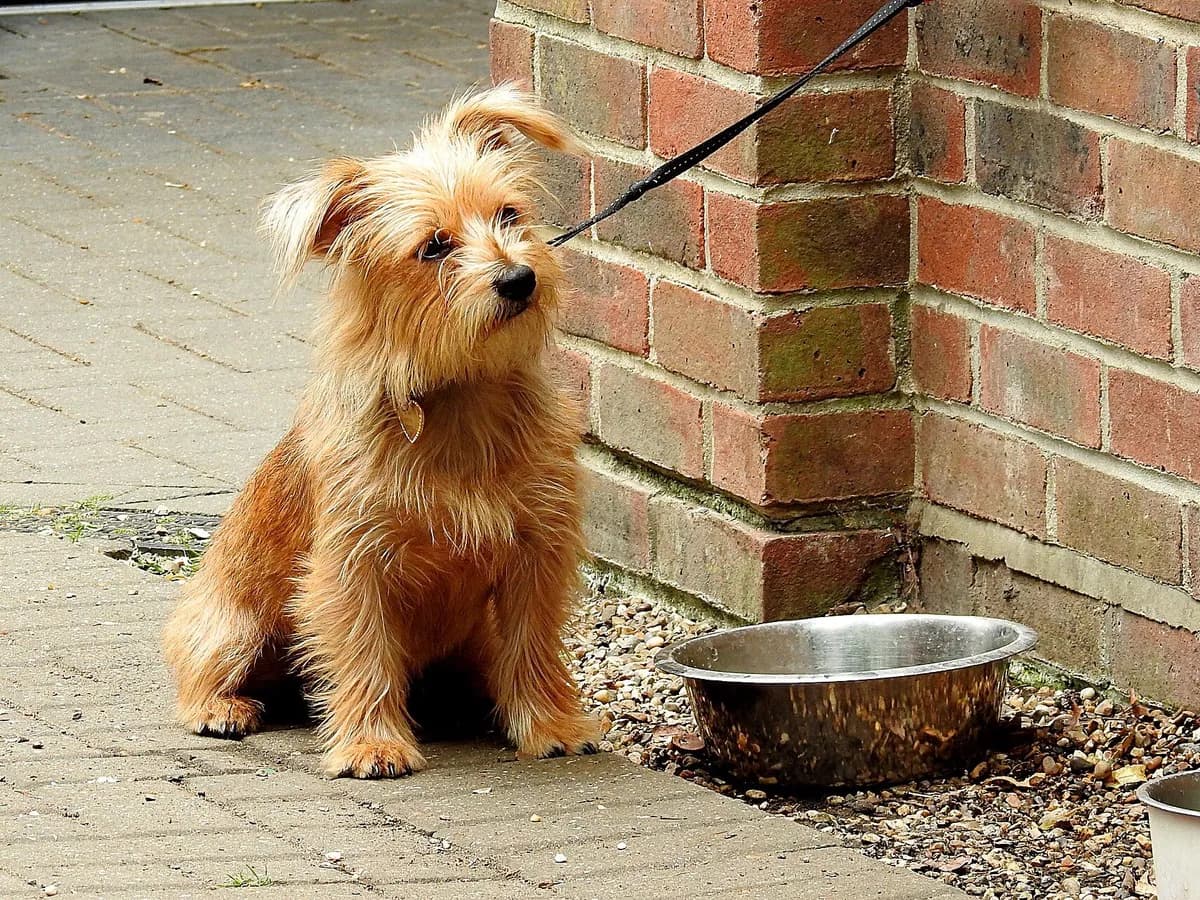
The Norfolk Terrier shares its early history with the Norwich Terrier, both descending from the small red ratting terriers of East Anglia that became a craze among Cambridge undergraduates in the 1880s as Trumpington Terriers. The two were shown as one breed until 1964, when the Kennel Club split them by ear carriage, with the drop-eared dogs becoming the Norfolk. It remains the rarer of the pair.
Norfolk Terriers are bold, curious and fearless for their size, keeping a strong instinct to hunt, dig and chase from their days running with packs of foxhounds. They are typically affectionate and sociable with their own family, often getting on well with other dogs, though early socialisation matters around smaller pets.
Their independent streak means training takes patience and consistency rather than repetition alone, and recall in particular can be a lifelong project given how readily they follow a scent. A Norfolk that works for its dinner through training or a puzzle feeder tends to be a calmer, better-adjusted companion.
Common health conditions
Things Norfolk Terrier owners commonly watch for. Guidance, not veterinary advice.
Hip dysplasia
Poor hip joint development, which can lead to arthritis in later life. Keep a Norfolk lean through accurate portioning to take pressure off the joints.
Luxating patella
The kneecap slips temporarily out of place, a common small-terrier issue. Watch body condition as closely as the scales.
Eye conditions (cataracts, glaucoma, lens luxation)
Norfolks can be affected by several inherited eye problems. Choose breeders who screen parents through the BVA and Kennel Club eye scheme.
Dental disease
Like many small breeds, Norfolks are prone to crowding and early tartar. Use dental-friendly kibble and count chews into the daily ration.
Mitral valve disease (MMVD)
A degenerative heart condition that can appear in small terriers later in life. Keep up regular vet checks so early murmurs are caught.
Feeding a Norfolk Terrier
Norfolk Terriers weigh only five kilograms or so, so measured feeding really counts. A few extra grams of kibble or treats is a far bigger share of daily needs than for a larger dog. A quality small-breed complete food with appropriately sized kibble suits their compact jaws, split into two meals a day.
Because the breed is so food-motivated, it lends itself well to training with measured kibble rather than extra treats stacked on top, which prevents the gradual weight creep vets see in small terriers. Watch body condition, and not the scales alone, particularly after neutering or into the senior years. Choose a food that supports joint and dental health.
Every dog is different — weight, age and activity all shift what a Norfolk Terrier needs. The turns these breed tendencies into a shortlist matched to your dog’s age, size, budget and needs.
Typical adult weight
5–5.5 kg
Est. daily calories
280–450 kcal
A broad guide for an average-activity adult in good body condition — not veterinary advice. Real needs vary with age, neutering, activity, health and body condition, so no two Norfolk Terriers eat exactly the same. Get a personalised estimate or estimate feeding costs.
- Per day
- ~£0.51
- Per month
- ~£15
- Per year
- ~£185
A broad typical monthly budget guide, not a live price quote. Food format, calorie density, pack size and retailer pricing all change the real cost.
Find the right food for your Norfolk Terrier
Foods ranked to your dog
Answer a few quick questions and the Food Finder ranks foods to your Norfolk Terrier by score, price, life stage and fit.
Breed at a glance
- Exercise needs6/10
- Appetite7/10
- Trainability5/10
- Good with children7/10
- Shedding4/10
- Tolerates being alone4/10
The good & the worth-knowing
The good
- Compact, sturdy size that suits smaller homes without sacrificing terrier character
- Affectionate and sociable with its family, generally good with sensible older children
- Low-shedding wire coat that, with regular stripping, needs no elaborate daily routine
Worth knowing
- Independent, hard-wired hunting instinct that can make off-lead recall genuinely difficult
- Strong digging urge that isn't easily trained out and can wreck a lawn
- Food-motivated appetite that tips into weight gain quickly if treats aren't accounted for
Best matched accessories
All accessoriesThe collections that suit the breed, judged by the same independent standard.
Common owner questions
How much exercise does a Norfolk Terrier actually need?
Walks and off-lead play adding up to around an hour a day are usually enough. Mental stimulation, such as scent games or a puzzle feeder at mealtimes, matters as much as distance covered.
Are Norfolk Terriers easy to train?
They are intelligent but independent, with a prey drive that can override recall, so consistent food-reward training started early works best, using part of the measured daily ration as treats to avoid extra calories.
What should I feed a Norfolk Terrier to keep it a healthy weight?
A measured small-breed food fed in two portions a day, with treats counted within the allowance, is the simplest way to avoid weight gain in this appetite-driven breed. Our Food Finder can suggest suitable foods by life stage.
Does a Norfolk Terrier need a joint- or skin-supporting diet?
Given the breed's predisposition to hip, patella and skin problems, a food supporting joint health and skin condition is a sensible choice from middle age onwards. Discuss supplements such as omega-3s or glucosamine with your vet.