
Most important facts
- Group
- Terrier
- Size
- Small
- Weight
- 5–5.5 kg
- Lifespan
- 12–15 years
- Coat
- Wiry
- Energy
- High
- Height
- 24–26 cm
- Colours
- Red, wheaten, black and tan or grizzle
- Shedding
- Moderate
- Est. feeding cost
- ~£0.51 a day
- Gear to consider
- Slow-feeder bowl, slicker brush and stripping knife, secure-fit harness for a small, wriggly dog
Typical dry food, adult
About the Norwich Terrier
The Norwich Terrier grew from the same East Anglian ratting stock as the Norfolk, popularised in the 1880s by Cambridge undergraduates who kept the little red terriers in their college rooms. Recognised in 1932, the breed was split from its drop-eared twin in 1964, with the prick-eared dogs keeping the Norwich name. It has stayed a working terrier at heart despite more than a century of drawing-room living.
Norwich Terriers are lively and affectionate dogs, game for anything despite their size, and plenty of the instinct that bred them to go to ground after vermin is still there. They tend to be sociable with people and other dogs when well socialised, but that drive means a fondness for digging, chasing and investigating anything that moves.
They're intelligent and generally keen to please, though a streak of terrier independence means training benefits from short, consistent, reward-based sessions rather than long drills. Food-motivated by nature, they respond well to treat-based training, so factor treats into the daily allowance before they become a large share of a small dog's calories.
Common health conditions
Things Norwich Terrier owners commonly watch for. Guidance, not veterinary advice.
Upper airway obstruction (BOAS-like signs)
Breed monitoring lists laboured or noisy breathing as a specific concern for the Norwich. Keep your dog lean to reduce strain on the airway, especially in warm weather.
Luxating patella
A slipping kneecap is fairly common in small terriers. Keep weight in the correct range, and ask your vet about joint support if needed.
Portosystemic shunt (liver shunt)
A congenital blood-vessel defect that stops the liver filtering properly, seen more often in this breed than most. Diagnosed dogs need a specialist prescription diet.
Dental disease
Like many small breeds, Norwich Terriers are prone to plaque and crowded teeth. Use dental chews, a dental-care kibble and regular brushing.
Feeding a Norwich Terrier
At only five kilograms or so, a Norwich Terrier's daily food allowance is small, so weigh meals and never guess. A few extra grams of kibble a day shows up fast around the waist. An energy-dense, small-breed kibble sized for a tiny mouth suits them well, split across two meals to keep energy even through the day.
Portosystemic shunt is a recognised issue in the breed. Any Norwich showing poor growth, lethargy after eating or neurological signs should see a vet promptly, as affected dogs need a specific liver-support diet. For the majority without a shunt, a good-quality diet with joint-supporting nutrients and a dental-friendly texture covers the bases.
Every dog is different — weight, age and activity all shift what a Norwich Terrier needs. The turns these breed tendencies into a shortlist matched to your dog’s age, size, budget and needs.
Typical adult weight
5–5.5 kg
Est. daily calories
280–450 kcal
A broad guide for an average-activity adult in good body condition — not veterinary advice. Real needs vary with age, neutering, activity, health and body condition, so no two Norwich Terriers eat exactly the same. Get a personalised estimate or estimate feeding costs.
- Per day
- ~£0.51
- Per month
- ~£15
- Per year
- ~£185
A broad typical monthly budget guide, not a live price quote. Food format, calorie density, pack size and retailer pricing all change the real cost.
Find the right food for your Norwich Terrier
Foods ranked to your dog
Answer a few quick questions and the Food Finder ranks foods to your Norwich Terrier by score, price, life stage and fit.
Breed at a glance
- Exercise needs6/10
- Appetite6/10
- Trainability6/10
- Good with children6/10
- Shedding4/10
- Tolerates being alone4/10
The good & the worth-knowing
The good
- Compact size makes them adaptable to flats and houses alike
- Affectionate, sociable and typically good with a settled family
- Low daily exercise needs compared with larger terriers
Worth knowing
- Wire coat needs hand-stripping a few times a year on top of weekly brushing
- Bred to go to ground, so a strong prey drive and digging urge need managing
- Can be vocal and prone to separation-related stress if left alone for long stretches
Best matched accessories
All accessoriesThe collections that suit the breed, judged by the same independent standard.
Common owner questions
How much exercise does a Norwich Terrier need?
A couple of walks totalling around 45 minutes to an hour a day works well, plus some off-lead exploring or garden play where it's safe. They're energetic and enjoy a job to do, but their short legs mean they don't need marathon distances.
What should I feed a Norwich Terrier?
A complete small-breed diet fed in carefully weighed portions works best, since even a small daily surplus shows quickly on a five-kilogram dog. If a vet has diagnosed a liver shunt, follow their specific dietary advice rather than a standard adult food.
Do Norwich Terriers shed much?
Their wiry double coat is a low-to-moderate shedder, but it does need hand-stripping a few times a year alongside weekly brushing to stay in good condition. Clipping is an option but softens the coat's texture.
Are Norwich Terriers good with children?
They can be, and are typically affectionate and sociable, but their small size means play with boisterous young children should be supervised. A healthy weight also matters for a small dog that's often picked up and carried.
Similar breeds
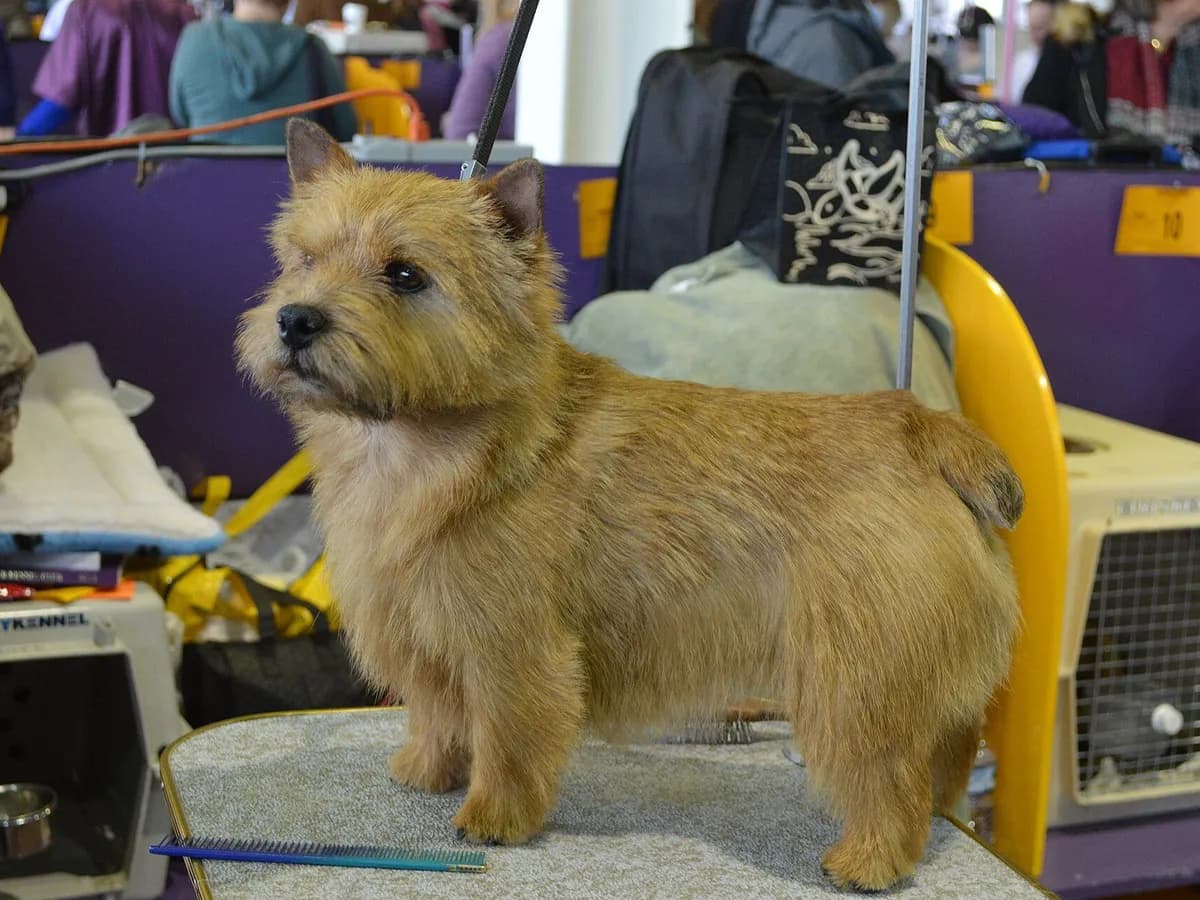
Photo: Pets Adviser from Brooklyn, USA, CC BY 2.0, via Wikimedia Commons