


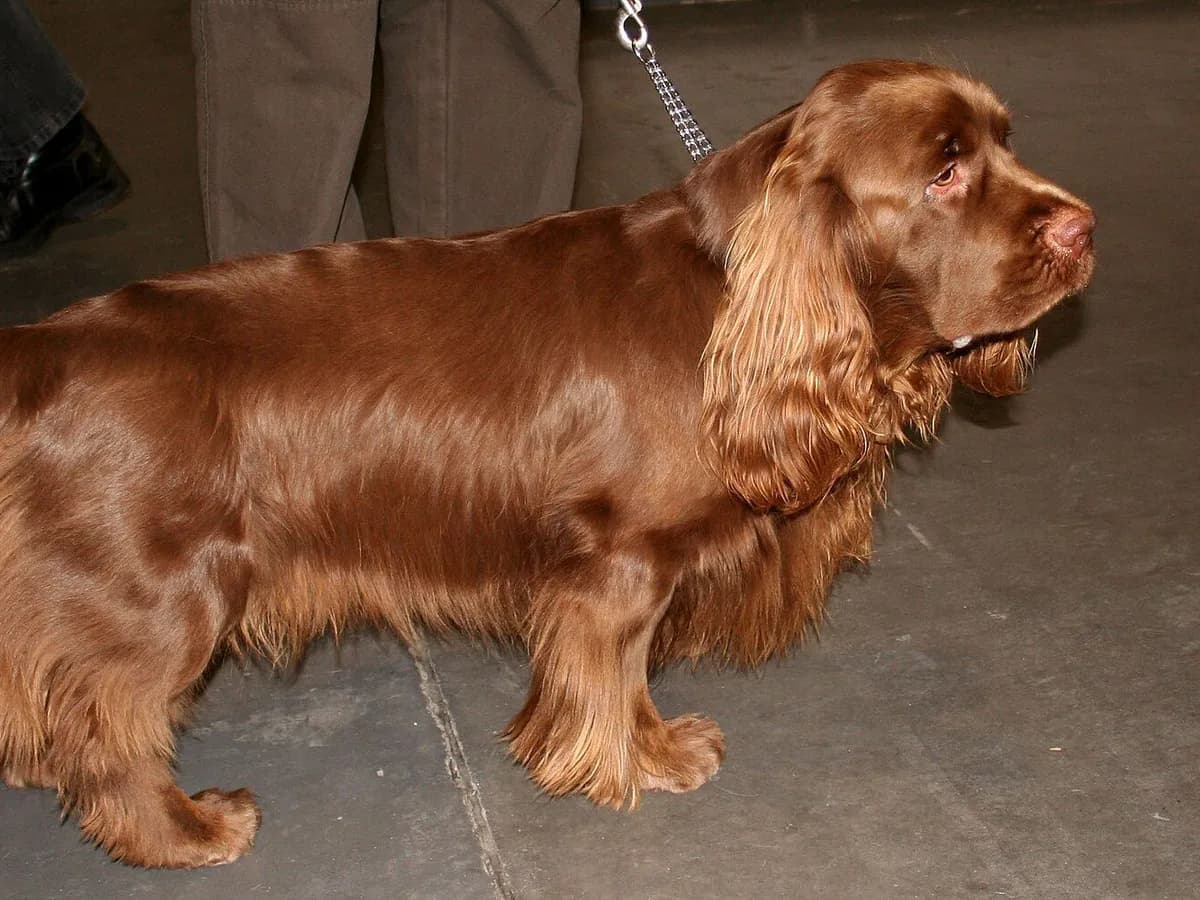

Most important facts
- Group
- Gundog
- Size
- Medium
- Weight
- 18–23 kg
- Lifespan
- 11–13 years
- Coat
- Flat or slightly waved
- Energy
- Low
- Height
- 38–41 cm
- Colours
- Rich golden liver
- Shedding
- Moderate
- Est. feeding cost
- ~£1.08 a day
- Gear to consider
- Slow-feeder bowl, orthopaedic dog bed, soft harness (rather than a collar, to protect the neck and back)
Typical dry food, adult
About the Sussex Spaniel
Augustus Fuller developed the Sussex Spaniel from 1795 at Rosehill Park in Sussex, a slow, steady, golden-liver spaniel bred to work the county's heavy clay and dense cover. It gave tongue as it went so the guns could follow. The breed nearly vanished during the Second World War, saved almost single-handedly by breeder Joy Freer and her eight dogs. It remains one of Britain's rarest native breeds.
The Sussex Spaniel is known for a calm, dignified and affectionate temperament, markedly less frenetic than many of its spaniel relatives. It's devoted to its family and forms close bonds, sometimes becoming vocal or unsettled when left alone for long periods, so building up time apart gradually from puppyhood is worthwhile.
This is a breed with a mind of its own. Sussex Spaniels can be somewhat independent and slow to mature, so patient, food-motivated training works better than repetition-heavy drilling. Its solid build and lower energy make it a placid companion around the home, but exercise still needs pacing sensibly to protect its long back and joints.
Common health conditions
Things Sussex Spaniel owners commonly watch for. Guidance, not veterinary advice.
Intervertebral disc disease (IVDD)
The Sussex Spaniel's long back and short legs put extra strain on the spine. Keep weight down through accurate portioning and discourage jumping on and off furniture.
Hip dysplasia
A heavy-boned, low-slung build means the joints carry more load than in a leaner dog. Feed a slow-growth puppy diet and keep adults lean.
Heart conditions (including pulmonic stenosis)
Sussex Spaniels are noted for a higher-than-average rate of heart murmurs. Keep up regular vet checks and a healthy weight to reduce strain on the heart.
Ear infections
Long, low-set, heavily feathered ears trap moisture and wax. Check and dry the ears weekly, especially after wet walks.
PDP1 deficiency (exercise intolerance)
A rare inherited metabolic condition that can cause collapse after exertion. Choose breeders who screen for it, and keep activity gentle for affected dogs.
Feeding a Sussex Spaniel
This is a heavy-boned dog with comparatively low exercise needs, so calorie intake has to be judged carefully and not left to a bag guideline. This breed carries weight easily, and extra pounds sit badly on a long back prone to hip and disc problems, so keep ribs easily felt.
A moderate-protein, moderate-fat complete food fed in weighed, twice-daily portions suits most adults well, with treats accounted for rather than added on top. Puppies benefit from a food formulated for medium or large breeds that supports steady, controlled growth instead of rapid weight gain, and the Food Finder can help narrow down suitable options.
Every dog is different — weight, age and activity all shift what a Sussex Spaniel needs. The turns these breed tendencies into a shortlist matched to your dog’s age, size, budget and needs.
Typical adult weight
18–23 kg
Est. daily calories
730–1,030 kcal
A broad guide for an average-activity adult in good body condition — not veterinary advice. Real needs vary with age, neutering, activity, health and body condition, so no two Sussex Spaniels eat exactly the same. Get a personalised estimate or estimate feeding costs.


- Per day
- ~£1.08
- Per month
- ~£33
- Per year
- ~£395
A broad typical monthly budget guide, not a live price quote. Food format, calorie density, pack size and retailer pricing all change the real cost.
Find the right food for your Sussex Spaniel
Foods ranked to your dog
Answer a few quick questions and the Food Finder ranks foods to your Sussex Spaniel by score, price, life stage and fit.
Breed at a glance
- Exercise needs4/10
- Appetite7/10
- Trainability6/10
- Good with children7/10
- Shedding5/10
- Tolerates being alone4/10
The good & the worth-knowing
The good
- Calm, affectionate temperament that suits a quieter household
- Lower exercise demands than most spaniel breeds
- Devoted and gentle with its family, including children

Worth knowing
- Low-slung, long-backed build needs careful weight management to protect the spine
- Feathered coat and drooping ears require regular grooming and ear care
- Rare breed, so puppies can be hard to find and often involve a wait
Best matched accessories
All accessoriesThe collections that suit the breed, judged by the same independent standard.




Common owner questions
How much exercise does a Sussex Spaniel actually need?
Two walks a day, coming to around 45 to 60 minutes in total, are usually enough, as this is a steadier spaniel than a Cocker or Springer. They don't burn off much through exercise, so judge portions against what your dog actually does, never a generic guideline.
Are Sussex Spaniels prone to putting on weight?
Yes, this is one of the breed's more common feeding challenges. Their low-key exercise needs combined with a sturdy frame mean weight creeps on unnoticed, so prioritise regular weigh-ins and keeping ribs easily felt over free-feeding.
Do Sussex Spaniels get on well with children?
Generally yes. They're a placid, affectionate breed that tends to be patient with children in the home, though as with any dog, time together should be supervised, particularly with a breed built low to the ground.
What should I feed a Sussex Spaniel puppy?
Given the breed's hip and joint predispositions, a complete puppy food designed for medium or large breeds is generally recommended, fed in controlled portions so that growth stays gradual. A vet or the Food Finder can help match a formulation to your puppy's expected adult weight.