


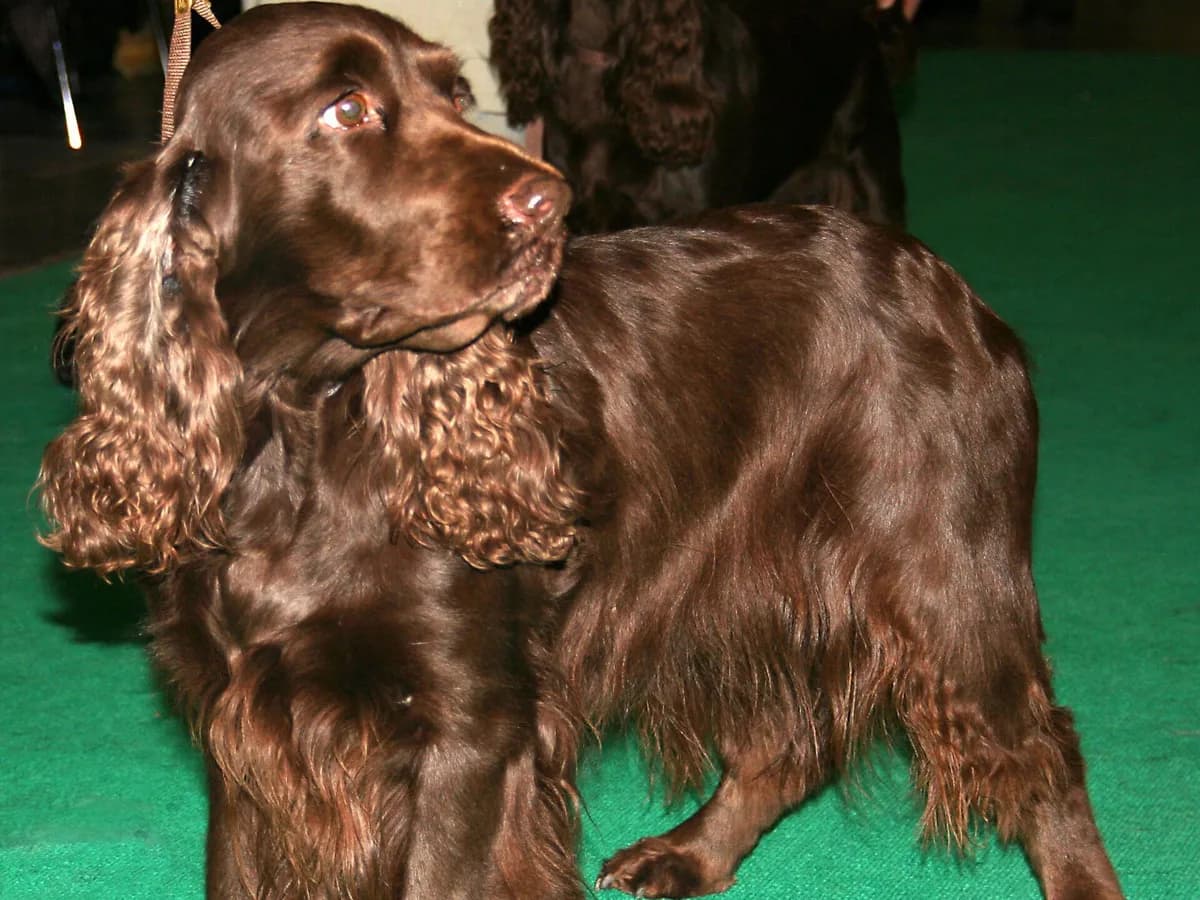

Most important facts
- Group
- Gundog
- Size
- Medium
- Weight
- 18–25 kg
- Lifespan
- 12–14 years
- Coat
- Long, flat
- Energy
- High
- Height
- 43–46 cm
- Colours
- Black, liver or roan
- Shedding
- Moderate
- Est. feeding cost
- ~£1.09 a day
- Gear to consider
- Slicker brush and metal comb, ear-cleaning solution, a well-fitted field-style harness
Typical dry food, adult
About the Field Spaniel
The Field Spaniel was developed in nineteenth-century England as one of the first spaniels bred for the show bench, prized at the time for its all-black coat. Exaggerated show breeding almost ruined the breed, producing long, low dogs unfit for work, until mid-twentieth-century breeders restored a sounder, more moderate type. It remains a vulnerable native breed, with only a small number of puppies registered each year.
Field Spaniels are gentle and notably devoted to their families, described in the breed standard as docile and independent. They can be reserved with strangers and take time to warm up, so early, positive socialisation matters, and heavy-handed training tends to backfire with a dog this responsive to tone and mood.
They were bred to work steadily and independently in dense cover, and that background still shows. Field Spaniels are thoughtful, sometimes stubborn, and do best with owners who are consistent rather than forceful. Given enough physical and mental outlets, including scentwork and retrieving games, they settle into calm, affectionate house dogs.
Common health conditions
Things Field Spaniel owners commonly watch for. Guidance, not veterinary advice.
Hip dysplasia
A recognised issue in the breed, which is why the breed society encourages hip scoring before breeding. Keep an adult lean through measured feeding to take unnecessary load off the joints.
Eye conditions (retinal dysplasia, cataracts, glaucoma)
The breed can be affected by inherited eye disease, including a drainage-angle abnormality that raises glaucoma risk. Choose breeders whose stock has annual eye tests.
Ear infections
Like most long-eared spaniels, the low-set, feathered ears trap moisture and wax. Check and clean the ears regularly to prevent recurring infections.
Elbow abnormalities (incomplete ossification of the humeral condyle)
An inherited elbow condition reported in the breed. Use an appropriate puppy food at a controlled growth rate, and avoid overfeeding for fast growth.
Weight gain
Field Spaniels are food-motivated gundogs that pile on weight once exercise drops. Adjust portions to actual activity levels rather than feeding by habit.
Feeding a Field Spaniel
This is a working gundog build on a moderate frame. An adult diet with well-controlled energy density suits most Field Spaniels better than a high-calorie formula, particularly once field work gives way to a quieter routine. Owners consistently report a keen, food-driven appetite, so weighed portions and a defined daily allowance beat free-feeding.
Because ear and skin health are ongoing considerations for the breed, a diet that supports coat and skin condition is worth prioritising, alongside routine ear care. Treats used in training should be counted within the day's total, since this is a breed that will happily eat past a healthy body condition if allowed.
Every dog is different — weight, age and activity all shift what a Field Spaniel needs. The turns these breed tendencies into a shortlist matched to your dog’s age, size, budget and needs.
Typical adult weight
18–25 kg
Est. daily calories
730–1,410 kcal
A broad guide for an average-activity adult in good body condition — not veterinary advice. Real needs vary with age, neutering, activity, health and body condition, so no two Field Spaniels eat exactly the same. Get a personalised estimate or estimate feeding costs.


- Per day
- ~£1.09
- Per month
- ~£33
- Per year
- ~£397
A broad typical monthly budget guide, not a live price quote. Food format, calorie density, pack size and retailer pricing all change the real cost.
Find the right food for your Field Spaniel
Foods ranked to your dog
Answer a few quick questions and the Food Finder ranks foods to your Field Spaniel by score, price, life stage and fit.
Breed at a glance
- Exercise needs7/10
- Appetite7/10
- Trainability7/10
- Good with children7/10
- Shedding5/10
- Tolerates being alone3/10
The good & the worth-knowing
The good
- Gentle, affectionate and deeply loyal to their family
- A steady working gundog temperament that suits an active outdoor lifestyle
- Handsome weatherproof coat and a calm, biddable nature once settled

Worth knowing
- Long, silky ears need regular checking and cleaning to prevent infection
- A working gundog temperament means genuine daily exercise is non-negotiable
- As a rarer breed, puppies from health-tested lines can involve a wait
Best matched accessories
All accessoriesThe collections that suit the breed, judged by the same independent standard.




Common owner questions
How much exercise does a Field Spaniel need?
The gundog background shows here: give an adult at least an hour of varied daily exercise, with some off-lead time and scent-based activity such as retrieving or nose work.
Are Field Spaniels prone to weight gain?
Yes, they have a keen appetite and can gain weight quickly once activity drops. Weigh the meals and feed to body condition. Change the portion as your dog's exercise shifts through the year.
Do Field Spaniels need a special diet for their ears or joints?
There's no single diet that prevents ear or joint problems, but keeping a dog lean supports the joints, and routine ear cleaning matters more than any specific food. The Food Finder can help identify complete diets suited to an active, joint-conscious dog.
Are Field Spaniels good with children?
Generally yes, they tend to be gentle and affectionate, though as with any dog, time with young children should be supervised and the dog given a settled base with predictable routines.