


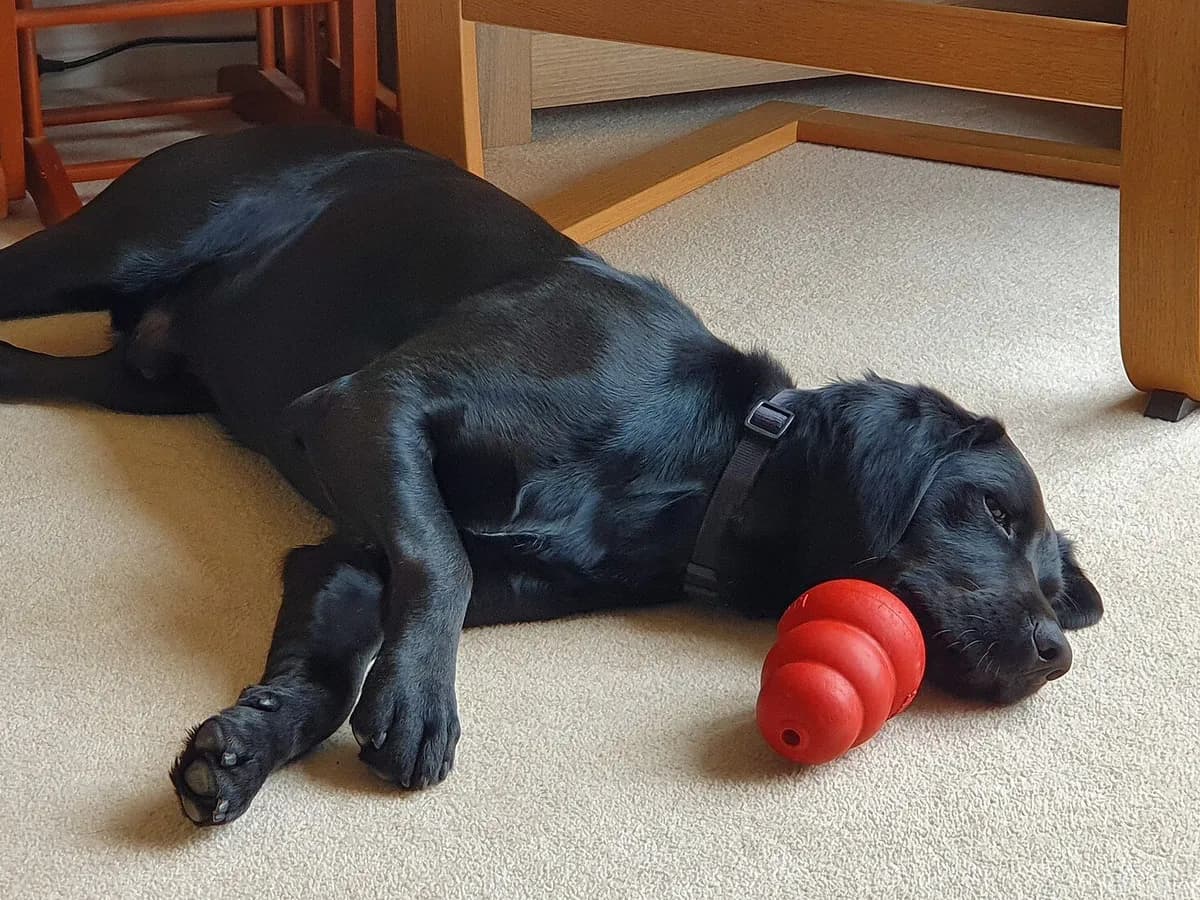

Most important facts
- Group
- Crossbreed
- Size
- Medium
- Weight
- 23–34 kg
- Lifespan
- 10–14 years
- Coat
- Short-to-medium
- Energy
- High
- Height
- 46–56 cm
- Colours
- Black, yellow, chocolate or black and white
- Shedding
- Moderate
- Est. feeding cost
- ~£1.45 a day
- Gear to consider
- Slow-feeder bowl, durable retrieving toys, harness with a sturdy lead for water and field walks
Typical dry food, adult
About the Springador
The Springador crosses the English Springer Spaniel with the Labrador Retriever, a pairing gamekeepers and shooting folk have favoured informally for generations before it acquired a name in the designer-cross era. The aim is a biddable all-rounder with the Springer's nose and the Labrador's steadiness. It has no Kennel Club recognition, and individual dogs can lean towards either parent.
Springadors combine the Springer Spaniel's enthusiasm and eagerness to please with the Labrador's steady, sociable nature, producing a dog that is typically affectionate, biddable and keen to be involved in whatever the family is doing. Children and other dogs are usually no trouble for them, and their gundog ancestry makes them naturally responsive to food-based training.
This is a breed that needs a job or an outlet, whether retrieving, long walks, scentwork or swimming. Without enough physical and mental exercise, Springadors can become boisterous, vocal or destructive. Their strong food drive makes them easy to train with treats but also means portions and treat allowances need close watching.
Common health conditions
Things Springador owners commonly watch for. Guidance, not veterinary advice.
Hip and elbow dysplasia
Both parent breeds carry a risk of joint dysplasia. Keep a Springador lean from puppyhood and choose a food with appropriate calcium and controlled calories.
Ear infections
Long, floppy ears restrict airflow and trap moisture. Check the ears regularly and dry them after swimming or wet walks.
Weight gain and obesity
Labrador ancestry brings a strong food drive and a tendency to overeat. Measure portions, use a slow-feeder bowl, and resist extra treats.
Eye conditions (progressive retinal atrophy, cataracts)
Inherited eye disease can appear in either parent line. Choose breeders who health-test for PRA, and watch for cloudiness or night-vision changes with age.
Feeding a Springador
Springadors are active, muscular dogs that usually need a food with moderate-to-high energy density for long walks, retrieving games and swimming. Weigh portions carefully, because the Labrador side of the cross puts on weight easily when intake isn't controlled.
A diet with adequate but not excessive protein supports lean muscle, while controlled fat and calories through adolescence protect growing hips and elbows. Feed to a visible waist and rib outline, adjust portions as exercise changes, and use slow-feeder bowls or split meals to manage this breed's eagerness to eat quickly and beg for more.
Every dog is different — weight, age and activity all shift what a Springador needs. The turns these breed tendencies into a shortlist matched to your dog’s age, size, budget and needs.
Typical adult weight
23–34 kg
Est. daily calories
880–1,770 kcal
A broad guide for an average-activity adult in good body condition — not veterinary advice. Real needs vary with age, neutering, activity, health and body condition, so no two Springadors eat exactly the same. Get a personalised estimate or estimate feeding costs.


- Per day
- ~£1.45
- Per month
- ~£44
- Per year
- ~£530
A broad typical monthly budget guide, not a live price quote. Food format, calorie density, pack size and retailer pricing all change the real cost.
Find the right food for your Springador
Foods ranked to your dog
Answer a few quick questions and the Food Finder ranks foods to your Springador by score, price, life stage and fit.
Breed at a glance
- Exercise needs9/10
- Appetite9/10
- Trainability8/10
- Good with children8/10
- Shedding6/10
- Tolerates being alone3/10
The good & the worth-knowing
The good
- Intelligent, biddable and generally straightforward to train, drawing on gundog heritage
- Good-natured and sociable, usually excellent with children and family life
- Highly active and versatile, equally happy on long walks, in water or retrieving

Worth knowing
- High daily exercise needs mean this is not a breed for a sedentary household
- Strong food motivation makes portion control and weight management a constant task
- Can be vocal or destructive if left alone too long or under-exercised
Best matched accessories
All accessoriesThe collections that suit the breed, judged by the same independent standard.
Common owner questions
How much exercise does a Springador need?
Expect at least an hour a day of varied exercise that works body and mind, ideally with some off-lead running or retrieving. Both parent breeds were bred to work all day in the field.
Are Springadors prone to putting on weight?
Yes. The Labrador side of this cross brings a strong appetite and food motivation, so measured meals, limited treats and regular body condition checks are important. A food matched to the dog's actual activity level via our Food Finder helps avoid gradual weight creep.
What should I feed a Springador puppy?
A large-breed or medium-to-large puppy formula with controlled calcium and calorie content supports steady, not overly rapid, growth, which matters given this breed's dysplasia risk. Feeding to body condition rather than a fixed scoop size is the safest approach.
Do Springadors shed a lot?
They shed moderately year-round with a heavier seasonal drop. Regular brushing keeps the coat and skin in good condition, and pairs well with a diet that includes adequate omega fatty acids for coat health.