
Most important facts
- Group
- Crossbreed
- Size
- Large
- Weight
- 25–36 kg
- Lifespan
- 10–14 years
- Coat
- Short to medium double coat; may lean towards the Labrador's dense
- Energy
- High
- Height
- 56–61 cm
- Colours
- Yellow, gold, black or chocolate
- Shedding
- Moderate
- Est. feeding cost
- ~£1.48 a day
- Gear to consider
- Slow-feeder bowl, durable retrieving toys, no-pull harness
Typical dry food, adult
About the Goldador
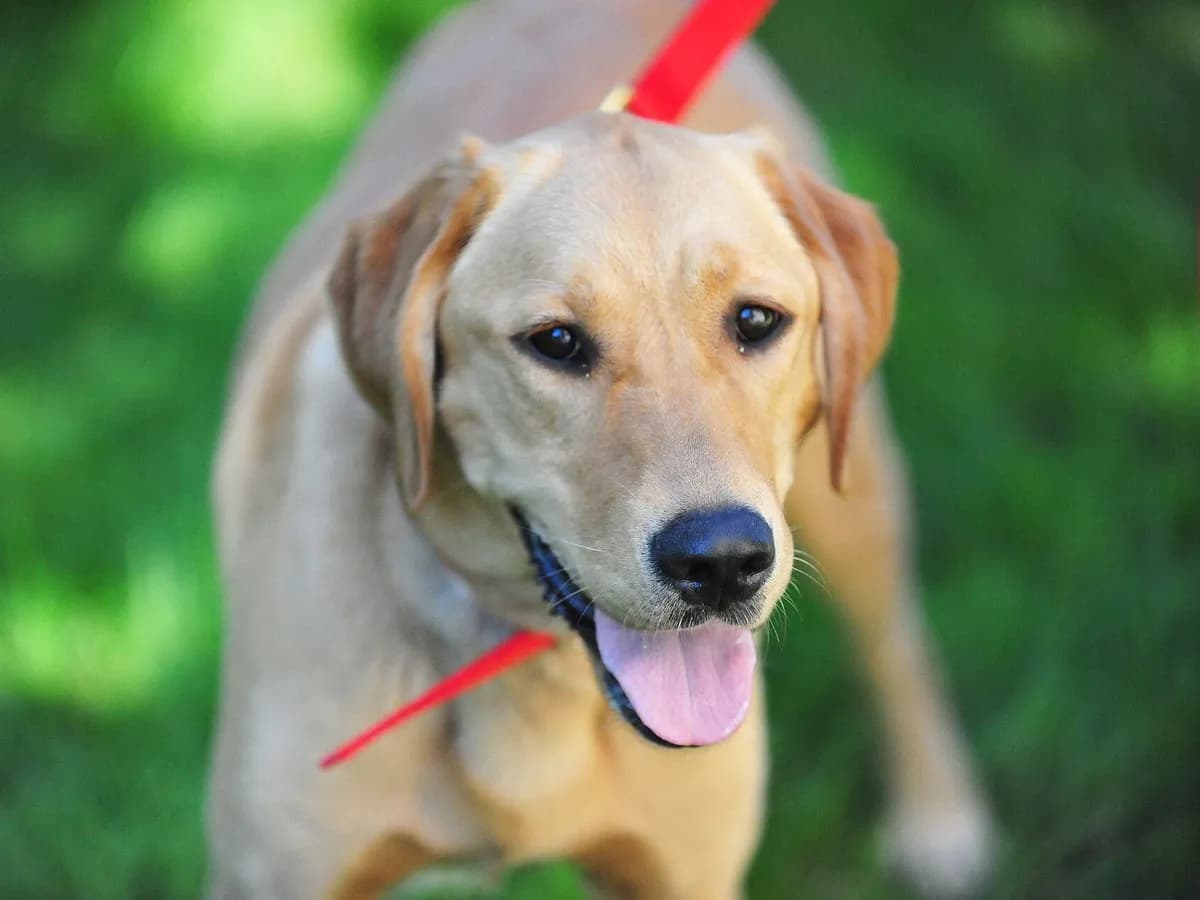
The Goldador is a deliberate cross between the Labrador Retriever and the Golden Retriever, bred in earnest from the early 2000s onwards. Guide and assistance dog organisations led that work, and wanted the Labrador's steadiness with the Golden's gentle biddability. Many of the world's working assistance dogs are exactly this cross. It has no Kennel Club recognition, but its parentage is about as proven as dog breeding gets.
Goldadors typically inherit the friendliness and eagerness to please of both parents, which is why families and the organisations that train guide and assistance dogs like them so much. They tend to be sociable with other dogs and quick to bond with the whole household.
As large, exuberant retrievers, Goldador puppies benefit from early, consistent training to manage jumping up, mouthing and their legendary enthusiasm around food. Their retriever instincts mean they thrive with a job to do, and boredom without enough outlet can show up as weight gain or destructive chewing.
Common health conditions
Things Goldador owners commonly watch for. Guidance, not veterinary advice.
Hip and elbow dysplasia
Both parent breeds carry a meaningful risk of joint laxity that can lead to early arthritis. Keeping a Goldador lean from puppyhood is the most effective protection an owner can offer.
Obesity
Labradors are among the UK's most overweight breeds, and Goldadors inherit the same steady appetite. Measure meals and resist extra treats more firmly than you would with most dogs.
Progressive retinal atrophy (PRA)
An inherited eye condition seen in both parent breeds causing gradual vision loss. Choose breeders who health-test the parent dogs.
Ear infections
Floppy, low-set ears trap moisture and wax. Check and dry the ears regularly after swimming or wet walks to prevent recurring trouble.
Feeding a Goldador
As a large, active cross descended from two food-driven breeds, the Goldador needs a diet formulated for large-breed adults, with measured portions rather than free feeding. Both parents are known for a genuine propensity to overeat, so calorie-controlled meals, a slow-feeder bowl and firm limits on titbits matter more here than for many breeds.
A large-breed puppy formula with controlled calcium and phosphorus suits a Goldador puppy, since steady joint development guards against the dysplasia that rapid growth can worsen. Move to adult food once growth slows around 12 to 15 months. Adults carrying extra weight often benefit from a weight-management or joint-support formula alongside regular, varied exercise.
Every dog is different — weight, age and activity all shift what a Goldador needs. The turns these breed tendencies into a shortlist matched to your dog’s age, size, budget and needs.
Typical adult weight
25–36 kg
Est. daily calories
940–1,850 kcal
A broad guide for an average-activity adult in good body condition — not veterinary advice. Real needs vary with age, neutering, activity, health and body condition, so no two Goldadors eat exactly the same. Get a personalised estimate or estimate feeding costs.
- Per day
- ~£1.48
- Per month
- ~£45
- Per year
- ~£541
A broad typical monthly budget guide, not a live price quote. Food format, calorie density, pack size and retailer pricing all change the real cost.
Find the right food for your Goldador
Foods ranked to your dog
Answer a few quick questions and the Food Finder ranks foods to your Goldador by score, price, life stage and fit.
Breed at a glance
- Exercise needs8/10
- Appetite9/10
- Trainability9/10
- Good with children9/10
- Shedding6/10
- Tolerates being alone4/10
The good & the worth-knowing
The good
- Friendly, biddable temperament that suits families and first-time owners
- Highly trainable and eager to please, responding well to positive reinforcement
- Sociable with children, other dogs and generally with strangers too
Worth knowing
- Strong food drive and a tendency to overeat means portion control needs real discipline
- High daily exercise and mental stimulation needs suit active households
- As an unrecognised cross, adult size, coat and temperament vary between litters
Best matched accessories
All accessoriesThe collections that suit the breed, judged by the same independent standard.
Common owner questions
How much should I feed a Goldador to avoid it becoming overweight?
Start from the feeding guide on the packaging for the dog's current weight and activity, then adjust to body condition rather than the number alone. Ribs are easy to feel without heavy pressure, and the waist shows from above. Our Food Finder can compare calorie-appropriate options.
Is a Goldador the same as a Labrador or a Golden Retriever?
No. A Goldador is a first-generation cross between the two breeds, so it isn't recognised by the Kennel Club and has no fixed standard. Individual dogs can lean towards either parent in size, coat and temperament.
How much exercise does a Goldador need?
Both parents were working dogs, and it shows: most adults do well with an hour to two hours a day across walks, play and retrieving games. Puppies need much shorter, controlled sessions to protect developing joints.
Do Goldadors have specific dietary needs?
They benefit from a large-breed formula with controlled minerals as puppies, and calorie-controlled, measured meals as adults given how easily both parent breeds gain weight. Joint-support formulas are worth considering into the senior years.