


Most important facts
- Group
- Utility
- Size
- Medium
- Weight
- 18–29 kg
- Lifespan
- 9–11 years
- Coat
- Short
- Energy
- Moderate
- Height
- 44–51 cm
- Colours
- Black, red, fawn, cream or blue
- Shedding
- Light
- Est. feeding cost
- ~£1.25 a day
- Gear to consider
- Soft-bristle grooming brush, vet-recommended ear-cleaning solution with cotton pads, slow-feeder bowl
Typical dry food, adult
About the Shar Pei
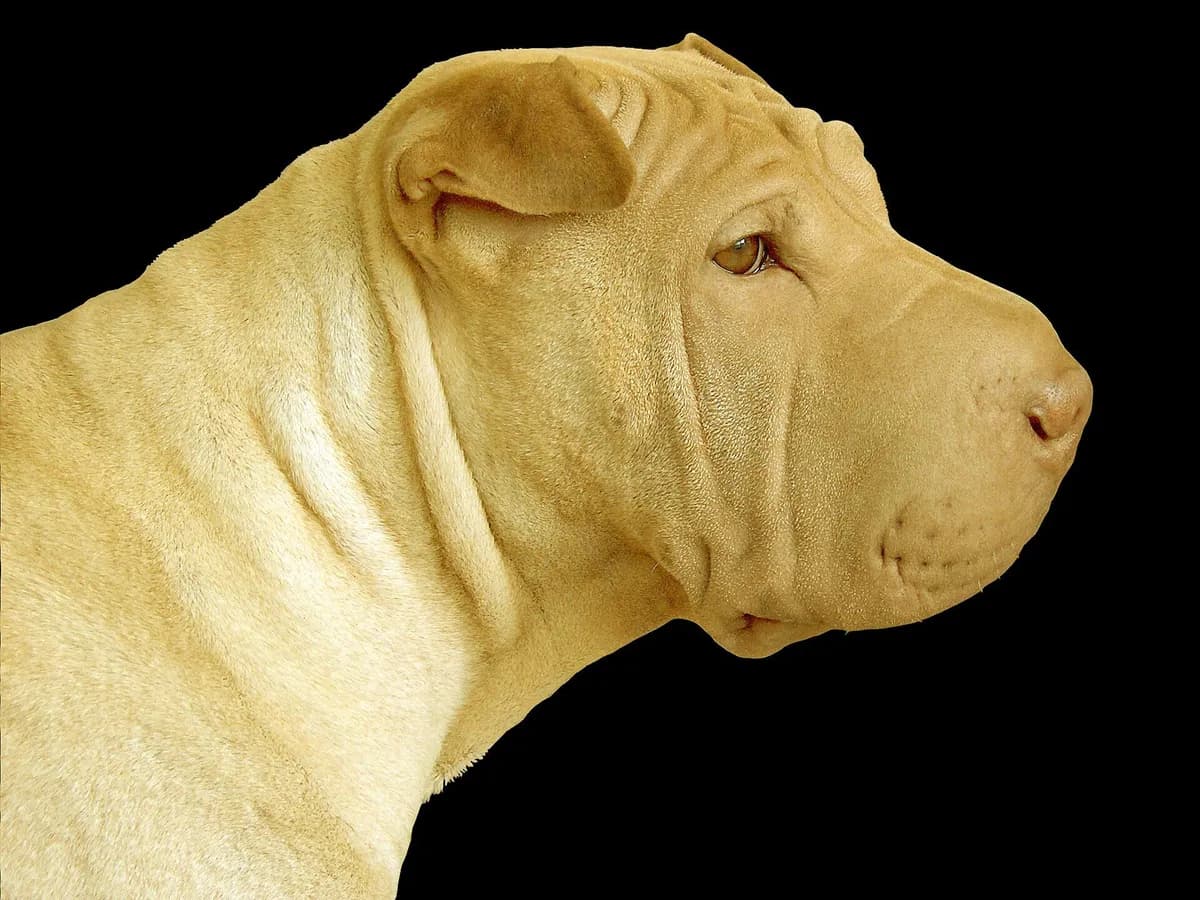
The Shar Pei served Chinese farmers as a hunter, guard and fighting dog for some two thousand years, with Han dynasty tomb figurines showing unmistakably wrinkled dogs. The breed was all but wiped out in mid-twentieth-century China, and was at that point described as the rarest dog in the world. Hong Kong breeder Matgo Law's 1970s appeal to American fanciers saved it. The wrinkles have been famous ever since.
Well-socialised Shar Pei are loyal, calm and quietly devoted to their family, often bonding closely with one particular person. They tend to be reserved and watchful around strangers rather than outgoing, which suits owners who want a low-key companion rather than a dog that greets every visitor with enthusiasm.
Early, careful socialisation matters a great deal with this breed, as an under-socialised Shar Pei can become suspicious or reactive towards unfamiliar people and dogs. They are intelligent but independent-minded, so training rewards patience and consistency, and food-motivated positive reinforcement using the normal daily ration works well without piling on extra calories.
Common health conditions
Things Shar Pei owners commonly watch for. Guidance, not veterinary advice.
Entropion (in-turned eyelids)
The most commonly diagnosed condition in the breed, caused by loose facial skin folding the eyelid inward. Ask breeders directly about it, as many puppies need corrective surgery.
Ear infections (otitis externa)
Narrow, folded ear canals trap moisture and wax. Check gently and dry thoroughly after washing, with a skin-supporting diet to reduce flare-ups.
Skin fold dermatitis and allergies (atopy)
Skin creases can trap moisture and become sore, and many Shar Pei also have environmental allergies. Keep the folds clean and dry and feed a skin-supportive diet.
Familial Shar Pei Fever
An inherited condition causing recurrent fever and swollen joints that can lead to kidney damage over time. Agree a flare-up plan with your vet early on.
Breathing difficulties linked to facial conformation (BOAS)
The thickened, folded muzzle can narrow the airway in some dogs. Keep to a lean, well-managed weight to reduce the strain on breathing.
Feeding a Shar Pei
Shar Pei do not have the sky-high energy needs of a working breed. It is easy to overfeed a dog that is only moderately active and add weight the joints and airway do not need. Portion to the feeding guide, then adjust using body condition, with a moderate-protein complete food fed in two meals.
Because skin and ear problems are so common in the breed, many owners find a diet with good levels of omega-3 and omega-6 fatty acids helps support skin barrier health alongside any vet-directed treatment. Slow, calm feeding from a low, wide bowl also helps, since deep folds can trap food debris near the creases.
Every dog is different — weight, age and activity all shift what a Shar Pei needs. The turns these breed tendencies into a shortlist matched to your dog’s age, size, budget and needs.
Typical adult weight
18–29 kg
Est. daily calories
730–1,400 kcal
A broad guide for an average-activity adult in good body condition — not veterinary advice. Real needs vary with age, neutering, activity, health and body condition, so no two Shar Peis eat exactly the same. Get a personalised estimate or estimate feeding costs.


- Per day
- ~£1.25
- Per month
- ~£38
- Per year
- ~£458
A broad typical monthly budget guide, not a live price quote. Food format, calorie density, pack size and retailer pricing all change the real cost.
Find the right food for your Shar Pei
Foods ranked to your dog
Answer a few quick questions and the Food Finder ranks foods to your Shar Pei by score, price, life stage and fit.
Breed at a glance
- Exercise needs4/10
- Appetite5/10
- Trainability5/10
- Good with children4/10
- Shedding3/10
- Tolerates being alone4/10
The good & the worth-knowing
The good
- Low-shedding, easy-care short coat that needs only weekly brushing
- Calm, quietly devoted temperament that suits a settled household
- Naturally watchful and protective without being highly vocal

Worth knowing
- Prone to a cluster of skin, eye and ear problems needing lifelong vigilance
- Can be aloof, stubborn and wary of strangers without thorough early socialisation
- Not the easiest breed for first-time owners or households with very young children
Best matched accessories
All accessoriesThe collections that suit the breed, judged by the same independent standard.

Common owner questions
How much should I feed my Shar Pei?
Start with the feeding guide for their current weight, then adjust to body condition, since Shar Pei are only moderately active and gain weight easily. Our Food Finder can help match a food to their size and activity.
Does diet help with a Shar Pei's skin problems?
Diet won't resolve entropion or Familial Shar Pei Fever on its own. A food with good omega-3 and omega-6 levels can support skin barrier health and ease general skin and coat condition alongside any veterinary treatment your dog needs.
Are Shar Pei good with children?
They can do well in a calm, experienced household when raised with children from puppyhood. Their reserved, sometimes stubborn nature means they are not the best first choice for families with very young or boisterous children.
How much exercise does a Shar Pei need?
Around an hour a day of walking split across the day suits most adults well. Because they are only moderately active, keep an eye on portion sizes so exercise and feeding stay balanced.