


Most important facts
- Group
- Utility
- Size
- Large
- Weight
- 20–32 kg
- Lifespan
- 9–12 years
- Coat
- Dense
- Energy
- Moderate
- Height
- 46–56 cm
- Colours
- Red, black, blue, fawn or cream
- Shedding
- Heavy
- Est. feeding cost
- ~£1.31 a day
- Gear to consider
- Undercoat rake or de-shedding brush, slow-feeder bowl, no-pull harness
Typical dry food, adult
About the Chow Chow
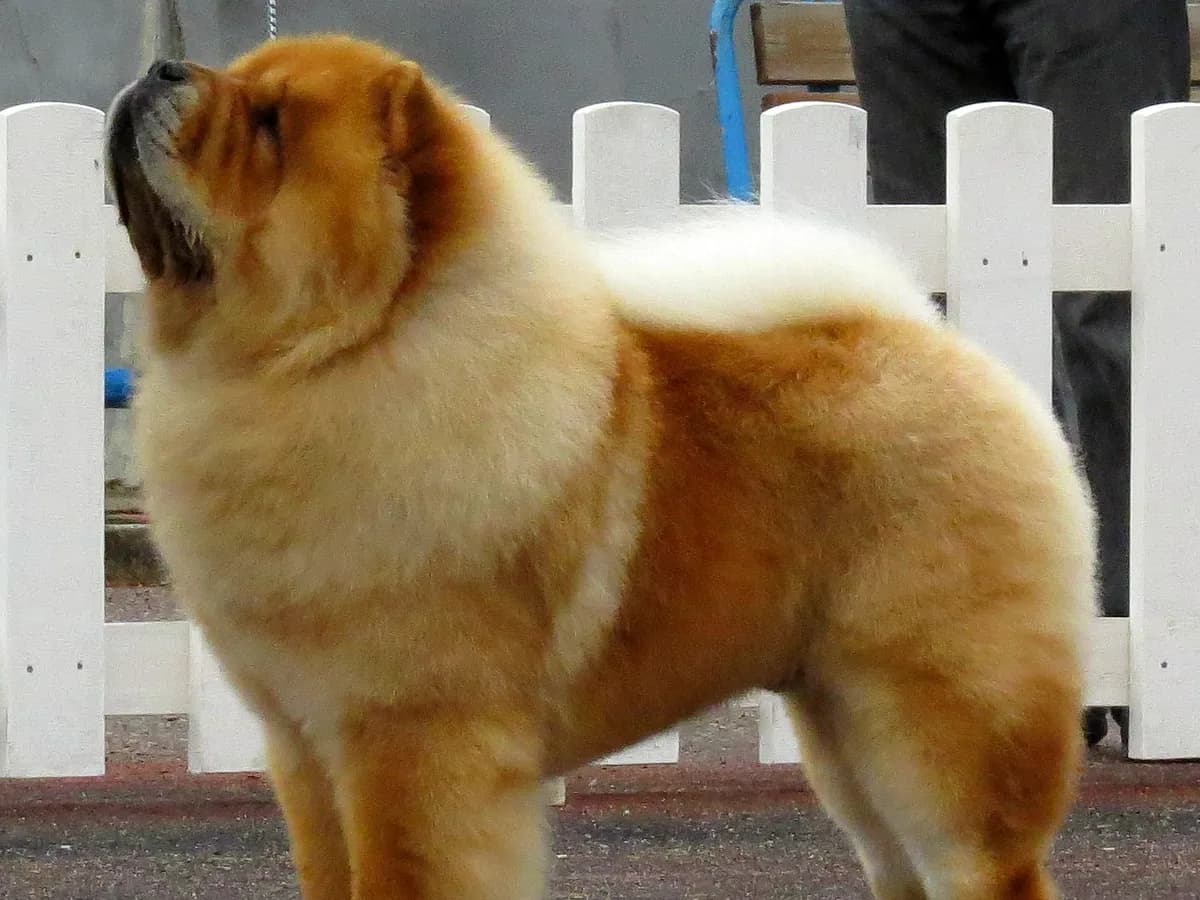
The Chow Chow is one of the world's oldest breeds, kept in China for well over two thousand years as a hunter, guardian and cart-puller. DNA studies place it among the closest breeds to the dog's earliest ancestors. The name is generally traced to the pidgin-English term for miscellaneous ship's cargo, and the breed arrived in Britain in the late eighteenth century, later winning royal admirers.
The Kennel Club standard describes the Chow Chow as independent, loyal, yet aloof, and that captures them well. They are natural watchdogs, reserved with strangers while forming strong, quiet bonds with their own family. Early, ongoing socialisation matters more here than with many breeds, as their guarding instinct can otherwise tip into over-protectiveness.
This is not a breed that thrives on constant activity or attention, and most settle well at home once given a solid daily walk and some mental stimulation. Their stubborn streak means training rewards patience and consistency. Because they burn fewer calories through play than boisterous breeds, matching food to their true activity level keeps them in shape.
Common health conditions
Things Chow Chow owners commonly watch for. Guidance, not veterinary advice.
Hip and elbow dysplasia
A common concern in the breed. Accurate portioning keeps your Chow lean, which spares the joints.
Entropion (inward-rolling eyelids)
The breed's heavy facial skin makes inward-rolling eyelids common. Watch for excessive tearing or squinting and see a vet promptly.
Gastric dilatation-volvulus (bloat)
A deep-chested breed at raised risk. Break the daily ration into smaller meals, two or more, and keep vigorous exercise well away from mealtimes.
Hypothyroidism
Weight gain and a dull coat can point to an underactive thyroid. Report unexplained changes in condition to your vet, as diet alone won't resolve it.
Skin fold infections (pyoderma)
The dense coat and facial folds trap moisture and debris. Keep up regular grooming and drying alongside good nutrition for the coat.
Feeding a Chow Chow
Chow Chows are a moderate-energy breed that carries weight easily if fed as though they were as active as a working collie. A complete diet with sensible energy density, fed in weighed portions and never free-fed, keeps them lean, which matters for a breed predisposed to hip and elbow dysplasia. Splitting the ration into two or more meals also helps manage the breed's raised bloat risk.
Coat and skin are a bigger nutritional consideration here than for smoother-coated breeds, given the dense double coat and deep facial folds prone to irritation. Diets with good omega-3 and omega-6 levels support skin and coat quality alongside regular grooming and fold-drying. Watch body condition as Chows age, since a drop in activity shows up quickly as weight gain.
Every dog is different — weight, age and activity all shift what a Chow Chow needs. The turns these breed tendencies into a shortlist matched to your dog’s age, size, budget and needs.
Typical adult weight
20–32 kg
Est. daily calories
790–1,510 kcal
A broad guide for an average-activity adult in good body condition — not veterinary advice. Real needs vary with age, neutering, activity, health and body condition, so no two Chow Chows eat exactly the same. Get a personalised estimate or estimate feeding costs.
- Per day
- ~£1.31
- Per month
- ~£40
- Per year
- ~£477
A broad typical monthly budget guide, not a live price quote. Food format, calorie density, pack size and retailer pricing all change the real cost.
Find the right food for your Chow Chow
Foods ranked to your dog
Answer a few quick questions and the Food Finder ranks foods to your Chow Chow by score, price, life stage and fit.
Breed at a glance
- Exercise needs5/10
- Appetite6/10
- Trainability3/10
- Good with children4/10
- Shedding8/10
- Tolerates being alone5/10
The good & the worth-knowing
The good
- Loyal, watchful companion that bonds closely with its family
- Relatively calm and settled indoors once daily exercise needs are met
- Distinctive lion-like appearance with a dense, weather-resistant double coat
Worth knowing
- Heavy shedding with dramatic seasonal coat blows needing daily brushing
- Independent, sometimes stubborn temperament that makes training slower
- Predisposed to joint problems, entropion, bloat and skin fold infections
Best matched accessories
All accessoriesThe collections that suit the breed, judged by the same independent standard.
Common owner questions
How much exercise does a Chow Chow need?
Around an hour a day is typical, split across walks rather than one long session, plus some off-lead time somewhere secure. They are not a high-energy breed, so match meal portions to that moderate activity.
Are Chow Chows easy to train?
Not especially. They are intelligent but independent and can be stubborn, so short, consistent, reward-based sessions work best. Using part of the daily food allowance as training treats, rather than adding extra, avoids creeping weight gain.
What should I feed a Chow Chow to avoid weight gain?
Let ideal body condition, not the pack guideline alone, decide how much complete food you weigh out, and reassess as activity changes with age. Our Food Finder can help match a food's energy density to a Chow's moderate exercise needs.
Do Chow Chows need a special diet for their skin and coat?
There's no single Chow Chow diet, but a food with good omega-3 and omega-6 levels supports the dense double coat and the skin around the facial folds. This works alongside regular grooming and fold care, and replaces neither.