


Most important facts
- Group
- Utility
- Size
- Small
- Weight
- 3–9 kg
- Lifespan
- 13–15 years
- Coat
- Dense
- Energy
- High
- Height
- 25–33 cm
- Colours
- Black
- Shedding
- Moderate
- Est. feeding cost
- ~£0.39 a day
- Gear to consider
- De-shedding undercoat rake, secure well-fitted harness, puzzle feeders
Typical dry food, adult
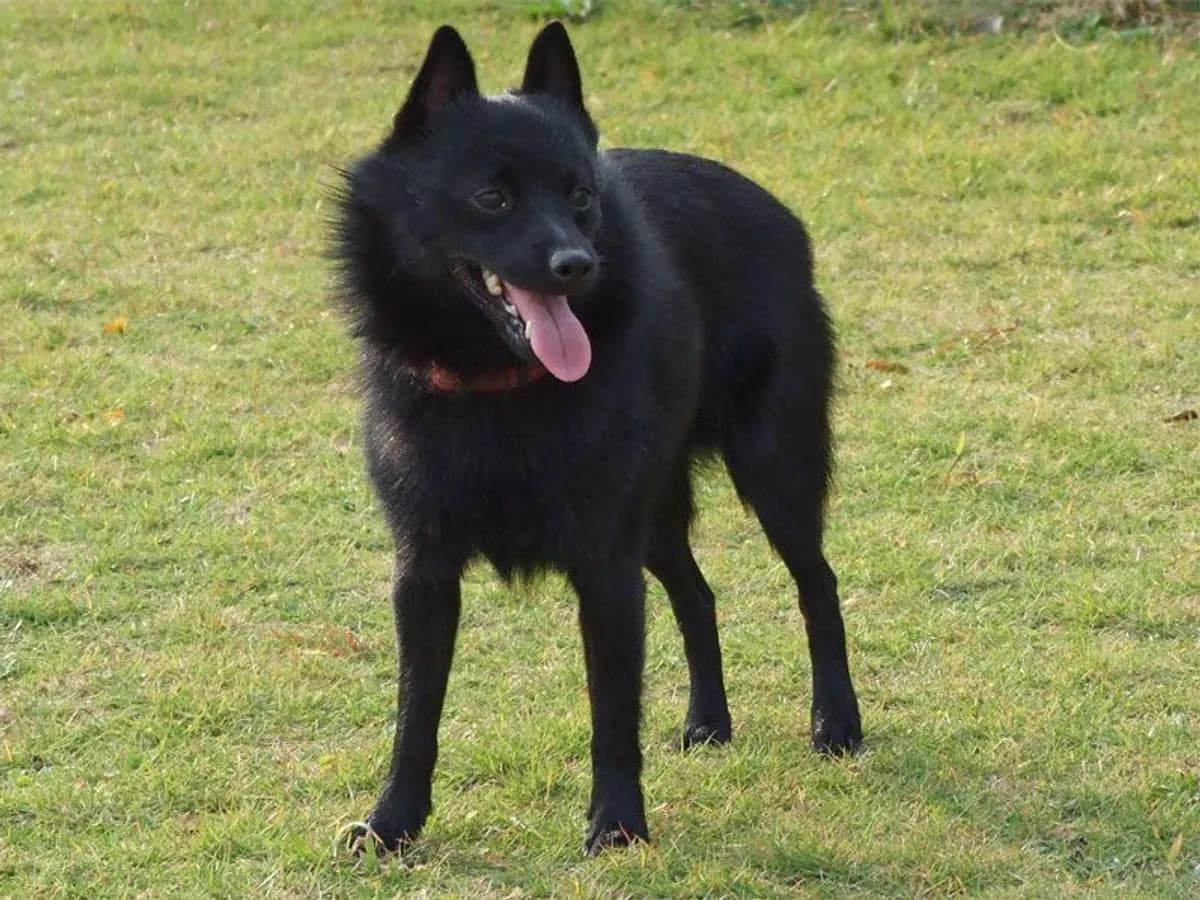
About the Schipperke
On the canal barges of Belgium, the Schipperke earned its keep by guarding the boat and clearing rats between ports. Its name is usually translated as little captain. It was equally at home with the tradesmen's guilds of Brussels, whose members showed off their dogs' brass collars on Sundays. The bold, tailless silhouette has changed little in over a century.
Schipperkes are endlessly curious and mischievous, and constantly on the move. Belgian bargemen gave them the old nickname of little black devils. They are natural watchdogs, quick to bark at anything unfamiliar, and their sharp intelligence means they need regular mental stimulation or that energy surfaces as digging, escaping or general mischief.
Within the family they are typically devoted and playful, though often reserved with strangers unless socialised from puppyhood. They can do well with children who handle a small, high-energy dog gently, with supervision. A predictable routine, including set feeding times rather than food left down all day, channels their busy, food-motivated nature into good manners.
Common health conditions
Things Schipperke owners commonly watch for. Guidance, not veterinary advice.
Patellar luxation
A common small-breed knee condition: the kneecap slips out of position. Weigh portions accurately so a Schipperke stays lean, which eases the load on the joints.
Legg-Calvé-Perthes disease
A hip joint disorder seen in small breeds affecting blood supply to the femoral head, usually in young dogs. Feed a controlled growth rate on an appropriate small-breed puppy food.
Von Willebrand's Disease Type 1
An inherited bleeding disorder for which a DNA test exists. Choose breeders who test their breeding stock.
Mucopolysaccharidosis IIIB (MPS IIIB)
A rare inherited metabolic storage disease with a DNA test available. Screening of breeding pairs has reduced its incidence, so ask breeders for results.
Epilepsy
Reported in the breed with no current genetic screening test. Have any dog showing seizure activity assessed by a vet promptly.
Feeding a Schipperke
Small in stature but far from low-energy, Schipperkes generally do well on an energy-dense complete food formulated for small breeds, with kibble sized for their compact jaw. They are keen, opportunistic eaters, so free feeding is a mistake. Portioning accurately against body condition avoids the gradual weight gain that strains knees prone to luxation.
The breed has a dense double coat and a predisposition to joint issues such as patellar luxation and Legg-Calvé-Perthes disease. Prioritise foods with good omega fatty acids for the coat and added joint-support nutrients like glucosamine. Keep treats modest, as this breed's enthusiasm for food can outpace its genuinely small daily calorie needs.
Every dog is different — weight, age and activity all shift what a Schipperke needs. The turns these breed tendencies into a shortlist matched to your dog’s age, size, budget and needs.
Typical adult weight
3–9 kg
Est. daily calories
190–650 kcal
A broad guide for an average-activity adult in good body condition — not veterinary advice. Real needs vary with age, neutering, activity, health and body condition, so no two Schipperkes eat exactly the same. Get a personalised estimate or estimate feeding costs.

- Per day
- ~£0.39
- Per month
- ~£12
- Per year
- ~£142
A broad typical monthly budget guide, not a live price quote. Food format, calorie density, pack size and retailer pricing all change the real cost.
Find the right food for your Schipperke
Foods ranked to your dog
Answer a few quick questions and the Food Finder ranks foods to your Schipperke by score, price, life stage and fit.
Breed at a glance
- Exercise needs7/10
- Appetite7/10
- Trainability6/10
- Good with children6/10
- Shedding6/10
- Tolerates being alone4/10
The good & the worth-knowing
The good
- Big, alert personality packed into a low-space-need, small-breed size
- Naturally watchful, making them quick to alert owners to visitors
- Adaptable and hardy, coping well with town or country life given enough activity

Worth knowing
- Can be vocal and wary of strangers if not well socialised early on
- Known for digging, escaping and chasing, so gardens need secure fencing
- An independent streak means training takes patience despite the breed's intelligence
Best matched accessories
All accessoriesThe collections that suit the breed, judged by the same independent standard.
Common owner questions
How much exercise does a Schipperke need?
Walk them for 45 to 60 minutes a day across two outings, and add regular play and puzzle toys. Without enough to do, this breed's energy comes out as digging or escaping.
Are Schipperkes good with children?
They can be, particularly with children old enough to be gentle and consistent with a small, boisterous dog, but their boldness and size mean time together should always be supervised.
How much should I feed a Schipperke?
Follow the feeding guide on a small-breed food, then adjust to a body condition where you can feel the ribs beneath a slight covering. This breed is a keen eater, so weigh meals rather than guessing, and our Food Finder can help match a food to their age and activity.
Do Schipperkes have particular food sensitivities?
Food allergies are not a particular problem in this breed, though any dog can develop sensitivities. Watch for loose stools, itching or a dull coat, and use our Food Finder to find a suitable formula if issues appear.