

Most important facts
- Group
- Utility
- Size
- Medium
- Weight
- 14–20 kg
- Lifespan
- 10–14 years
- Coat
- Double coat: straight, harsh
- Energy
- Moderate
- Height
- 43–46 cm
- Colours
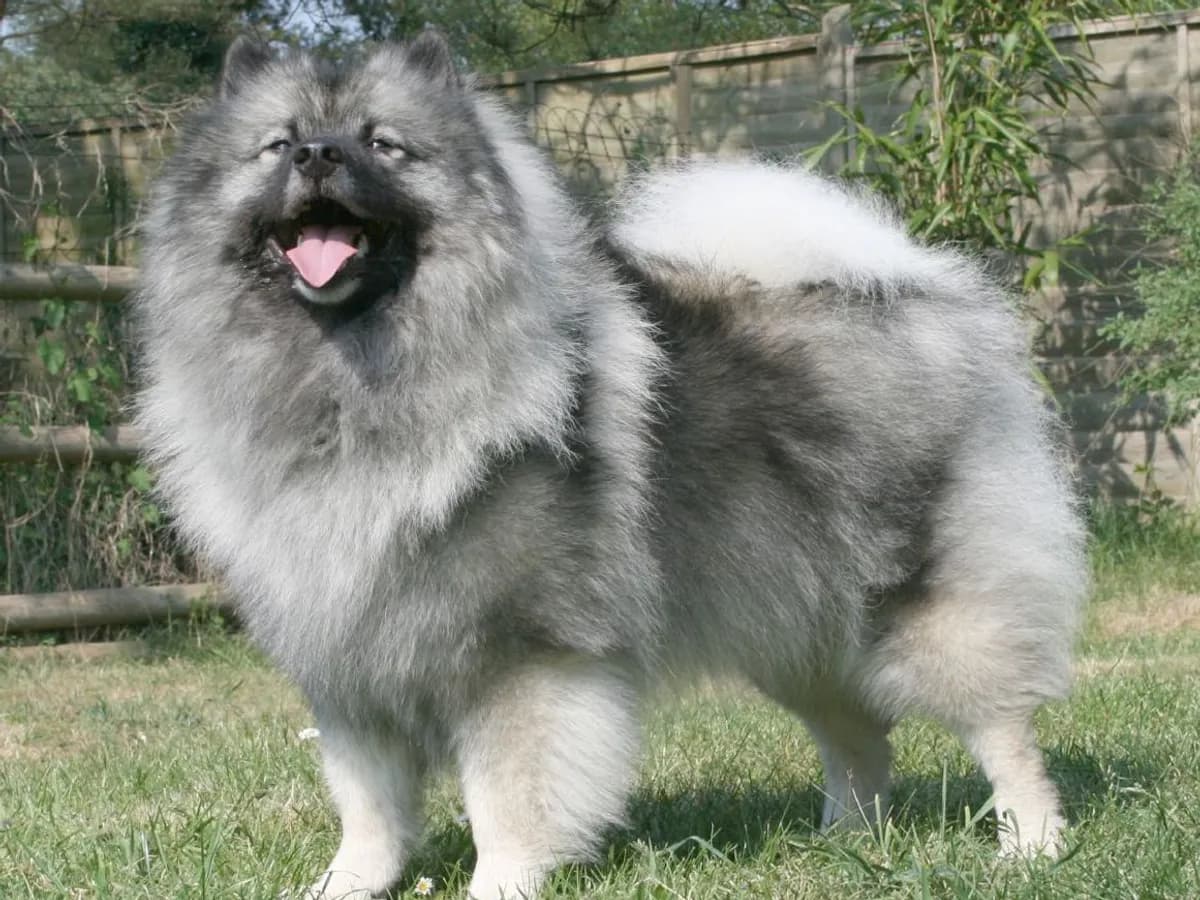
- Silver-grey with black shading
- Shedding
- Heavy
- Est. feeding cost
- ~£1.00 a day
- Gear to consider
- Undercoat rake and slicker brush, joint-support supplement chews, treat-based training pouch
Typical dry food, adult
About the Keeshond
The Keeshond earned its keep as a watchdog on the barges of the Dutch canals, and in the eighteenth century became the emblem of the Dutch Patriot party, named after the party leader's dog Kees. When the political tide turned, the breed's popularity collapsed with it, and it was rescued from obscurity by dedicated fanciers in the 1920s. It remains the Netherlands' best-loved contribution to the spitz family.
Confident and alert, the Keeshond was bred to raise the alarm on Dutch barges and keeps a watchful, vocal streak, often barking to announce visitors or new sounds. Beneath the bark is a thoroughly friendly dog. Early socialisation and consistent training channel this alertness without it becoming a nuisance.
It is a deeply people-orientated breed that does not cope well with long periods alone and can develop separation-related barking or destructiveness if under-stimulated. Regular mealtimes and food-based enrichment, such as puzzle feeders, are a useful outlet for a breed happiest kept busy and close to its family.
Common health conditions
Things Keeshond owners commonly watch for. Guidance, not veterinary advice.
Hip dysplasia
Slack joints, which can bring on arthritis in later life. Keep a Keeshond at a lean, healthy weight through accurate portioning.
Epilepsy
A brain disorder that can cause seizures. Discuss any suspected episodes with a vet promptly, as some medications can also affect appetite and weight.
Luxating patella
The kneecap can slip temporarily out of place. Maintain a healthy body weight to limit extra pressure on the knee.
Primary hyperparathyroidism
An inherited condition, seen more often in this breed than most, that raises blood calcium levels. It needs veterinary diagnosis and treatment, as diet alone cannot manage it.
Skin allergies (atopy)
Often appears between one and three years old as itchy skin, paw-licking or recurrent ear infections. Feed a skin-supporting diet alongside veterinary treatment.
Feeding a Keeshond
This is a medium-sized, moderately active breed, so measure portions against realistic daily activity and not against its confident, energetic appearance. Because the dense double coat can mask early weight gain, check body condition by hand regularly and adjust feeding, particularly around the twice-yearly coat blow. Two measured meals a day suit most adults.
Coat condition is what the breed is known for, and a complete diet built on quality protein with balanced omega fatty acids supports it. Consistent portioning guards against the hip and joint problems it can be prone to. Introduce new foods gradually and watch for signs of itching or ear irritation.
Every dog is different — weight, age and activity all shift what a Keeshond needs. The turns these breed tendencies into a shortlist matched to your dog’s age, size, budget and needs.
Typical adult weight
14–20 kg
Est. daily calories
610–1,060 kcal
A broad guide for an average-activity adult in good body condition — not veterinary advice. Real needs vary with age, neutering, activity, health and body condition, so no two Keeshonds eat exactly the same. Get a personalised estimate or estimate feeding costs.

- Per day
- ~£1.00
- Per month
- ~£30
- Per year
- ~£364
A broad typical monthly budget guide, not a live price quote. Food format, calorie density, pack size and retailer pricing all change the real cost.
Find the right food for your Keeshond
Foods ranked to your dog
Answer a few quick questions and the Food Finder ranks foods to your Keeshond by score, price, life stage and fit.
Breed at a glance
- Exercise needs5/10
- Appetite5/10
- Trainability7/10
- Good with children8/10
- Shedding9/10
- Tolerates being alone2/10
The good & the worth-knowing
The good
- Affectionate, people-focused companion that bonds closely with the whole family
- Alert and watchful, making a naturally good doorbell without excessive aggression
- Moderate exercise needs suit a range of active but not extreme lifestyles
Worth knowing
- Sheds heavily, with a particularly heavy seasonal coat blow twice a year
- Needs regular, thorough grooming to keep the double coat free of mats
- Vocal by nature and prone to separation-related barking if left alone too often
Best matched accessories
All accessoriesThe collections that suit the breed, judged by the same independent standard.
Common owner questions
How much should I feed a Keeshond?
There is no single correct amount. Base feeding on the individual dog's weight, age and activity, checked against body condition rather than the bag guideline alone. Our Food Finder can help narrow down a suitable complete food and starting portion.
Are Keeshonden prone to weight gain?
Their thick double coat can hide early weight gain, so regular hands-on body condition checks matter more than for a shorter-coated breed. Measure meals accurately and limit treats to protect the hips and joints.
Do Keeshonden shed a lot?
Yes, they shed year-round with two heavier seasonal coat blows, so regular brushing is essential. Feeding for skin and coat condition makes the coat easier to manage, though it won't stop the shedding.
Are Keeshonden good with children?
Generally yes. They are affectionate, sociable dogs that do well in family households, though as with any breed, time with young children should always be supervised.
Similar breeds
Photo: dancing with wolves, CC BY 2.0, via Wikimedia Commons