


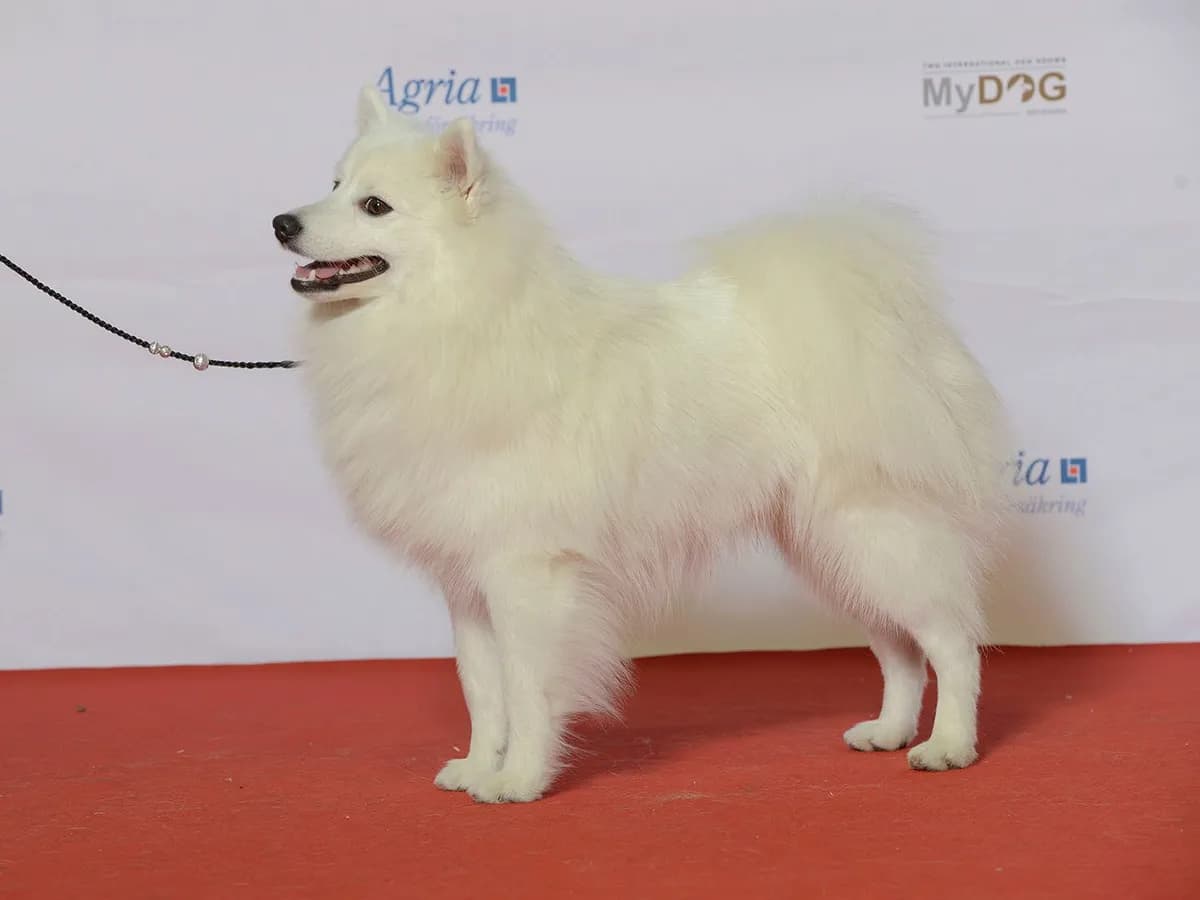

Most important facts
- Group
- Utility
- Size
- Small
- Weight
- 5–7 kg
- Lifespan
- 12–14 years
- Coat
- Dense double coat: straight
- Energy
- High
- Height
- 30–36 cm
- Colours
- Pure white
- Shedding
- Heavy
- Est. feeding cost
- ~£0.52 a day
- Gear to consider
- Slicker brush and undercoat rake, no-pull harness, snuffle mat or puzzle feeder
Typical dry food, adult
About the Japanese Spitz
The Japanese Spitz was developed in Japan between the 1920s and 1940s, when breeders crossed white German Spitz dogs imported from around the world to create a small, snow-white companion. The standard was fixed after the Second World War and the breed spread through Scandinavia and Britain from the 1970s. It remains far less common than its looks deserve, often mistaken for a small Samoyed.
Japanese Spitz are alert, intelligent and lively, forming close bonds with their family and generally getting on well with other household pets. Strangers usually meet reserve on first meeting, a recognised breed trait and not a fault, so early socialisation matters for a confident, well-adjusted adult.
They are a genuinely vocal breed, quick to bark at doorbells, passers-by or anything out of the ordinary, and can become persistent barkers if under-stimulated. Reward-based training suits their intelligent but slightly independent streak, and mental stimulation through short sessions or puzzle feeding channels their energy productively.
Common health conditions
Things Japanese Spitz owners commonly watch for. Guidance, not veterinary advice.
Patellar luxation
The breed's main health concern: the kneecap slips its groove. Keep the dog lean through accurate portion control to reduce strain.
Progressive retinal atrophy (PRA-rcd4)
A late-onset inherited eye condition. Ask breeders for DNA test results for both parents before buying a puppy.
Factor VII deficiency
An inherited blood-clotting disorder found in the breed. Choose breeders who screen through Kennel Club health schemes.
Tear staining (epiphora)
Small or blocked tear ducts can cause runny eyes and staining on the white coat. It's usually cosmetic, but mention worsening staining to a vet.
Feeding a Japanese Spitz
Japanese Spitz are small, active dogs with modest daily calorie needs, so it's easy to overfeed one, especially with training treats. A measured, small-breed complete food fed in two portions a day, with treats counted within the allowance, keeps weight ideal and takes pressure off the knees, the breed's main structural weak point. Puppies do better on three smaller meals.
The profuse white outer coat makes condition highly visible in this breed. Prioritise diets that support skin and coat health with adequate omega-3 and omega-6 oils and quality protein. Small, sometimes fussy appetites mean palatability matters, and smaller kibble suits their neat jaws.
Every dog is different — weight, age and activity all shift what a Japanese Spitz needs. The turns these breed tendencies into a shortlist matched to your dog’s age, size, budget and needs.
Typical adult weight
5–7 kg
Est. daily calories
280–540 kcal
A broad guide for an average-activity adult in good body condition — not veterinary advice. Real needs vary with age, neutering, activity, health and body condition, so no two Japanese Spitzes eat exactly the same. Get a personalised estimate or estimate feeding costs.


- Per day
- ~£0.52
- Per month
- ~£16
- Per year
- ~£192
A broad typical monthly budget guide, not a live price quote. Food format, calorie density, pack size and retailer pricing all change the real cost.
Find the right food for your Japanese Spitz
Foods ranked to your dog
Answer a few quick questions and the Food Finder ranks foods to your Japanese Spitz by score, price, life stage and fit.
Breed at a glance
- Exercise needs6/10
- Appetite5/10
- Trainability6/10
- Good with children6/10
- Shedding8/10
- Tolerates being alone4/10
The good & the worth-knowing
The good
- Affectionate and devoted towards their family
- Naturally clean, dirt-resistant white coat that needs infrequent bathing
- Alert and effective as a watchdog, quick to notice visitors or new sounds

Worth knowing
- Daily brushing is non-negotiable to stop the dense double coat matting
- Can be vocal, barking readily at visitors or noises if under-exercised or bored
- Naturally wary of strangers, so needs consistent early socialisation
Best matched accessories
All accessoriesThe collections that suit the breed, judged by the same independent standard.




Common owner questions
How much should I feed a Japanese Spitz?
Feed to body condition rather than a fixed amount, as this is a small, light-framed breed with modest calorie needs. Use a small-breed complete food, split into two measured meals, and check ribs are easily felt but not visible. Our Food Finder can suggest options for your dog's age and weight.
Are Japanese Spitz prone to putting on weight?
They can be, particularly if treats aren't accounted for or exercise drops in bad weather. Extra weight strains joints already predisposed to patellar luxation, so an owner's most useful job, day to day, is keeping this breed lean.
Do Japanese Spitz need a lot of grooming?
Yes. Daily brushing keeps the dense double coat free of tangles and manages the heavy seasonal shedding known as blowing coat. The coat is naturally dirt-resistant, so bathing can be infrequent, but brushing cannot be skipped.
Are Japanese Spitz good for first-time owners or families with children?
They can suit both, being affectionate and loyal with their own family, though wariness of strangers means early, consistent socialisation matters. With young children, supervise play given their small size, and expect a dog that alert-barks at visitors.
Similar breeds
Photo: Svenska Mässan from Sweden, CC BY 2.0, via Wikimedia Commons