


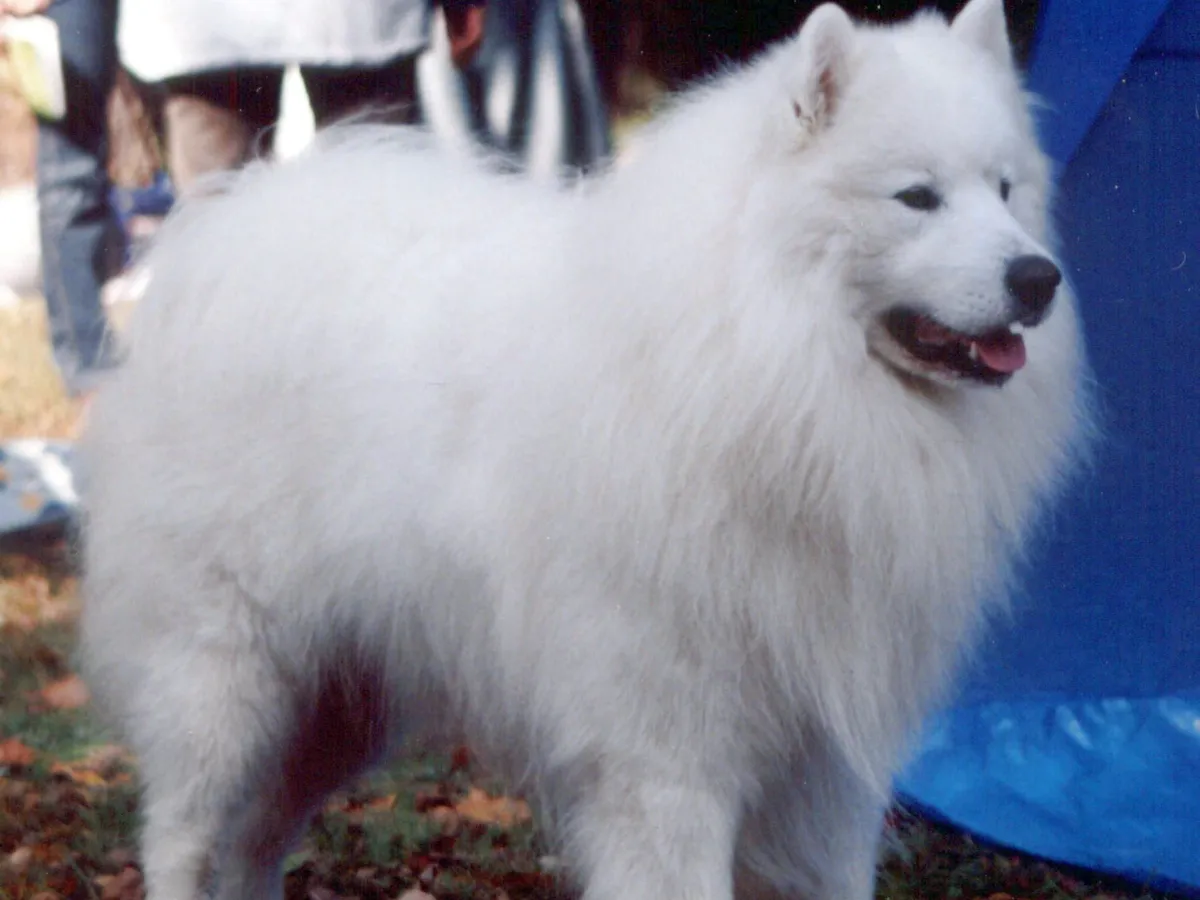

Most important facts
- Group
- Pastoral
- Size
- Medium
- Weight
- 16–30 kg
- Lifespan
- 12–14 years
- Coat
- Thick, dense
- Energy
- High
- Height
- 46–56 cm
- Colours
- White, cream or white and biscuit
- Shedding
- Heavy
- Est. feeding cost
- ~£1.08 a day
- Gear to consider
- Undercoat rake or de-shedding brush, cooling mat for warm weather, no-pull harness for his natural pulling instinct
Typical dry food, adult
About the Samoyed
The Samoyed takes its name from the Samoyede people of Siberia, who bred it to herd reindeer, haul sledges and sleep in the tent as a living hot water bottle. That closeness shaped its people-loving temperament. The breed later served on polar expeditions with Nansen and Amundsen. The upturned mouth corners that create the Sammy smile also stop drool freezing in Arctic air.
Samoyeds are friendly, sociable dogs that were bred to live in close quarters with their human families, and that heritage shows in how much they crave company. They're gentle with children and generally good with other dogs, but their pack instincts mean they don't cope well left alone for long and can develop separation anxiety, including a distinctive vocal scream when distressed.
Bred for demanding Arctic work, Samoyeds are intelligent, alert and have real stamina. They can be independent-minded and occasionally stubborn, so consistent, reward-based training works best, and because they were bred to problem-solve without constant direction, mental stimulation alongside physical exercise helps prevent boredom-driven barking or digging.
Common health conditions
Things Samoyed owners commonly watch for. Guidance, not veterinary advice.
Hip dysplasia
The hip joint forms poorly and can cause pain and early arthritis. Accurately portioned food keeps a Samoyed lean and takes strain off the joints.
Diabetes mellitus
Samoyeds have a recognised predisposition to diabetes. Maintain a healthy body weight and avoid excess treats or fatty scraps.
Eye problems (including cataracts)
Inherited eye conditions are screened through Kennel Club and BVA schemes in breeding stock. Book annual vet checks to catch changes early.
Samoyed Hereditary Glomerulopathy (SHG)
An inherited kidney condition specific to the breed affecting the kidney's filtering ability. Choose tested breeders, and follow vet-guided feeding for any dog with kidney concerns.
Feeding a Samoyed
Samoyeds carry a well-documented predisposition to diabetes, making accurately measured portions more important than for many breeds, so free-feeding or generous scraps aren't a good fit. A complete diet with steady, moderate energy density suits their working-dog metabolism better than anything overly rich, and treats are best kept genuinely occasional.
The thick double coat is fuelled from the inside as much as the outside. Diets that support skin and coat condition, with good protein and adequate omega fatty acids, help keep shedding manageable through both seasonal blows. Given the breed's joint and kidney sensitivities, keeping a Samoyed at a lean, correct body condition throughout life is one of the most protective things an owner can do.
Every dog is different — weight, age and activity all shift what a Samoyed needs. The turns these breed tendencies into a shortlist matched to your dog’s age, size, budget and needs.
Typical adult weight
16–30 kg
Est. daily calories
670–1,620 kcal
A broad guide for an average-activity adult in good body condition — not veterinary advice. Real needs vary with age, neutering, activity, health and body condition, so no two Samoyeds eat exactly the same. Get a personalised estimate or estimate feeding costs.

- Per day
- ~£1.08
- Per month
- ~£33
- Per year
- ~£395
A broad typical monthly budget guide, not a live price quote. Food format, calorie density, pack size and retailer pricing all change the real cost.
Find the right food for your Samoyed
Foods ranked to your dog
Answer a few quick questions and the Food Finder ranks foods to your Samoyed by score, price, life stage and fit.
Breed at a glance
- Exercise needs8/10
- Appetite6/10
- Trainability6/10
- Good with children8/10
- Shedding9/10
- Tolerates being alone3/10
The good & the worth-knowing
The good
- Warm, affectionate and highly sociable with family, including children
- Strikingly beautiful white coat and an alert, friendly Sammy smile
- Intelligent and adaptable, thriving on both physical exercise and mental engagement

Worth knowing
- Sheds heavily and consistently, with a particularly heavy coat blow twice a year
- Prone to separation anxiety and can be vocal, including a distinctive high-pitched scream
- Thick double coat and Arctic heritage mean careful management in warm weather
Best matched accessories
All accessoriesThe collections that suit the breed, judged by the same independent standard.


Common owner questions
Why does my Samoyed shed so much, and does diet help?
The breed's dense double coat blows out fully twice a year on top of steady year-round shedding. Regular brushing does most of the work, but a diet with good protein and balanced omega fatty acids supports the coat from the inside, and the Food Finder can help you check for one.
How much should I feed a Samoyed to avoid weight gain?
Because the breed is predisposed to diabetes and joint problems, feeding to an accurately weighed portion rather than guessing matters more than usual. Follow the pack guideline as a starting point, then adjust based on body condition, checking ribs are easily felt but not visible.
Is the Samoyed hypoallergenic?
No. Despite sometimes being described this way, Samoyeds shed heavily and are not considered hypoallergenic. Anyone with allergies should spend time with the breed before committing.
How much exercise does a Samoyed need?
Around two hours a day, including off-lead running where safe, given his working heritage as a herding and sledding dog. An under-exercised Samoyed is more likely to become vocal or destructive, and to carry excess weight, so balance activity and portions together.