

Most important facts
- Group
- Toy
- Size
- Small
- Weight
- 6.3–8.1 kg
- Lifespan
- 12–15 years
- Coat
- Short, smooth
- Energy
- Low
- Height
- 25–33 cm
- Colours
- Fawn, apricot, silver or black
- Shedding
- Moderate
- Est. feeding cost
- ~£0.58 a day
- Gear to consider
- Slow-feeder bowl, cooling mat, flat harness (no neck pressure)
Typical dry food, adult
About the Pug
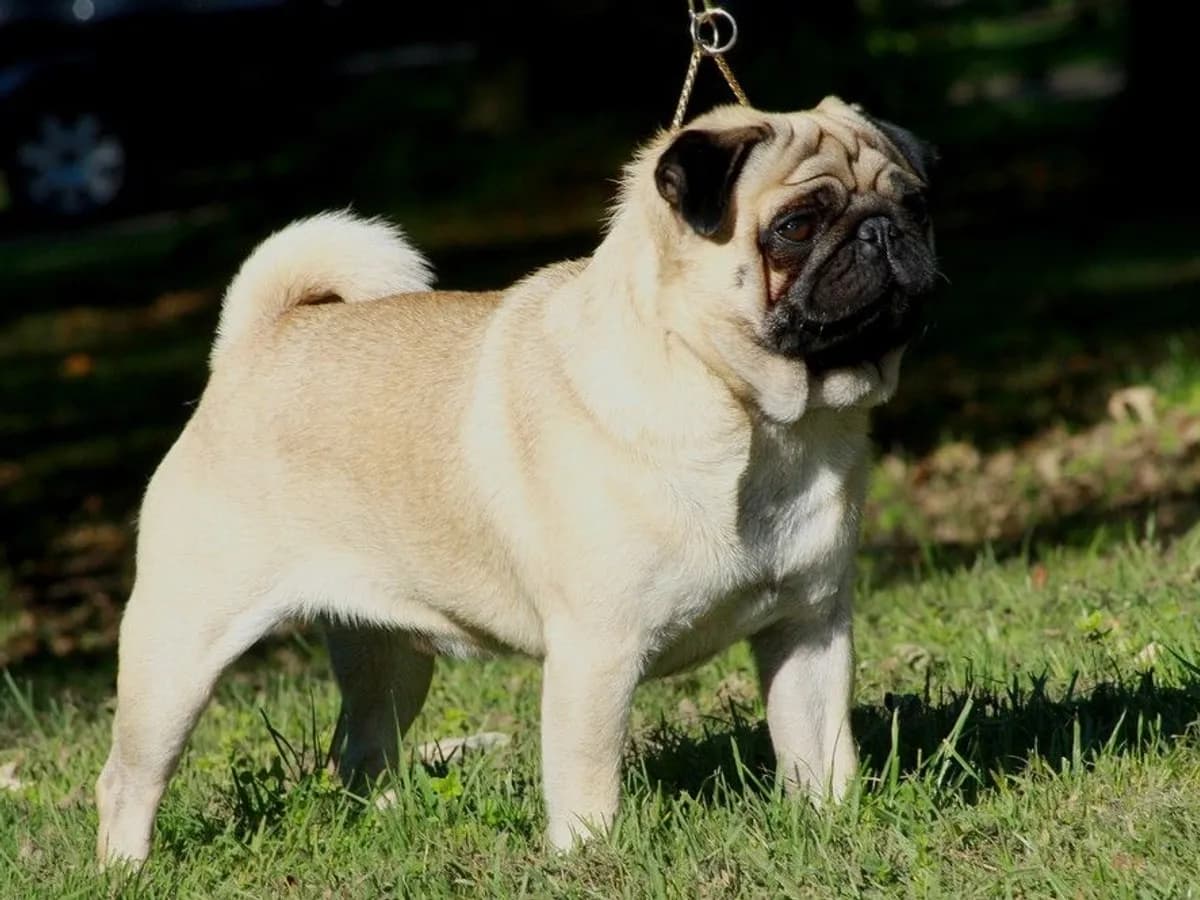
The Pug began as a treasured lapdog of Chinese emperors and was carried to Europe by Dutch East India Company traders in the sixteenth century. It became the mascot of the House of Orange after a Pug named Pompey reputedly saved Prince William's life by raising the alarm. Victorian Britain adored it, and its wrinkled charm has never really gone out of fashion since.
Pugs are affectionate and eager to be near their people, often described as having a big personality in a small frame. Properly socialised, most Pugs are easy with children and other household pets, and they generally dislike being left alone for long periods.
Companionship, not a job to do, is what this breed thrives on. Their food-motivated nature makes training relatively easy, and it also makes them quick to beg and quick to gain weight. Firm portion control, with no free feeding, keeps a happy, food-driven dog at a healthy size.
Common health conditions
Things Pug owners commonly watch for. Guidance, not veterinary advice.
Brachycephalic Obstructive Airway Syndrome (BOAS)
The flat face makes Pugs among the breeds most affected by airway problems. Keep weight down and avoid heat and over-exertion to ease the breathing load.
Obesity
Pugs are diagnosed with excess weight more often than almost any breed. Weighed, measured meals matter more here than for most dogs.
Eye conditions (corneal ulcers, entropion)
Prominent, shallow eye sockets leave the cornea exposed and easily scratched or dried. Keep the face and folds clean, and treat sudden squinting as urgent.
Skin fold dermatitis and ear infections
Deep facial wrinkles and narrow ear canals trap moisture and debris. Clean regularly as part of routine care alongside a skin-supportive diet.
Hemivertebrae and spinal issues
The corkscrew tail is linked to vertebral abnormalities that can occasionally affect the spine. Have any sudden hind-limb weakness checked promptly by a vet.
Feeding a Pug
Pugs have modest energy needs relative to their appetite, so calorie-dense diets and generous portions catch up with them quickly, and vets diagnose excess weight in Pugs far more often than in the average breed. Owners do best weighing food to the gram against a vet-set target rather than following generic bag guidelines, choosing a complete diet with moderate fat and controlled calories.
Because breathing problems make eating and drinking more effortful for many Pugs, smaller, more frequent meals in a slow-feeder bowl reduce gulping, regurgitation and post-meal breathlessness. A diet that supports skin condition is also worth considering given the breed's tendency towards fold dermatitis, and treats should be counted within the daily allowance, never added on top.
Every dog is different — weight, age and activity all shift what a Pug needs. The turns these breed tendencies into a shortlist matched to your dog’s age, size, budget and needs.
Typical adult weight
6.3–8.1 kg
Est. daily calories
330–470 kcal
A broad guide for an average-activity adult in good body condition — not veterinary advice. Real needs vary with age, neutering, activity, health and body condition, so no two Pugs eat exactly the same. Get a personalised estimate or estimate feeding costs.
- Per day
- ~£0.58
- Per month
- ~£18
- Per year
- ~£210
A broad typical monthly budget guide, not a live price quote. Food format, calorie density, pack size and retailer pricing all change the real cost.
Find the right food for your Pug
Foods ranked to your dog
Answer a few quick questions and the Food Finder ranks foods to your Pug by score, price, life stage and fit.
Breed at a glance
- Exercise needs2/10
- Appetite10/10
- Trainability5/10
- Good with children8/10
- Shedding6/10
- Tolerates being alone2/10
The good & the worth-knowing
The good
- Affectionate, people-focused companion suited to calm households
- Low exercise needs, well suited to smaller homes and less mobile owners
- Generally sociable with children, other dogs and cats when socialised
Worth knowing
- High risk of obesity and weight-related complications if feeding isn't measured
- Breathing difficulties can worsen in heat, humidity or after exertion
- Prone to skin fold infections and eye injuries that need regular checking
Best matched accessories
All accessoriesThe collections that suit the breed, judged by the same independent standard.
Common owner questions
How much should I feed my Pug?
Pugs need relatively few calories for their size, so feed to a vet-set target weight and not to the amount on the bag. Weigh meals on kitchen scales and reassess portions every few weeks using body condition checks. Our Food Finder can help match a suitable weight-conscious recipe.
Why do Pugs gain weight so easily?
Pugs are food-motivated and have low exercise needs, so even small amounts of extra food or treats tip the balance. Vets see excess weight in Pugs far more often than in the average breed, making portion control especially important.
Do Pugs need a special diet for their flat face?
There's no single brachycephalic diet, but smaller, more frequent meals fed slowly can reduce gulping and post-meal breathlessness, and keeping weight within range is the single biggest thing owners can do to ease breathing.
How much exercise does a Pug need?
Pugs do well on short, gentle walks rather than long or strenuous exercise, particularly in warm weather when their breathing is under more strain. Low activity levels mean feeding has to be tightly controlled to prevent weight gain.