


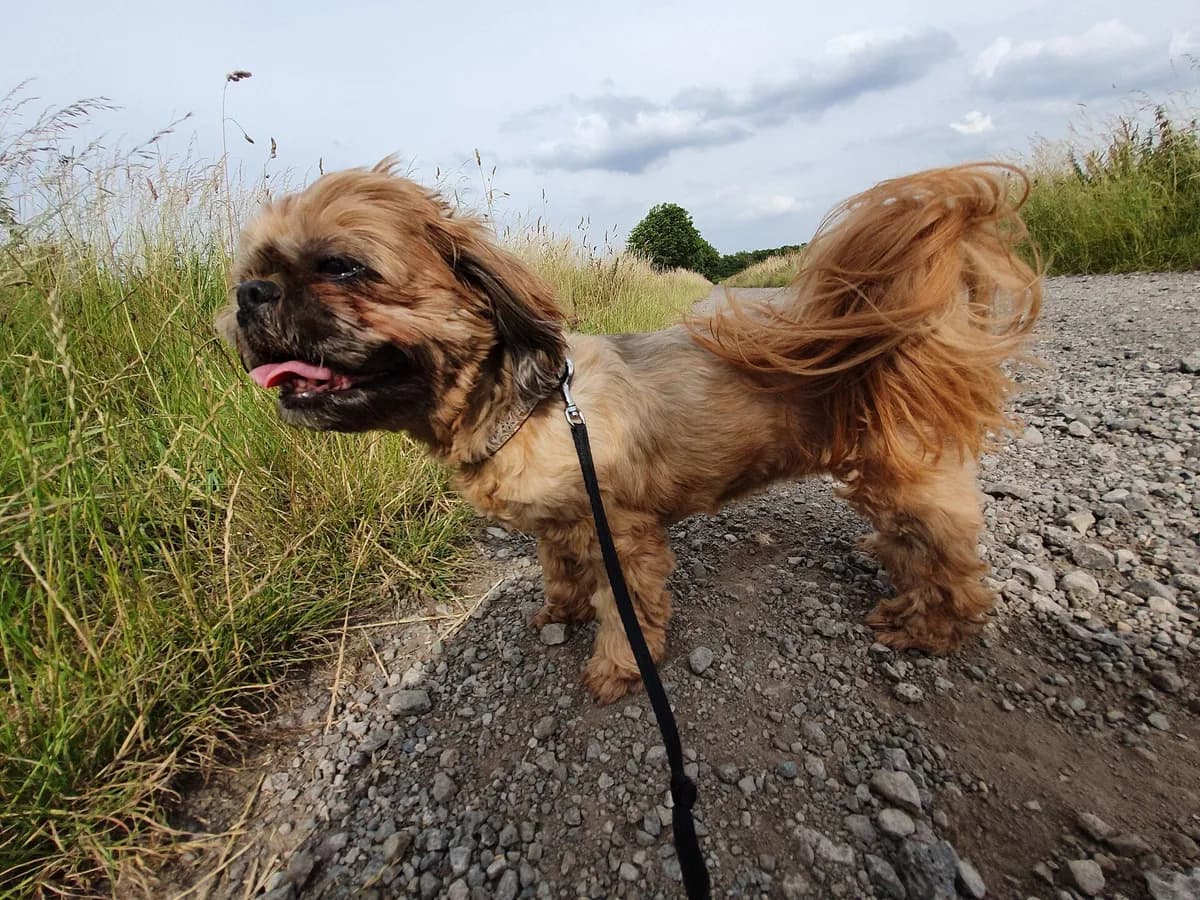

Most important facts
- Group
- Utility
- Size
- Small
- Weight
- 4.5–8 kg
- Lifespan
- 10–16 years
- Coat
- Long
- Energy
- Low
- Height
- 20–27 cm
- Colours
- All colours and combinations
- Shedding
- Light
- Est. feeding cost
- ~£0.52 a day
- Gear to consider
- No-pull harness (not a collar), slicker brush and metal comb, shallow ceramic feeding bowl
Typical dry food, adult
About the Shih Tzu
The Shih Tzu descends from Tibetan lion dogs gifted to the Chinese imperial court, where the breed was perfected in the Forbidden City under the Dowager Empress Cixi. It came perilously close to extinction after the fall of the imperial era, and every Shih Tzu alive today traces to just fourteen dogs. The name translates as lion dog, though the attitude is closer to pampered royalty.
Shih Tzus were bred purely as companion dogs and it shows. They're affectionate and sociable, happiest close to their people and not off exploring on their own. Most are friendly with familiar children and other pets, though their small size means time with boisterous young children should be supervised to avoid accidental injury.
They can be a little independent-minded and stubborn in training, so short, food-motivated sessions work better than long ones. Because they're bred for companionship, many Shih Tzus don't cope well with long stretches alone. That same sociable streak makes mealtimes a good opportunity for calm, structured bonding, and not free-feeding through the day.
Common health conditions
Things Shih Tzu owners commonly watch for. Guidance, not veterinary advice.
Brachycephalic Obstructive Airway Syndrome (BOAS)
The short muzzle can restrict airflow, making the breed prone to snoring and overheating. Use a shallow bowl at ground level, and keep mealtimes calm in warm weather.
Eye problems (dry eye, corneal ulcers, progressive retinal atrophy)
Prominent, shallow eye sockets leave the eyes exposed to injury and dryness. Keep facial hair trimmed away from the eyes and have any redness checked promptly.
Periodontal (dental) disease
A compact jaw often leads to crowded teeth and faster plaque build-up. Use dental-friendly kibble textures, appropriate chews and regular brushing.
Anal sac impaction
A common finding in the breed. Feed a diet providing appropriate fibre and firm, well-formed stools to reduce the need for manual expression.
Feeding a Shih Tzu
Shih Tzus are a small breed with genuinely low exercise requirements, so it's easy for daily calorie intake to outpace what they burn. Feeding to a lean, visible waist matters more than sticking rigidly to pack guidelines, with portions split across two meals rather than left down all day. Their compact jaw also means smaller, breed-appropriate kibble is easier to chew and helps slow plaque.
The flat face can make eating from a deep or narrow bowl awkward, so a shallow, wide dish at ground level suits them better and reduces the risk of food going down too fast. Keep mealtimes calm and avoid strenuous activity or excitement straight after eating to reduce strain on their breathing, and flag any heavy tear staining to a vet.
Every dog is different — weight, age and activity all shift what a Shih Tzu needs. The turns these breed tendencies into a shortlist matched to your dog’s age, size, budget and needs.
Typical adult weight
4.5–8 kg
Est. daily calories
260–470 kcal
A broad guide for an average-activity adult in good body condition — not veterinary advice. Real needs vary with age, neutering, activity, health and body condition, so no two Shih Tzus eat exactly the same. Get a personalised estimate or estimate feeding costs.

- Per day
- ~£0.52
- Per month
- ~£16
- Per year
- ~£190
A broad typical monthly budget guide, not a live price quote. Food format, calorie density, pack size and retailer pricing all change the real cost.
Find the right food for your Shih Tzu
Foods ranked to your dog
Answer a few quick questions and the Food Finder ranks foods to your Shih Tzu by score, price, life stage and fit.
Breed at a glance
- Exercise needs2/10
- Appetite6/10
- Trainability5/10
- Good with children6/10
- Shedding2/10
- Tolerates being alone3/10
The good & the worth-knowing
The good
- Affectionate, people-oriented companion that thrives on close family contact
- Low exercise requirements suit calmer households and smaller living spaces
- Long, low-shedding coat can suit owners sensitive to loose hair around the home

Worth knowing
- High daily grooming demands, including regular professional clipping to prevent matting
- Flat-faced build means care is needed in heat and during exercise
- Prone to weight gain if feeding isn't adjusted for naturally low exercise needs
Best matched accessories
All accessoriesThe collections that suit the breed, judged by the same independent standard.

Common owner questions
How much exercise does a Shih Tzu actually need?
Considerably less than most breeds their size might suggest. Short, gentle daily walks plus some indoor play are usually sufficient, and because of their flat face, exercise is best kept low-intensity and avoided altogether in hot weather.
How much should I be feeding my Shih Tzu?
Feed to your individual dog's body condition and not a generic bowl-fill, since their low activity means many Shih Tzus gain weight easily. Two measured meals a day, with treats kept under ten percent of calories, is a sensible starting point, and our Food Finder can point you towards a suitable recipe.
Why does my Shih Tzu have brown tear staining around the eyes?
This is common in the breed and usually comes down to their face shape and tear duct drainage, not diet. Persistent or worsening staining is worth a vet check to rule out infection or irritation.
Is a Shih Tzu a good choice for a first-time or less active owner?
Their low exercise needs and affectionate nature suit many households, but the daily grooming commitment and flat-faced health considerations mean feeding, coat care and heat management all need ongoing attention regardless of experience.