


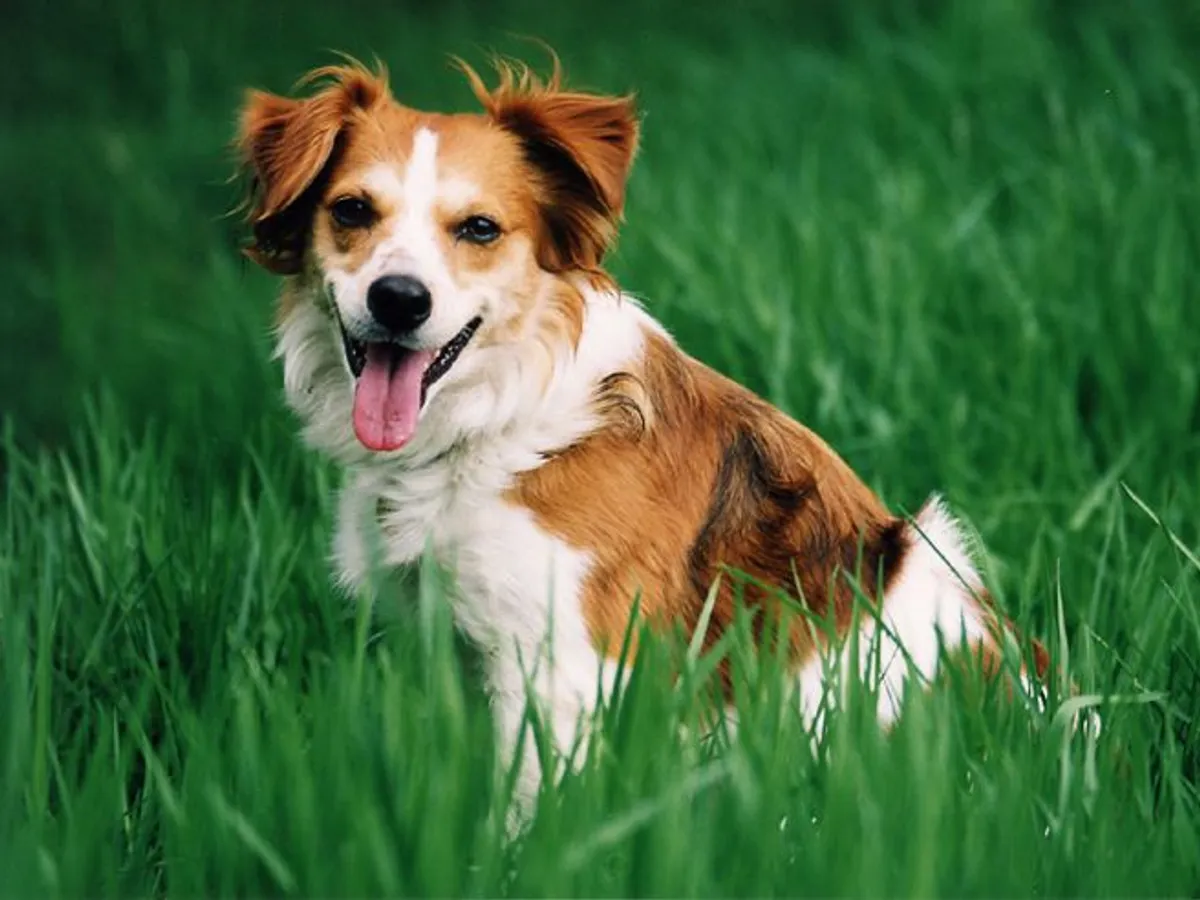

Most important facts
- Group
- Utility
- Size
- Medium
- Weight
- 9–16 kg
- Lifespan
- 13–15 years
- Coat
- Wiry (rough-haired) or smooth-haired
- Energy
- Moderate
- Height
- 38–46 cm
- Colours
- White with brown markings
- Shedding
- Light
- Est. feeding cost
- ~£0.80 a day
- Gear to consider
- Interactive puzzle feeders, well-fitted no-pull harness, slicker brush or grooming glove for the wiry coat
Typical dry food, adult
About the Kromfohrlander
The Kromfohrlander descends from Original Peter, a scruffy stray adopted by American troops in France in 1944 and later taken in by Ilse Schleifenbaum in Germany. She bred from him and named the result after her local krom fohr, or crooked furrow, countryside, one of the more charming origin stories in dogdom. Recognised in 1955, it remains one of Germany's rarest breeds and a genuine rarity in Britain.
Kromfohrlanders were bred purely as companions, and it shows. They're cheerful, affectionate and closely bonded to their own family, following owners from room to room and thriving on being included in daily life. Their terrier ancestry gives them a watchful streak, and strangers usually meet reserve on first meeting.
Early, ongoing socialisation matters more for this breed than many, as some lines develop nervousness or reactivity around adolescence if not carefully managed. A calm, consistent household, including predictable mealtimes and routines, helps settle a dog with this tendency, with steady, low-drama handling preferred over anything high-arousal.
Common health conditions
Things Kromfohrlander owners commonly watch for. Guidance, not veterinary advice.
Epilepsy
Idiopathic epilepsy is reported in the breed, usually starting in young adulthood. Keep a settled daily routine and flag any suspected episodes to your vet.
Patellar luxation
A slipping kneecap that affects many small-to-medium breeds. Keep a Kromfohrlander lean to reduce the load on the joint.
Von Willebrand disease (Type I)
An inherited clotting disorder found in the breed. Choose breeders who health-test, and make sure your vet knows before any surgery.
Cystinuria
An inherited condition causing amino-acid build-up in urine and a risk of bladder stones. Keep hydration good and follow vet-guided diet choices.
Feeding a Kromfohrlander
Kromfohrlanders are a moderate size with moderate exercise needs, so they rarely need the calorie-dense diets built for working terriers or gundogs. A good-quality complete food portioned to keep them lean suits their build, with treats counted inside the daily total. Even a little regular overfeeding shows up quickly. Two measured meals a day suit most adults.
The breed's known predisposition to cystinuria means good hydration and vet-guided food choices are worth discussing, particularly for dogs known to carry the trait. A calm, predictable feeding routine, same time and same place, helps settle individuals prone to nervous tendencies, alongside food chosen to keep skin and coat in good order.
Every dog is different — weight, age and activity all shift what a Kromfohrlander needs. The turns these breed tendencies into a shortlist matched to your dog’s age, size, budget and needs.
Typical adult weight
9–16 kg
Est. daily calories
440–900 kcal
A broad guide for an average-activity adult in good body condition — not veterinary advice. Real needs vary with age, neutering, activity, health and body condition, so no two Kromfohrlanders eat exactly the same. Get a personalised estimate or estimate feeding costs.

- Per day
- ~£0.80
- Per month
- ~£24
- Per year
- ~£293
A broad typical monthly budget guide, not a live price quote. Food format, calorie density, pack size and retailer pricing all change the real cost.
Find the right food for your Kromfohrlander
Foods ranked to your dog
Answer a few quick questions and the Food Finder ranks foods to your Kromfohrlander by score, price, life stage and fit.
Breed at a glance
- Exercise needs6/10
- Appetite5/10
- Trainability7/10
- Good with children6/10
- Shedding3/10
- Tolerates being alone4/10
The good & the worth-knowing
The good
- Deeply affectionate and devoted to their family, forming close bonds with their household
- Intelligent and generally responsive to training, especially with reward-based methods
- Low-shedding coat that's straightforward to keep in good condition

Worth knowing
- A genuinely rare breed in the UK, so finding an experienced breeder can take extra effort
- Naturally reserved with strangers and needs careful, ongoing socialisation
- Some lines are prone to nervous or anxious behaviour after adolescence, needing a calm household
Best matched accessories
All accessoriesThe collections that suit the breed, judged by the same independent standard.

Common owner questions
How much exercise does a Kromfohrlander need?
A moderate daily walk plus some free play and mental stimulation is usually enough. They're companionable rather than driven, so adjust exercise and food intake together to keep them lean.
Are Kromfohrlanders easy to train?
Yes, on the whole. They're intelligent and keen to please, and respond well to positive, reward-based training. Using part of the daily food allowance as training treats works nicely and avoids extra calories.
What should I feed a Kromfohrlander?
A complete food suited to their size and moderate activity, fed in portions that keep a lean body condition, not blindly from the pack guidelines. Our Food Finder can help match a food to their size, age and any sensitivities.
Do Kromfohrlanders shed a lot?
Very little. Both the wiry and smooth coat varieties are low-shedding and only need regular brushing, occasional hand-stripping for the wiry type, and the usual nail and ear checks.