
Start weeks before the first bang. Build a covered den in your quietest room, and play recorded firework sounds very quietly while good things happen. On the night, walk before dusk and feed early. Close the curtains and leave ordinary background sound on. Stay calm yourself. Offer chewing as distraction, and never punish fear or force your dog to face it.
Why do fireworks frighten dogs so much?
Nothing else in your dog's year sounds like a firework. It is loud with no warning. The direction it comes from keeps changing. Then comes a flash and a burnt smell that has no obvious source. Your dog cannot rehearse it and cannot see what is making it, so the body does the sensible thing and gets ready to escape.
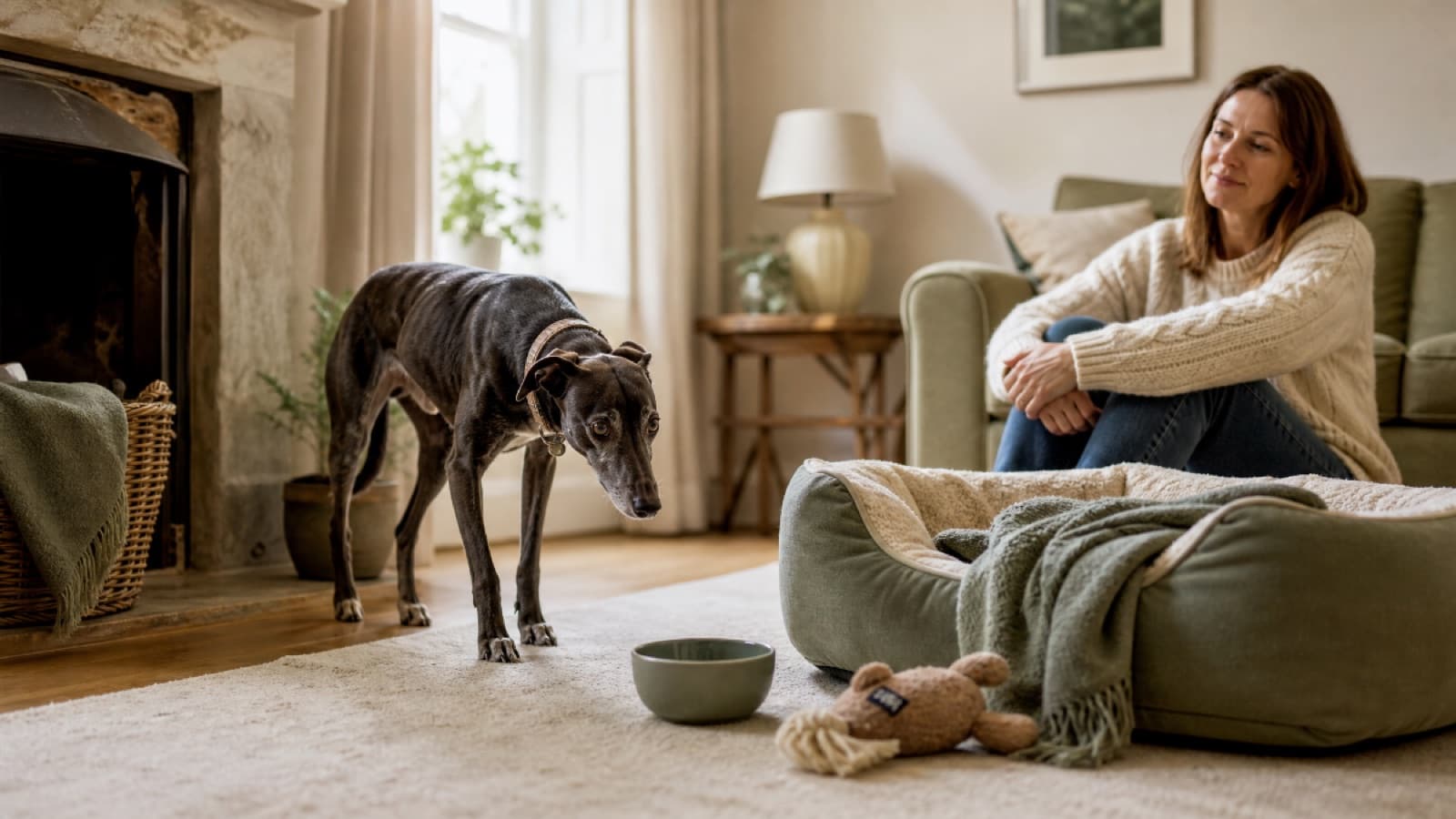
That is why fireworks fear often looks like restlessness, not hiding. Some dogs pace from room to room and cannot settle anywhere. Some pant, drool or shake. Some bark at the window with their hackles up, which is fear wearing a braver coat. Others go very quiet and very still, which is the easiest one to mistake for coping.
None of it is naughtiness, and none of it is a choice your dog is making. That matters, because it decides what you do next.
Build the den weeks before the first bang
The most useful thing you can do happens in September, not on the night. Your dog needs somewhere that already feels safe before there is anything to hide from. A den built while the sky is banging is just a strange new box. A den built weeks earlier is simply home.
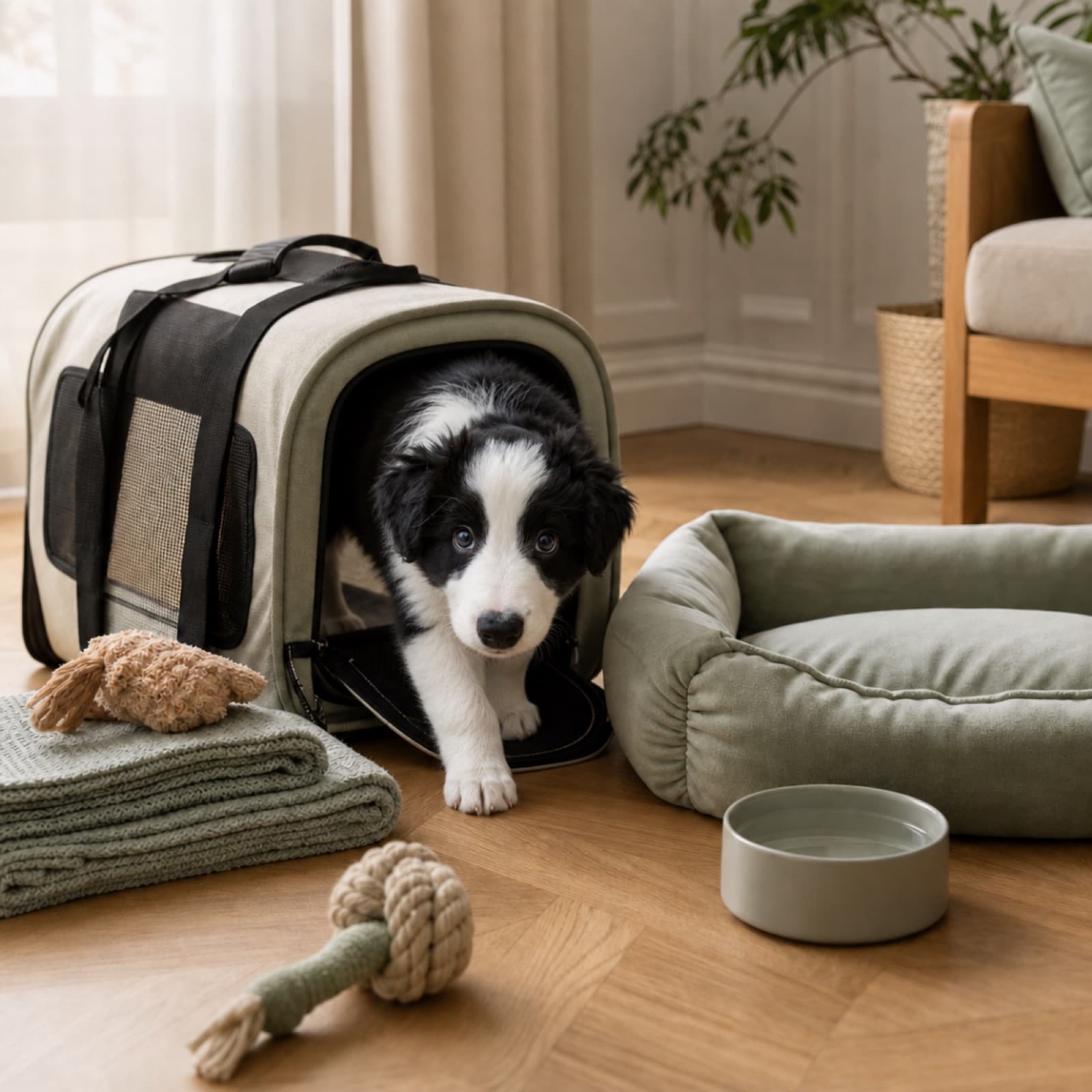
Pick the quietest room you have, ideally with few windows and away from the road. An understairs cupboard is often the best spot in the house. Put your dog's bed in there and give it a roof, because a covered space with one way in settles a frightened dog far better than an open corner does. A crate with a thick cover over three sides does this beautifully, and so does a bed tucked under a table.
If your dog has never really loved their bed, now is the time to sort that out. Our guide to choosing the right dog bed covers what makes a dog settle, not merely lie down. For this job, something deep sided with a raised edge to disappear into beats a flat mat. A deep sided shape (Rosewood 40 Winks donut) is our pick. The wider range sits in our dog beds section.
Then use the den before you need it. Feed the odd meal in there. Hand a chew over in there. Leave the door open so it is somewhere your dog chooses rather than somewhere your dog is put.
Can you teach a dog to mind fireworks less?
You can often take the edge off, and the work is gentler than people expect. Recorded firework sound, played so quietly your dog barely registers it while something good is happening, teaches the brain that the noise predicts nothing bad. Then you leave the volume where it is for days before nudging it up a whisker.
The rule that makes it work is the one people break. If your dog stops eating or looks towards the speaker, you have gone too loud. Drop back down and stay there longer. Nothing is gained by pushing on, and one frightening session undoes a fortnight of calm ones.
This is training, not a switch. Started in summer, it has months to take hold. Started in the last week of October it will not do much. That is fine. The rest of this guide still applies anyway. A dog who came to you recently may have a history you cannot read, so go slower again. For the wider version of the same patience, see our guide to settling a rescue dog.
What to do on the night itself
Walk before dark. Once dusk lands in early November the first bangs can come at any point, and a startled dog on a pavement is a dog who might bolt. Get the exercise in while it is light and let the evening walk go for a couple of weeks.
Check that identification is current before the season, and never wait for an incident, because a frightened dog can get through a gap you would swear was too small. Collar tag details and microchip records both want to be right. A tracker on the harness gives you a head start if the worst happens. That end of the kit sits in our dog wearables section. Go out to the garden on a lead on the big nights.
Indoors, feed a little earlier than usual so your dog has eaten before things start. Close the curtains and put the lights on, which flattens the flashes so they stop arriving as a strobe through the window. Ordinary background sound helps more than silence does, so leave the television on at a normal volume. Shut the windows and lock the cat flap.
If you possibly can, be at home. A dog who is fine alone on a Tuesday is a different dog when the sky is exploding. Our guide to leaving your dog home alone is worth reading for the ordinary version of that question.
How should you behave while your dog is frightened?
Be boring. Your dog reads you before they read the room, so the aim is to look like someone watching something dull on the telly. Sit down. Breathe out. Keep your voice at its normal pitch.
Comfort your dog if they come to you. You cannot make fear worse by being kind, and the old advice about ignoring a frightened dog has not aged well. Stroke them slowly if they enjoy being stroked. If they would rather be in the den on their own, let them. Resist the urge to keep peering in.
Two things never to do. Never tell a dog off for panting, pacing, barking or hiding, because that punishes an emotion rather than a behaviour and gives the fear a partner. And never make your dog face the noise. Standing them at the window to show them there is nothing to worry about is the fastest way to make next year worse.
What actually distracts a worried dog?
Chewing and licking settle dogs in a way that few other things do. A rubber toy stuffed in the morning and left in the freezer buys you real time and gives a worried dog a job. A snuffle mat with the evening kibble scattered through it does the same. Our dog toys section is where the chew and puzzle end of things lives, and a freezable stuffable (KONG Classic) is our pick.
There is a useful signal buried in this. A dog who works at a chew through the bangs is coping. A dog who takes it and puts it down, or will not take it at all, has gone past the point where food helps. That is not a failure. Stop asking and keep them quiet company instead.
Plug-in diffusers and snug body wraps suit some dogs and do nothing for others, so try one well before the season and find out which camp yours is in. A snug wrap (Thundershirt) is the one to try first.
When is it worth talking to your vet?
Whenever the fear is big. If your dog shakes for hours or hurts themselves trying to get out of a room, that is not something to handle alone with blankets and chews. The same goes for a dog who will not eat for the rest of the evening, or who stays frightened of ordinary sounds for weeks afterwards. Your vet comes first.
A vet can check that nothing physical is making noise sensitivity harder to live with, and can talk you through what they are willing to prescribe or refer you to a qualified behaviourist. Book that conversation in late summer, well before the afternoon of the fifth, because anything worth doing needs a run-up.
Please do not reach for anything sedating without that conversation. Some things that look calming from the outside leave a dog just as frightened and less able to move, which is the opposite of what you want. Whatever you try, go into the season with a plan and not a hope. Dogs do better on the nights their owners have already thought about.
Frequently asked questions
Should I comfort my dog during fireworks or ignore them?
Comfort them. You cannot make fear worse by being kind, and a dog who comes to you for reassurance is asking for something reasonable. Sit with them, stroke them slowly if they like it, and keep your voice ordinary. The only thing worth avoiding is a big anxious performance from you, because that tells your dog you agree the situation is alarming. If they would rather hide in the den, let them hide.
Can I still walk my dog during fireworks season?
Yes, but move the walk into daylight. From late October onwards, fireworks start well before the advertised displays. That matters because a dog who bolts in the dark is very hard to find. Do the main walk in the afternoon and use a secure harness with the lead clipped to it, never a collar alone. After dark, take garden trips on a lead. Sniffing games indoors cover the rest of the day nicely.
Does leaving the television on really help?
It helps, within limits. Steady background sound blurs the edge of a distant bang, which is the part that makes dogs jump. Keep it to a normal volume in an ordinary room, because anything loud enough to become its own problem defeats the point. It will not do much once the bangs are close and directly overhead. That is the moment the covered den in your quietest room earns its keep.
My dog was fine last year. Why is he frightened now?
Noise fear can arrive at any age. It often turns up after one bad experience, or builds quietly over several seasons until it finally shows. Older dogs whose hearing or eyesight is changing can also find sudden noise harder to place. None of this means you have done something wrong. Treat it as new information, build the den early this year, and mention the change to your vet at the next check.