


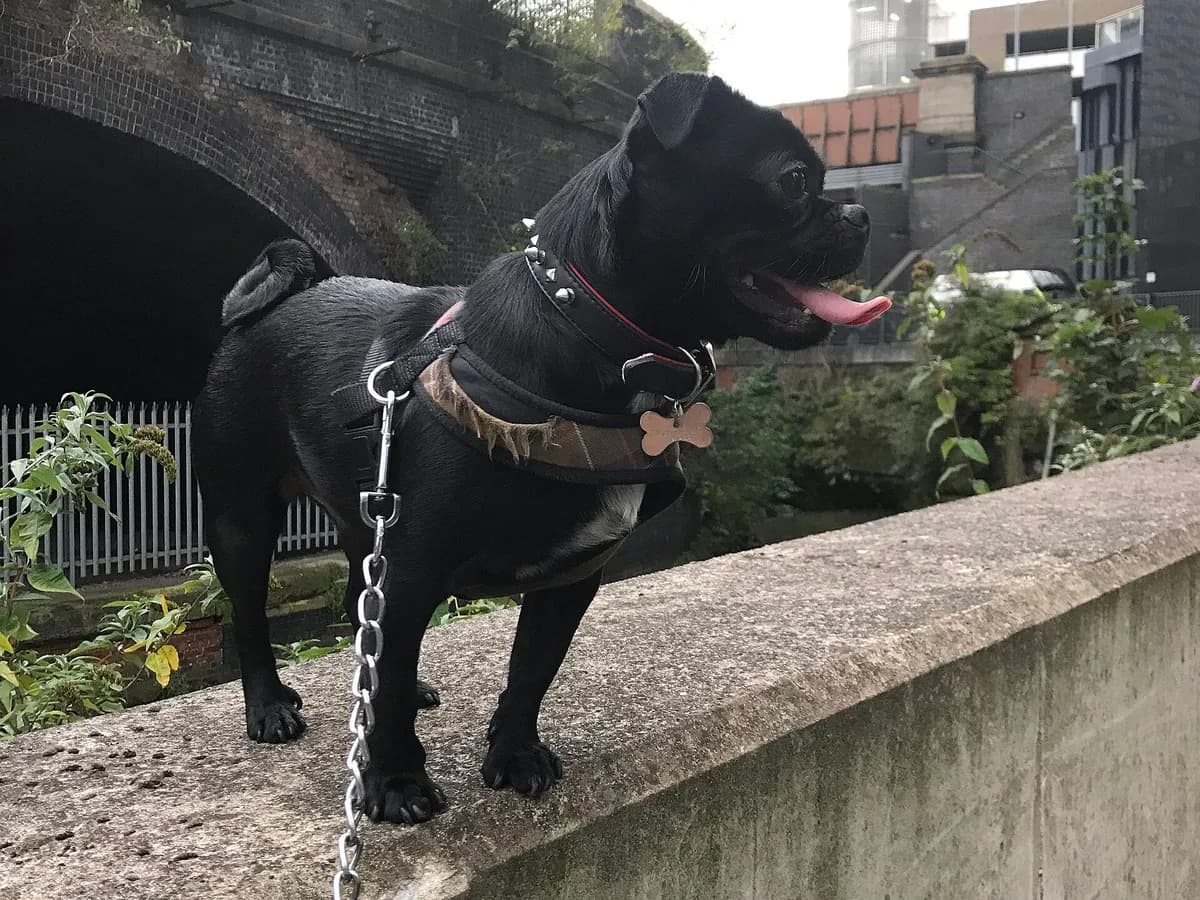

Most important facts
- Group
- Crossbreed
- Size
- Small
- Weight
- 5–7 kg
- Lifespan
- 12–15 years
- Coat
- Short
- Energy
- Moderate
- Height
- 25–36 cm
- Colours
- Fawn, black, tan or white
- Shedding
- Moderate
- Est. feeding cost
- ~£0.52 a day
- Gear to consider
- Well-fitted harness (avoids neck and airway pressure), slow-feeder bowl, dental-friendly chews
Typical dry food, adult
About the Jug
The Jug is a designer cross between the Jack Russell Terrier and the Pug, bred deliberately in Britain and America since the early 2000s. The aim was to pair the Pug's affectionate clowning with a longer, healthier muzzle and a dash of terrier athleticism. It has no Kennel Club recognition, and how much of each parent shows through varies considerably from one litter to the next.
Jugs typically combine the Jack Russell's confidence and alertness with the Pug's warmth and desire to be close to people, producing a sociable, playful dog that thrives on company. They are usually good with familiar children, though the terrier side can bring a stubborn streak and a tendency to bark or chase, so early training pays off. Coat and character vary between litters, as with any cross.
Jugs don't like being left alone for long, particularly given the Jack Russell influence, so they suit owners who can offer regular company or gradual training towards independence. Their food motivation makes them rewarding to train with small, measured treats, provided the daily ration is adjusted so treats don't create a surplus.
Common health conditions
Things Jug owners commonly watch for. Guidance, not veterinary advice.
Brachycephalic Obstructive Airway Syndrome (BOAS)
Inherited from the Pug side, a shortened muzzle can mean noisy breathing, snoring and reduced heat tolerance. Keep a Jug lean to make a real difference to airway comfort.
Obesity and weight gain
Jugs often inherit the Pug's hearty appetite. Feed measured meals and consider a weight-control formula to spare the joints and breathing.
Patellar luxation
A slipping kneecap is seen in both parent breeds. Keep muscle tone even through appropriate exercise and avoid excess weight.
Dental crowding and periodontal disease
A shorter jaw can leave teeth crowded, encouraging tartar. Use dental-friendly kibble and brush regularly to keep the gums healthy.
Feeding a Jug
Jugs tend to inherit the Pug parent's enthusiastic appetite, which makes portion control more important than for many small breeds. Feed a measured daily allowance, weighed rather than guessed, and adjust for treats and training rewards. A complete small-breed food with moderate energy density suits most adults better than a highly calorific formula.
Because excess weight strains both joints and an already compact airway, a weight-control recipe is worth considering for Jugs that struggle to stay lean, alongside regular body condition checks by hand and eye. Smaller kibble helps with the dental crowding some Jugs experience, and the Food Finder can compare formulas suited to smaller, moderate-energy breeds.
Every dog is different — weight, age and activity all shift what a Jug needs. The turns these breed tendencies into a shortlist matched to your dog’s age, size, budget and needs.
Typical adult weight
5–7 kg
Est. daily calories
280–480 kcal
A broad guide for an average-activity adult in good body condition — not veterinary advice. Real needs vary with age, neutering, activity, health and body condition, so no two Jugs eat exactly the same. Get a personalised estimate or estimate feeding costs.
- Per day
- ~£0.52
- Per month
- ~£16
- Per year
- ~£192
A broad typical monthly budget guide, not a live price quote. Food format, calorie density, pack size and retailer pricing all change the real cost.
Find the right food for your Jug
Foods ranked to your dog
Answer a few quick questions and the Food Finder ranks foods to your Jug by score, price, life stage and fit.
Breed at a glance
- Exercise needs6/10
- Appetite9/10
- Trainability6/10
- Good with children8/10
- Shedding5/10
- Tolerates being alone3/10
The good & the worth-knowing
The good
- Affectionate, people-oriented companions that bond closely with their families
- Compact size suits a range of households, including those with less space
- Playful and alert, with a lively terrier-influenced character

Worth knowing
- Prone to weight gain if food isn't carefully measured, worsening joint and breathing strain
- Can inherit brachycephalic breathing traits, meaning less heat and exercise tolerance
- Terrier stubbornness from the Jack Russell side can make training inconsistent without patience
Best matched accessories
All accessoriesThe collections that suit the breed, judged by the same independent standard.



Common owner questions
How much should I feed a Jug?
There is no fixed rule for portion size, which depends on the individual dog's weight, age and activity. Jugs gain weight readily, so keep to measured meals and avoid free-feeding. Check body condition regularly and adjust, or compare suitable formulas via the Food Finder.
Are Jugs prone to weight gain?
Yes, quite commonly. The Pug side brings a strong appetite and a tendency to gain weight easily, so factor treats into the daily allowance and consider a weight-control formula if your Jug starts carrying extra condition.
Do Jugs have breathing problems like Pugs?
Some do, depending on how much of the Pug's shorter muzzle they inherit, which varies considerably within the cross. A healthy weight, no exercise in hot weather and a harness rather than a collar all reduce strain on the airway.
How much exercise does a Jug need?
Around 30 to 45 minutes daily, spread over a couple of walks, plus some play and mental stimulation to satisfy the terrier side. Watch for breathlessness or overheating and pace exercise accordingly, especially in warm weather.