


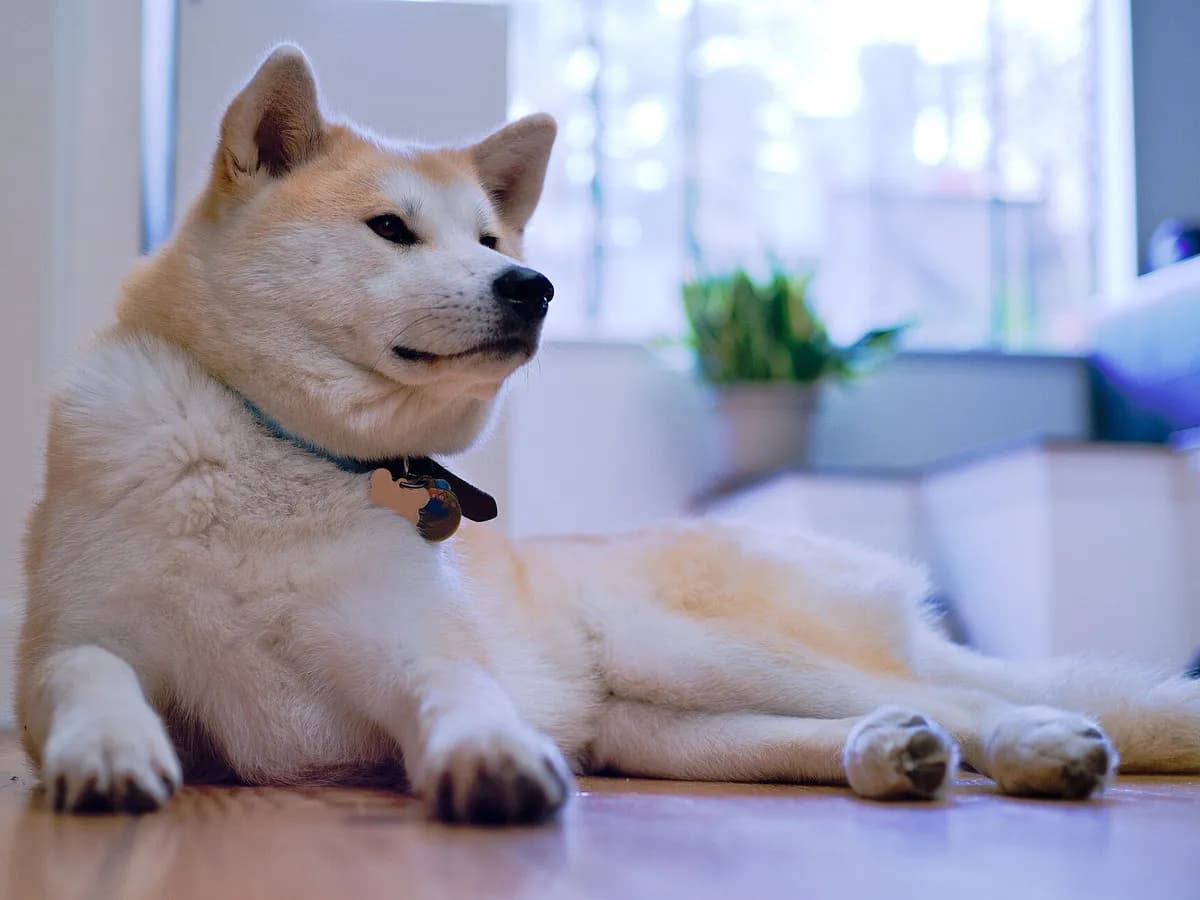

Most important facts
- Group
- Utility
- Size
- Large
- Weight
- 25–45 kg
- Lifespan
- 10–12 years
- Coat
- Short-to-medium, harsh
- Energy
- Moderate
- Height
- 58–70 cm
- Colours
- Red fawn, sesame, brindle or white
- Shedding
- Heavy
- Est. feeding cost
- ~£1.59 a day
- Gear to consider
- De-shedding tool and slicker brush, sturdy well-fitted harness, slow feeder or puzzle bowl
Typical dry food, adult
About the Japanese Akita Inu
The Japanese Akita Inu comes from the snowy Akita prefecture of northern Japan, where powerful matagi dogs hunted bear and boar for mountain hunters. The breed survived a fighting-dog era and near-extinction during the Second World War, and was declared a national natural monument in Japan. Its most celebrated member, Hachiko, waited at a Tokyo station for his late owner every day for nine years.
Watchful and deeply loyal to their household, Japanese Akita Inus were bred as guardians and hunting companions, and that heritage shows today. They are naturally reserved with strangers, can be wary of unfamiliar dogs, particularly of the same sex, and form intense bonds with their immediate family, so early, consistent socialisation is essential.
This is an independent-minded breed that thinks for itself rather than looking to please, so training calls for patience, calm consistency and short, rewarding sessions. Food-based reward training works well, provided treats are factored into the day's calories. Given their size and strength, Akitas suit owners with experience of large, characterful breeds.
Common health conditions
Things Japanese Akita Inu owners commonly watch for. Guidance, not veterinary advice.
Hip dysplasia
The hip joint fits poorly, and arthritis can follow. Keep your Akita lean through growth and adulthood to protect developing joints.
Gastric dilatation-volvulus (bloat)
A deep-chested breed at real risk of this life-threatening twist. Smaller, more frequent meals help, with exercise kept gentle around feeding times.
Sebaceous adenitis and skin conditions
An inherited condition affecting the skin's oil-producing glands, alongside general skin sensitivity. Feed a skin-supporting diet and work with your vet on treatment.
Progressive retinal atrophy and eye conditions
Inherited eye conditions including PRA and cataracts occur in the breed. Choose health-tested parents and report any changes in vision promptly.
Feeding a Japanese Akita Inu
The Akita is large and deep-chested, and a large-breed diet with controlled calorie density keeps excess weight off hips and joints. Bloat is a genuine risk in deep-chested dogs, so give two or three measured meals a day and use a slow-feeder bowl. Allow rest either side of exercise.
Skin and coat condition is a common focus for the breed, given its predisposition to sebaceous adenitis, so a diet with good-quality protein and adequate essential fatty acids supports a healthy coat alongside veterinary care. Akitas carry weight well, so review portions regularly against body condition before extra weight shows up in the joints.
Every dog is different — weight, age and activity all shift what a Japanese Akita Inu needs. The turns these breed tendencies into a shortlist matched to your dog’s age, size, budget and needs.
Typical adult weight
25–45 kg
Est. daily calories
940–1,950 kcal
A broad guide for an average-activity adult in good body condition — not veterinary advice. Real needs vary with age, neutering, activity, health and body condition, so no two Japanese Akita Inus eat exactly the same. Get a personalised estimate or estimate feeding costs.


- Per day
- ~£1.59
- Per month
- ~£48
- Per year
- ~£580
A broad typical monthly budget guide, not a live price quote. Food format, calorie density, pack size and retailer pricing all change the real cost.
Find the right food for your Japanese Akita Inu
Foods ranked to your dog
Answer a few quick questions and the Food Finder ranks foods to your Japanese Akita Inu by score, price, life stage and fit.
Breed at a glance
- Exercise needs6/10
- Appetite6/10
- Trainability4/10
- Good with children5/10
- Shedding8/10
- Tolerates being alone4/10
The good & the worth-knowing
The good
- Deeply loyal and devoted to their family, with a calm, dignified presence indoors
- Naturally clean and fastidious, often self-grooming in a cat-like manner
- Moderate exercise needs for a large breed once past the boisterous puppy stage

Worth knowing
- Sheds heavily, particularly during the twice-yearly coat blow, needing regular brushing
- Independent and often stubborn, so training takes patience and early, structured socialisation
- Naturally wary of strangers and can be reactive towards unfamiliar dogs
Best matched accessories
All accessoriesThe collections that suit the breed, judged by the same independent standard.




Common owner questions
How much exercise does a Japanese Akita Inu need?
Around an hour or so of daily exercise suits an adult, split across walks and recall practice in a securely fenced area, since recall can't always be relied on around other dogs. Keep puppy exercise short and controlled while the joints are still developing.
Are Japanese Akita Inus easy to train?
Not typically easy in the way biddable working breeds are. They are intelligent but independent-minded, so training relies on patience, consistency and positive, food-based methods started early. A trainer experienced with spitz breeds can be invaluable.
How much should I feed my Akita and how often?
Follow the feeding guide on a complete large-breed food and adjust to keep your dog in good condition, feeling ribs easily under a slim covering. Splitting the day into two or three smaller meals helps reduce bloat risk, and the Food Finder can match a food to your dog's life stage.
Why do Akitas bloat, and how can feeding help prevent it?
Their deep, narrow chest makes a stomach twist more likely than in many breeds. Keep meals small, serve them from a slow-feeder bowl, and avoid exercise immediately before or after eating.