


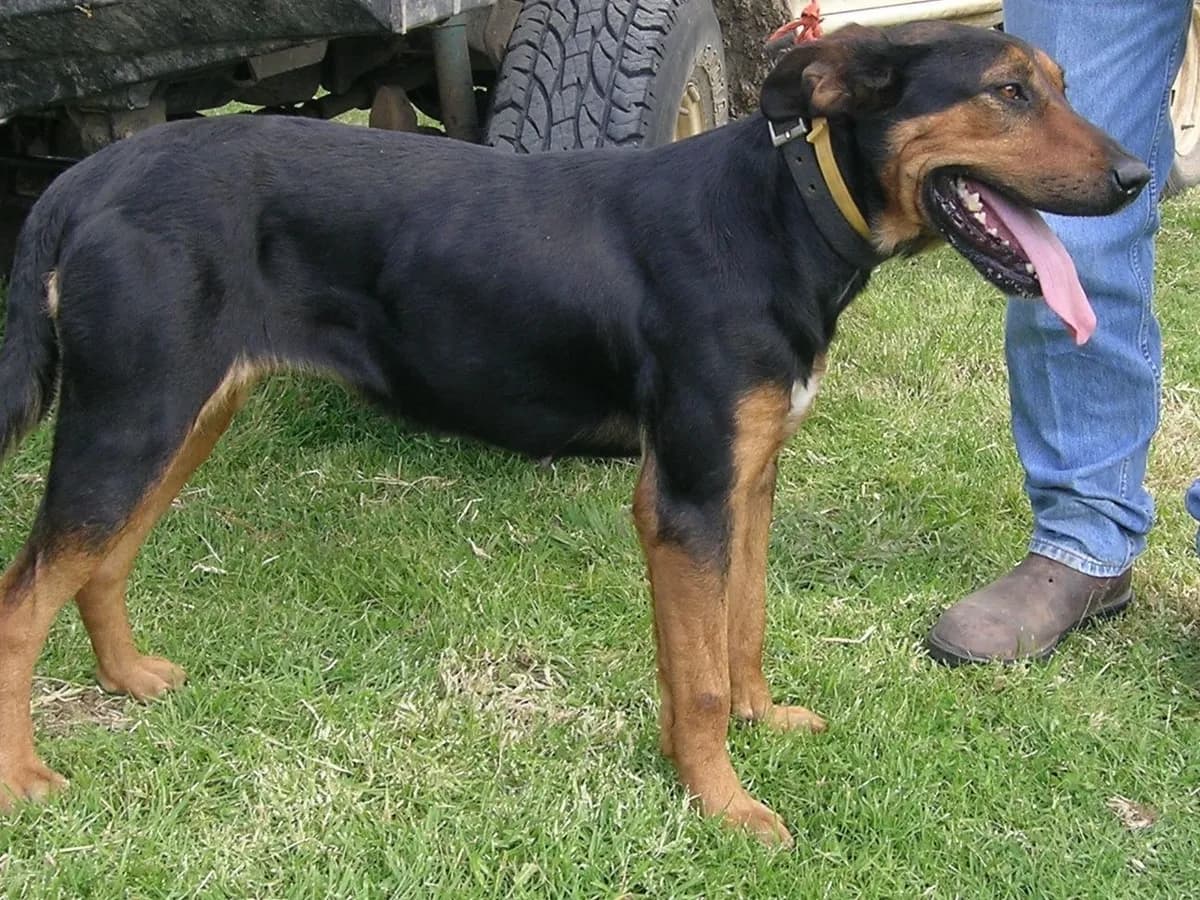

Most important facts
- Group
- Pastoral
- Size
- Large
- Weight
- 25–45 kg
- Lifespan
- 12–14 years
- Coat
- Short to medium double coat; texture varies from smooth to rough across the breed
- Energy
- High
- Height
- 56–66 cm
- Colours
- Black and tan, often with white
- Shedding
- Moderate
- Est. feeding cost
- ~£1.59 a day
- Gear to consider
- Raised slow-feeder bowl, long training line for recall work, hard-wearing outdoor bed
Typical dry food, adult
About the Huntaway
The Huntaway was developed in New Zealand in the late nineteenth century. Shepherds working vast hill stations needed a dog that could drive huge flocks with a booming bark, not a collie's silent stare. It has always been bred for working ability rather than looks, so type varies more than in show breeds. New Zealand celebrates it in sheepdog trials, while in Britain it remains a working rarity.
The Huntaway's name comes from its job of driving sheep away from the shepherd using a deep, insistent bark. That heritage shows in a confident, hardy dog happiest with a clear task, space and a consistent handler. Without enough outlet, that drive can turn into restlessness, escaping or constant barking.
Bred for practical stockwork, Huntaways tend to be sociable, even-tempered and tolerant of people and other dogs when properly introduced. They are easy to motivate with food and praise, which makes training straightforward provided the household can match their stamina. A bored Huntaway is a much harder dog to live with than a tired one.
Common health conditions
Things Huntaway owners commonly watch for. Guidance, not veterinary advice.
Hip dysplasia
Dysplasia is found in a notable share of working Huntaways. Keep an adult lean and feed joint-support nutrients such as glucosamine and omega-3 from puppyhood.
Bloat (gastric dilatation-volvulus)
As a large, deep-chested breed, Huntaways carry a real bloat risk. Give two or three smaller meals, keep eating slow, then rest for an hour either side of exercise.
Hypothyroidism
Weight gain, lethargy or a dull coat in middle age can point to an underactive thyroid. It's manageable with medication, so flag changes to your vet.
Epilepsy
Some lines carry a predisposition to idiopathic epilepsy. Discuss diet alongside medication with your vet.
Feeding a Huntaway
A working-bred Huntaway burns through calories fast, so an adult kept genuinely active needs an energy-dense, meat-rich food with portions reassessed regularly. Most in UK homes do far less than a hill farm day's work, though, and their hearty appetite makes it easy to overfeed them into a heavier dog than the breed is meant to be.
Because the breed is prone to bloat, feeding style matters as much as amount. Give two or three measured meals a day, slow the pace at the bowl, and keep quiet time either side of exercise. Given the breed's tendency towards hip dysplasia, a joint-support food and a lean body condition are the most useful things an owner controls. Our Food Finder can narrow down suitable options.
Every dog is different — weight, age and activity all shift what a Huntaway needs. The turns these breed tendencies into a shortlist matched to your dog’s age, size, budget and needs.
Typical adult weight
25–45 kg
Est. daily calories
940–2,190 kcal
A broad guide for an average-activity adult in good body condition — not veterinary advice. Real needs vary with age, neutering, activity, health and body condition, so no two Huntaways eat exactly the same. Get a personalised estimate or estimate feeding costs.


- Per day
- ~£1.59
- Per month
- ~£48
- Per year
- ~£580
A broad typical monthly budget guide, not a live price quote. Food format, calorie density, pack size and retailer pricing all change the real cost.
Find the right food for your Huntaway
Foods ranked to your dog
Answer a few quick questions and the Food Finder ranks foods to your Huntaway by score, price, life stage and fit.
Breed at a glance
- Exercise needs9/10
- Appetite8/10
- Trainability8/10
- Good with children6/10
- Shedding5/10
- Tolerates being alone3/10
The good & the worth-knowing
The good
- Highly capable working dog with strong stamina and drive
- Low-maintenance, weatherproof coat that needs little grooming
- Loyal and biddable once given a clear job and consistent handling

Worth knowing
- Needs a genuine daily job or serious exercise, not just a walk round the block
- Bred to bark while working stock, and can be vocal in a home setting without training
- Not a natural fit for sedentary, flat-dwelling or very low-activity households
Best matched accessories
All accessoriesThe collections that suit the breed, judged by the same independent standard.


Common owner questions
How much exercise does a Huntaway actually need?
A great deal. This is a breed built for a full working day on hill country, so expect to provide well over an hour of vigorous activity plus mental work such as scent games most days.
What should I feed a Huntaway that isn't working stock daily?
Match the portion to what the dog is actually doing, not what a working Huntaway theoretically needs. Most pets do best on a large-breed food with joint support, fed in two or three smaller meals, adjusted against regular body condition checks.
Are Huntaways prone to bloat, and how can I reduce the risk?
Yes. A deep chest like theirs raises the risk of gastric dilatation-volvulus. Feed smaller, more frequent meals, avoid vigorous exercise straight after eating, and use a slower feeding bowl.
Do Huntaways make good family pets in the UK?
They can, in the right household, but they are a working breed first. They tend to be sociable and tolerant with children they're raised alongside, but their size, bark and exercise needs suit an active, rural home better than a quiet flat.