


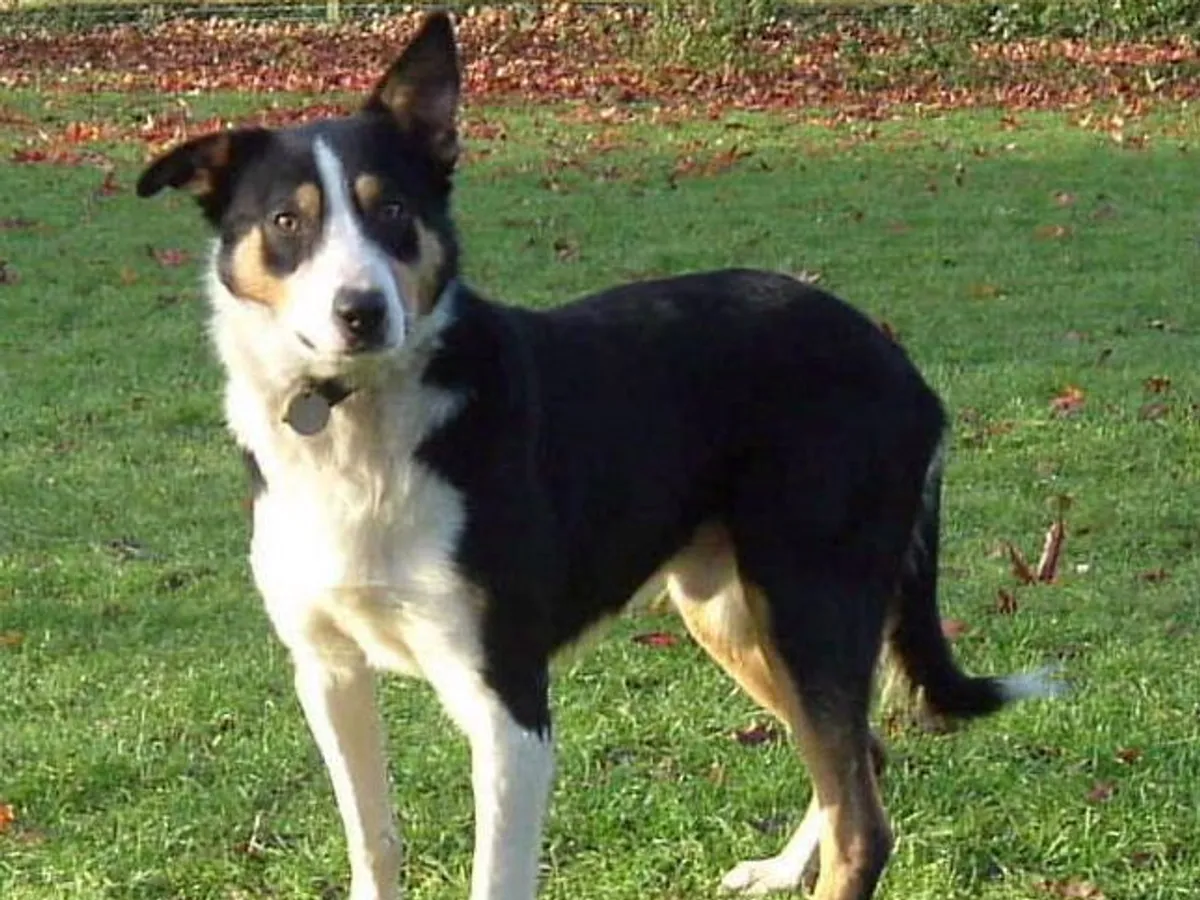

Most important facts
- Group
- Pastoral
- Size
- Medium
- Weight
- 13–18 kg
- Lifespan
- 12–15 years
- Coat
- Double coat in smooth or rough varieties; commonly black and white
- Energy
- High
- Height
- 46–56 cm
- Colours
- Black and white, tricolour, red or merle
- Shedding
- Moderate
- Est. feeding cost
- ~£0.91 a day
- Gear to consider
- Durable no-pull harness, slow-feeder or puzzle bowl, tough interactive treat-dispensing toys
Typical dry food, adult
About the Welsh Collie
The Welsh Collie, or Welsh Sheepdog, is a working landrace developed on the hill farms of Wales, prized for a loose-eyed, free-moving herding style quite different from the Border Collie's fixed stare. It has never been a Kennel Club show breed. Since 1997 the Welsh Sheepdog Society has registered dogs on proven working ability alone, keeping the old droving bloodlines alive.
Bred over centuries to work sheep, cattle and goats across Welsh hill farms, the Welsh Collie is intelligent, alert and highly biddable, working in a looser, more roaming style than the eye-fixed Border Collie. It retains a strong herding drive that needs a proper outlet, whether livestock work, agility, flyball or structured daily training.
This is a loyal, watchful breed that bonds closely with its family and can be reserved with strangers, though not typically aggressive. Given its working heritage, it does not thrive left alone for long or without a job, and boredom quickly shows as restlessness, chasing or nuisance barking. A settled routine, including consistent mealtimes, provides the structure it needs.
Common health conditions
Things Welsh Collie owners commonly watch for. Guidance, not veterinary advice.
Collie Eye Anomaly (CEA)
An inherited eye condition affecting retinal development, detectable by DNA test or examination in puppies. Choose breeders who test breeding stock before mating.
Hip dysplasia
As with most active herding breeds, keep body condition lean through accurately portioned feeding, particularly during the puppy growth phase.
Progressive retinal atrophy (PRA)
The retina breaks down slowly, an inherited fault seen across collie types. Choose DNA-screened parent dogs, as there is no cure once it develops.
Deafness and eye defects linked to double-merle breeding
Breeding two merle parents together raises the risk of deafness and eye defects in puppies. Choose breeders who avoid merle-to-merle pairings.
Feeding a Welsh Collie
The Welsh Collie's working heritage built it for endurance, not bulk. Most adults do best on a diet of moderate-to-high energy density that matches the activity they actually get, and not the breed's reputation for hard work. A dog doing hours of hill walking or herding needs considerably more than one living a quieter pet life, so adjust portions to body condition.
Good-quality protein supports the lean muscle this breed relies on for stamina. Welsh Collies are prone to inherited joint and eye conditions, so watch weight from puppyhood through the senior years, when joint-support nutrition becomes more relevant. Split feeding into two measured meals rather than free-feeding, supporting digestion around exercise and a lean condition.
Every dog is different — weight, age and activity all shift what a Welsh Collie needs. The turns these breed tendencies into a shortlist matched to your dog’s age, size, budget and needs.
Typical adult weight
13–18 kg
Est. daily calories
580–1,100 kcal
A broad guide for an average-activity adult in good body condition — not veterinary advice. Real needs vary with age, neutering, activity, health and body condition, so no two Welsh Collies eat exactly the same. Get a personalised estimate or estimate feeding costs.


- Per day
- ~£0.91
- Per month
- ~£28
- Per year
- ~£334
A broad typical monthly budget guide, not a live price quote. Food format, calorie density, pack size and retailer pricing all change the real cost.
Find the right food for your Welsh Collie
Foods ranked to your dog
Answer a few quick questions and the Food Finder ranks foods to your Welsh Collie by score, price, life stage and fit.
Breed at a glance
- Exercise needs9/10
- Appetite6/10
- Trainability9/10
- Good with children7/10
- Shedding6/10
- Tolerates being alone3/10
The good & the worth-knowing
The good
- Highly intelligent and trainable, thriving on structured activity and a clear job
- Loyal, watchful and naturally protective of its family and home
- Robust, hardy working breed with relatively few grooming demands for a double coat

Worth knowing
- Not suited to sedentary households or owners who cannot provide daily mental work
- Strong herding instinct can mean nipping at heels or fixating on moving objects
- Working-line temperament can make some individuals reserved with strangers
Best matched accessories
All accessoriesThe collections that suit the breed, judged by the same independent standard.


Common owner questions
How much exercise does a Welsh Collie need?
Plenty. This is a working farm breed, so most Welsh Collies need a good deal more than an hour of varied exercise daily. Pair physical activity with mental work such as training games or scent tasks, and size meals to their actual output.
Are Welsh Collies prone to weight gain?
A working Welsh Collie rarely carries excess weight, but a pet kept at a lower activity level can gain weight quickly if fed as though it were still herding all day. Portioning to body condition, not breed reputation, is the safest approach.
Is the Welsh Collie recognised by the Kennel Club?
No. The Welsh Collie is not a Kennel Club recognised breed in the UK. It is maintained as a working landrace by bodies such as the Welsh Sheepdog Society, which focuses on conserving its traditional working ability.
What should I feed a Welsh Collie puppy?
A complete puppy food formulated for medium, active breeds, fed in measured portions across several meals a day, supports steady growth and joint development. Because the breed can carry inherited eye and hip conditions, work with a vet on growth rate, and the Food Finder can narrow down options.
Similar breeds
Photo: en:Richard New Forest, CC BY-SA 3.0, via Wikimedia Commons