
Most important facts
- Group
- Working
- Size
- Giant
- Weight
- 40–64 kg
- Lifespan
- 8–11 years
- Coat
- Dense
- Energy
- Moderate
- Height
- 60–72 cm
- Colours
- Tricolour black, tan and white
- Shedding
- Heavy
- Est. feeding cost
- ~£2.16 a day
- Gear to consider
- Raised slow-feeder bowl, orthopaedic memory-foam bed, sturdy harness rated for large-breed walking
Typical dry food, adult
About the Greater Swiss Mountain Dog
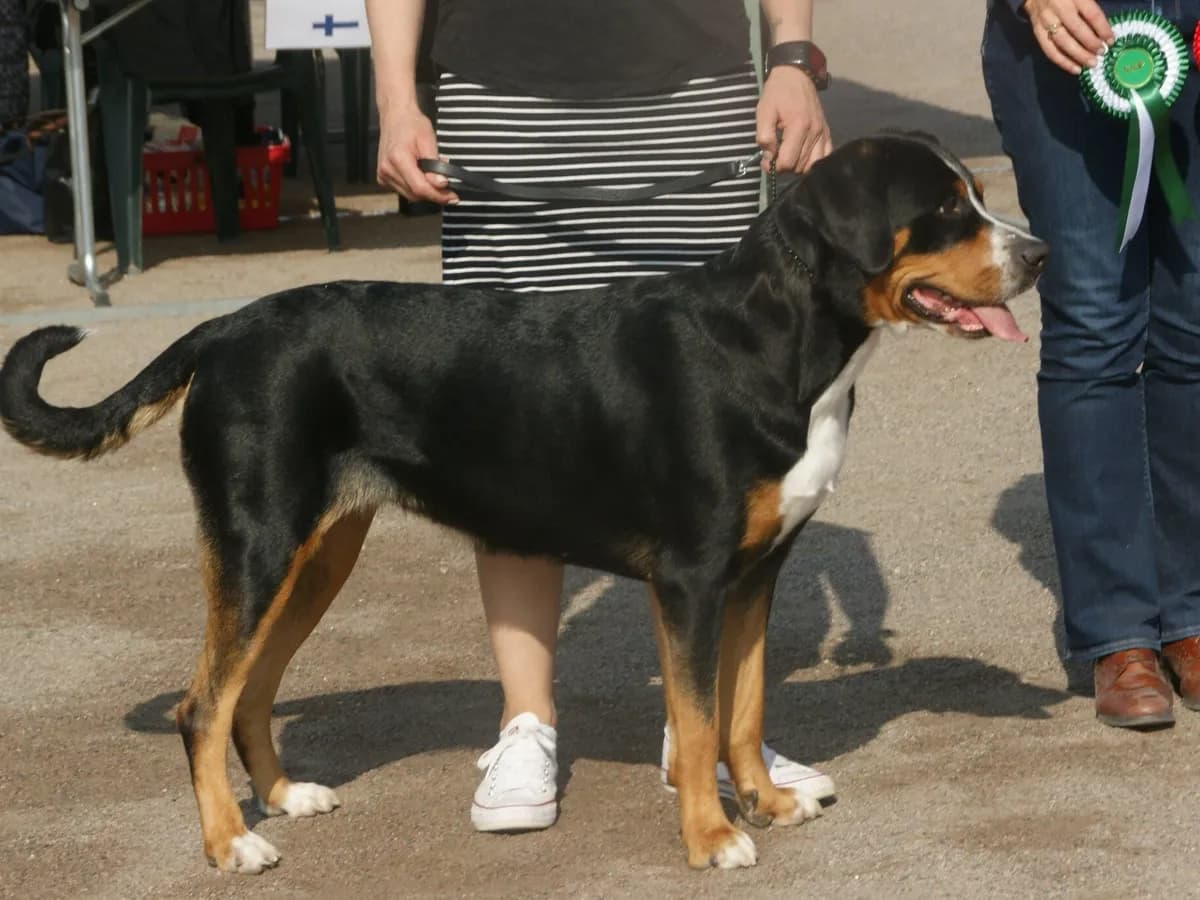
The Greater Swiss Mountain Dog is the largest and oldest of Switzerland's four Sennenhund breeds, worked for centuries as a drover, guard and draught dog hauling carts of milk and produce to market. The type had almost vanished by 1900, until the breed researcher Albert Heim recognised a surviving specimen at a Swiss show in 1908 and championed its revival. It remains an uncommon breed, in Britain especially.
Bred as an all-purpose farm dog that could drive cattle and guard property and pull carts, the Swissy is steady, confident and devoted to its family. It tends to be watchful of strangers without being aggressive, and bonds closely with the people it lives alongside, often shadowing them from room to room.
This is a sensible, biddable breed that responds well to calm, consistent handling, though its size means early socialisation and basic manners are essential rather than optional. Swissies mature slowly, both physically and mentally, and puppies benefit from measured exercise and controlled feeding while their large frames develop.
Common health conditions
Things Greater Swiss Mountain Dog owners commonly watch for. Guidance, not veterinary advice.
Hip and elbow dysplasia
Joint conformation issues are common, as with most giant breeds. Keep puppies lean and choose a food with controlled calcium for growth.
Gastric dilatation-volvulus (bloat)
This life-threatening stomach twist is a heightened risk in deep-chested giant breeds. Feed smaller, more frequent meals and keep feeding calm.
Eye conditions (entropion and distichiasis)
Eyelid abnormalities are seen in the breed and usually managed surgically if they cause irritation. Ask your vet to check the eyes at routine visits.
Splenic torsion
Reported more often in this breed than in many other large dogs. Treat sudden lethargy, pale gums or a swollen abdomen as an emergency.
Feeding a Greater Swiss Mountain Dog
As a giant breed, the Swissy does best on a food formulated for large or giant breeds, with controlled calcium and phosphorus during growth to support even bone and joint development. Overfeeding during puppyhood can push growth beyond what the skeleton can safely support, raising the risk of hip and elbow dysplasia later.
Deep-chested giants carry an elevated bloat risk, so the daily ration is best divided into two or three smaller meals. Use a slow-feeder bowl, and avoid strenuous exercise immediately before or after eating. Adults have a hearty appetite but put on weight if fed to it, so review portions regularly against body condition rather than guesswork.
Every dog is different — weight, age and activity all shift what a Greater Swiss Mountain Dog needs. The turns these breed tendencies into a shortlist matched to your dog’s age, size, budget and needs.
Typical adult weight
40–64 kg
Est. daily calories
1,340–2,530 kcal
A broad guide for an average-activity adult in good body condition — not veterinary advice. Real needs vary with age, neutering, activity, health and body condition, so no two Greater Swiss Mountain Dogs eat exactly the same. Get a personalised estimate or estimate feeding costs.
- Per day
- ~£2.16
- Per month
- ~£66
- Per year
- ~£788
A broad typical monthly budget guide, not a live price quote. Food format, calorie density, pack size and retailer pricing all change the real cost.
Find the right food for your Greater Swiss Mountain Dog
Foods ranked to your dog
Answer a few quick questions and the Food Finder ranks foods to your Greater Swiss Mountain Dog by score, price, life stage and fit.
Breed at a glance
- Exercise needs6/10
- Appetite8/10
- Trainability7/10
- Good with children8/10
- Shedding7/10
- Tolerates being alone4/10
The good & the worth-knowing
The good
- Steady, loyal and gentle temperament that suits family life
- Watchful and protective without being prone to unnecessary aggression
- Matures into a calm, biddable adult that is generally easy to live alongside
Worth knowing
- Large size and heavy build bring higher food, insurance and veterinary costs
- Prone to giant-breed joint and gastric issues that need proactive feeding management
- Sheds a fair amount, with heavier seasonal coat loss twice a year
Best matched accessories
All accessoriesThe collections that suit the breed, judged by the same independent standard.
Common owner questions
How much should I feed a Greater Swiss Mountain Dog?
There's no single correct amount, as portions depend on age, activity and the food's energy density. Start from the manufacturer's guide and adjust to keep your dog at a lean, healthy body condition. Our Food Finder can match a suitable giant-breed food to your dog's life stage.
Is the Greater Swiss Mountain Dog good with children?
Generally yes. The breed is known for being patient and gentle with familiar children, though its sheer size means time with very young children should still be supervised.
How can I reduce the risk of bloat in this breed?
Two or three smaller meals are better for this dog than one large one. Use a slow-feeder bowl, and avoid vigorous exercise for an hour either side of mealtimes. Speak to your vet about your dog's individual risk factors.
Does the Greater Swiss Mountain Dog need a lot of exercise?
It needs a solid daily walk and some space to move. It is not a high-energy breed in the way many working breeds are, so moderate, steady exercise suits it well, especially while young joints are developing.