

Most important facts
- Group
- Working
- Size
- Large
- Weight
- 23–30 kg
- Lifespan
- 11–13 years
- Coat
- Short, dense
- Energy
- High
- Height
- 42–50 cm
- Colours
- Tricolour black, tan and white
- Shedding
- Moderate
- Est. feeding cost
- ~£1.35 a day
- Gear to consider
- Durable herding-safe harness, slow-feeder bowl, tough puzzle/interactive feeders
Typical dry food, adult
About the Entlebucher Mountain Dog
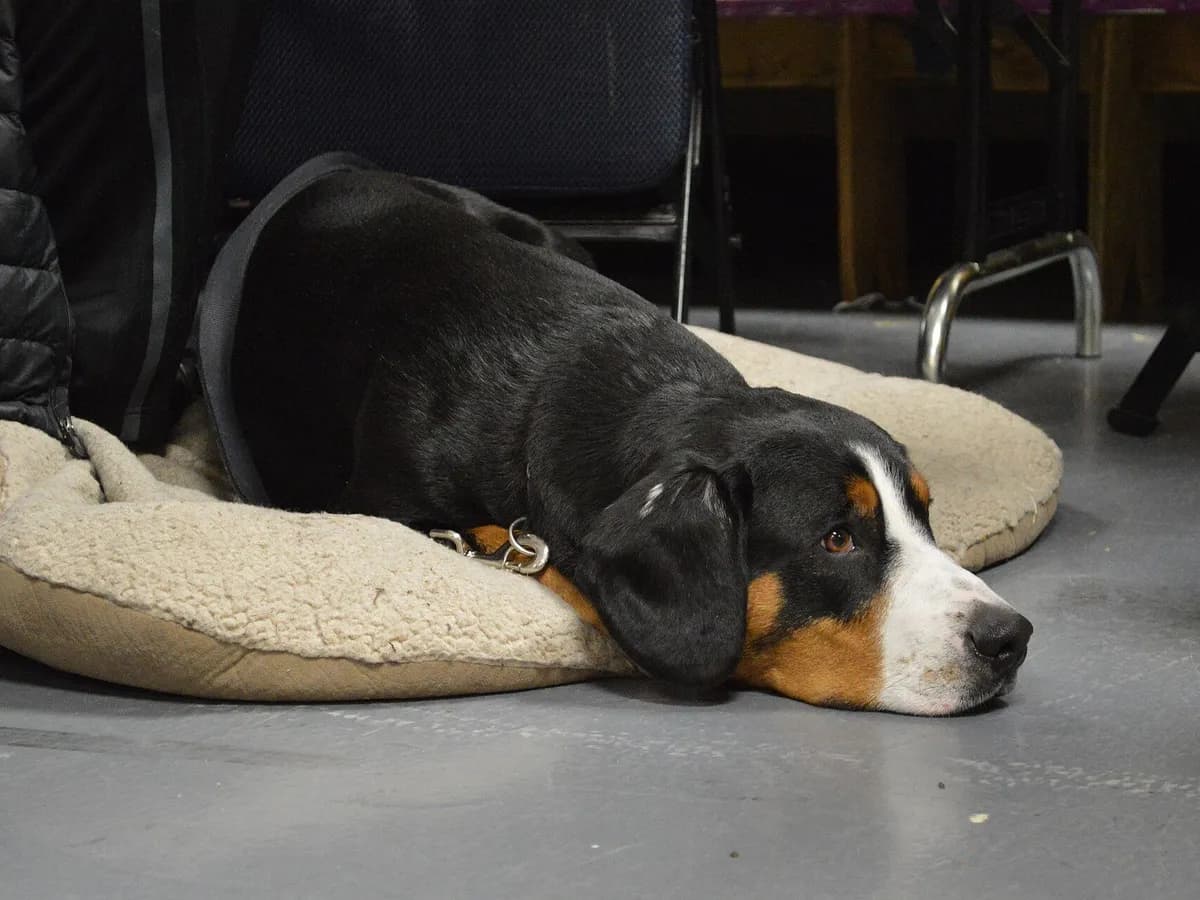
The Entlebucher Mountain Dog is the smallest of Switzerland's four Sennenhund breeds, named after the Entlebuch valley where it drove cattle between alpine pastures and guarded the farmstead. The type came close to disappearing in the early twentieth century before Swiss enthusiasts, led by the breed researcher Albert Heim, worked to preserve it. It remains a rare breed internationally and counts its UK population in the hundreds.
Self-assured and endlessly busy, the Entlebucher was bred to drive cattle over Swiss mountainsides and still carries that single-minded working drive. At home that translates into a dog that is affectionate and often goofy with its family, watchful with strangers, and genuinely chatty, barking and talking to communicate.
Its strong herding instinct means it may try to nip at heels or circle moving children, joggers or other pets, so early socialisation and consistent boundaries make a real difference. Intelligent and independent-minded, Entlebuchers respond best to confident, engaging training rather than repetitive drilling, and they thrive when given a genuine job.
Common health conditions
Things Entlebucher Mountain Dog owners commonly watch for. Guidance, not veterinary advice.
Hip dysplasia
A malformed hip joint that can cause stiffness or lameness. Keep this breed lean through accurate portioning to ease the load on the joints.
Progressive retinal atrophy (PRA)
An inherited, gradual loss of vision. Choose a breeder who health-tests, and keep routines settled for an affected dog.
Patellar luxation
A slipping kneecap that can cause an intermittent skip in the back leg. Excess weight makes symptoms worse, so steady portion control matters.
Entlebucher Urinary Syndrome (EUS)
A breed-specific inherited condition affecting the ureters, ranging from mild leaking to more serious kidney problems. Keep fresh water freely available and flag any urinary changes to a vet promptly.
Feeding a Entlebucher Mountain Dog
This is a muscular, high-drive working breed, and its diet should reflect that, with a nutrient-dense complete food and solid protein to support lean muscle, split across two measured meals a day. Because Entlebuchers are quick to put on condition if under-exercised, adjust portions regularly by feel and by eye rather than leaving them on a fixed setting.
Given the breed's predisposition to hip dysplasia and patellar luxation, a food with added glucosamine and chondroitin and controlled fat is a sensible long-term choice. Puppies benefit from a growth formula with controlled calcium and phosphorus. Fresh water should always be freely available, which matters more than usual for this breed.
Every dog is different — weight, age and activity all shift what a Entlebucher Mountain Dog needs. The turns these breed tendencies into a shortlist matched to your dog’s age, size, budget and needs.
Typical adult weight
23–30 kg
Est. daily calories
880–1,620 kcal
A broad guide for an average-activity adult in good body condition — not veterinary advice. Real needs vary with age, neutering, activity, health and body condition, so no two Entlebucher Mountain Dogs eat exactly the same. Get a personalised estimate or estimate feeding costs.
- Per day
- ~£1.35
- Per month
- ~£41
- Per year
- ~£491
A broad typical monthly budget guide, not a live price quote. Food format, calorie density, pack size and retailer pricing all change the real cost.
Find the right food for your Entlebucher Mountain Dog
Foods ranked to your dog
Answer a few quick questions and the Food Finder ranks foods to your Entlebucher Mountain Dog by score, price, life stage and fit.
Breed at a glance
- Exercise needs8/10
- Appetite6/10
- Trainability7/10
- Good with children7/10
- Shedding5/10
- Tolerates being alone2/10
The good & the worth-knowing
The good
- Deeply loyal and devoted to family life once settled in
- Highly intelligent, quick-thinking and keen to have a job to do
- Low-maintenance coat that needs only weekly brushing
Worth knowing
- Struggles with being left alone for long stretches and can become vocal or destructive if bored
- Strong herding instinct can show as nipping at heels, particularly with children
- A rare breed in the UK, so breeders, trainers and vets who know it are harder to find
Best matched accessories
All accessoriesThe collections that suit the breed, judged by the same independent standard.
Common owner questions
How much exercise does an Entlebucher Mountain Dog need?
Plan on around two hours a day, split into more than one outing and including off-lead time plus mental work such as training or scent games. This breed was bred to think as much as move, and a bored Entlebucher becomes vocal or destructive.
How much should I feed my Entlebucher Mountain Dog?
There's no single number that suits every dog. Start from the feeding guide, then adjust with regular body condition checks, making sure you can feel the ribs without pressing hard. Our Food Finder can suggest a suitable food and starting portion.
Are Entlebucher Mountain Dogs good with children?
Many are, and the breed is typically devoted to its own family, but its herding background means it may nip at heels to drive children or pets. Early socialisation and gentle redirection usually manage this, with supervision around very young children.
Do Entlebucher Mountain Dogs shed a lot?
Shedding is moderate day to day, with two heavier seasonal moults a year. A weekly brush through the short double coat is normally enough to keep on top of loose hair.
Similar breeds
Photo: Pets Adviser from Brooklyn, USA, CC BY 2.0, via Wikimedia Commons