



Most important facts
- Group
- Gundog
- Size
- Large
- Weight
- 25.5–29.5 kg
- Lifespan
- 11–13 years
- Coat
- Silky
- Energy
- High
- Height
- 62–66 cm
- Colours
- Black and tan
- Shedding
- Moderate
- Est. feeding cost
- ~£1.46 a day
- Gear to consider
- Slow-feeder bowl, sturdy retrieving toys, reflective exercise harness
Typical dry food, adult
About the Gordon Setter
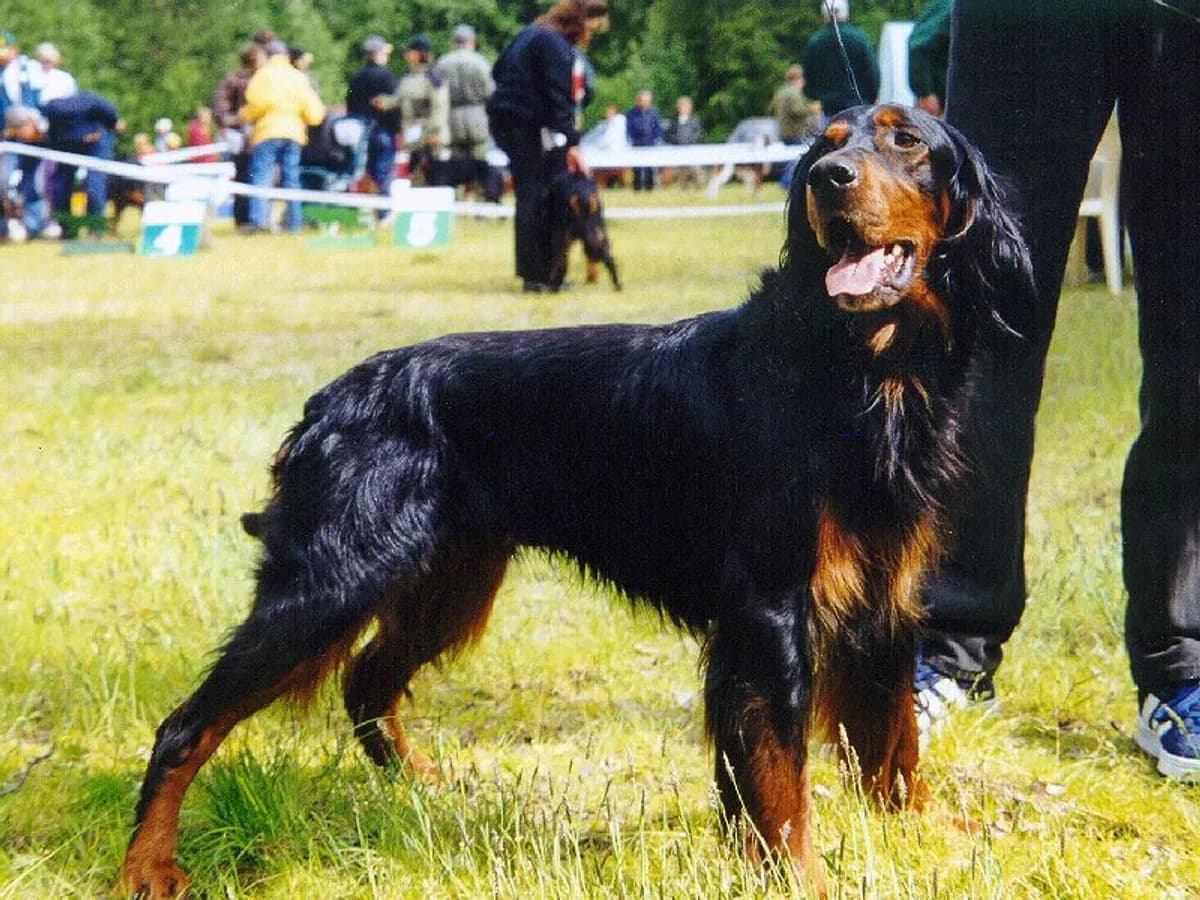
The Gordon Setter is Scotland's only native gundog breed, developed in the late eighteenth century at Gordon Castle in Banffshire. The fourth Duke of Gordon fixed the striking black-and-tan setter type that carries his name. Heavier and steadier than its Irish and English cousins, it was bred to work long days on grouse moors. It remains the least numerous of the setters but keeps a loyal following.
Gordon Setters are steady, loyal and often more serious-minded than their Irish and English cousins, forming deep bonds with their own family while staying somewhat reserved with strangers. Early, ongoing socialisation keeps this natural caution measured, so it does not harden into wariness.
This is an intelligent, sensitive breed that responds best to calm, consistent, reward-based training, as harsh handling tends to shut a Gordon Setter down. Bred to work closely with a handler all day, they thrive on having a purpose and don't do well left alone for long hours, which can show as boredom-driven chewing or barking.
Common health conditions
Things Gordon Setter owners commonly watch for. Guidance, not veterinary advice.
Hip and elbow dysplasia
Malformation of the hip or elbow joints that leads to arthritis over time. Keep your Gordon Setter lean from puppyhood and feed appropriate calcium and phosphorus levels through growth.
Gastric dilatation-volvulus (bloat)
That deep chest makes this life-threatening stomach twist a genuine risk. Feed two or three smaller meals, avoid vigorous exercise around mealtimes, and use a slow-feeder bowl.
Progressive retinal atrophy (PRA)
Vision is lost gradually in this inherited condition, and PRA-linked genes are widespread in the breed. Buy from a health-tested line.
Hypothyroidism
In middle age, an underactive thyroid may bring weight gain, low energy and coat changes. If weight climbs despite a stable diet, book a vet check rather than simply cutting food.
Feeding a Gordon Setter
A large, deep-chested, active gundog, the Gordon Setter needs a diet that supports sustained energy without tipping into excess weight, which stresses the hips, elbows and heart. A quality adult food with moderate-to-high protein suits its build, with portions adjusted to actual activity, since a family companion needs noticeably less than a dog working the field most weekends.
Because bloat is a genuine concern for this deep-chested breed, how a Gordon Setter is fed matters as much as what it's fed. Split the daily allowance into two or three calmer meals and use a slow-feeder bowl to discourage bolting. Leave an hour between eating and strenuous exercise. A joint-supporting formula is also worth considering given the dysplasia risk.
Every dog is different — weight, age and activity all shift what a Gordon Setter needs. The turns these breed tendencies into a shortlist matched to your dog’s age, size, budget and needs.
Typical adult weight
25.5–29.5 kg
Est. daily calories
950–1,590 kcal
A broad guide for an average-activity adult in good body condition — not veterinary advice. Real needs vary with age, neutering, activity, health and body condition, so no two Gordon Setters eat exactly the same. Get a personalised estimate or estimate feeding costs.


- Per day
- ~£1.46
- Per month
- ~£44
- Per year
- ~£533
A broad typical monthly budget guide, not a live price quote. Food format, calorie density, pack size and retailer pricing all change the real cost.
Find the right food for your Gordon Setter
Foods ranked to your dog
Answer a few quick questions and the Food Finder ranks foods to your Gordon Setter by score, price, life stage and fit.
Breed at a glance
- Exercise needs8/10
- Appetite7/10
- Trainability6/10
- Good with children7/10
- Shedding5/10
- Tolerates being alone3/10
The good & the worth-knowing
The good
- Deeply loyal, affectionate companion once bonded to its family
- Intelligent and capable working gundog with strong stamina
- Striking glossy black-and-tan coat that's manageable with regular grooming

Worth knowing
- Deep chest and single large-meal feeding habits raise bloat risk, so mealtimes need care
- Needs a serious daily exercise commitment, ideally with off-lead running
- Not naturally suited to being left alone for long stretches
Best matched accessories
All accessoriesThe collections that suit the breed, judged by the same independent standard.



Common owner questions
How much exercise does a Gordon Setter need?
Plan on an hour or two of proper exercise every day as a minimum, including off-lead running where it's safe. This is a breed developed to work all day, and under-exercised adults can become restless or difficult to settle.
Why are Gordon Setters at risk of bloat, and what can I do about it?
Their deep, narrow chest shape is a known risk factor for gastric dilatation-volvulus. Feeding smaller, more frequent meals, slowing fast eaters with a slow-feeder bowl, and resting around mealtimes all lower the risk, alongside knowing the emergency signs.
How do I know if my Gordon Setter is a healthy weight?
You should feel the ribs easily under a light covering, and see the waist from above. Weigh portions rather than guessing, and adjust gradually if a body condition check suggests too much or too little.
Are Gordon Setters good family dogs?
Yes, they're typically loyal and affectionate with their own family, though their size, energy and occasional wariness of strangers mean early socialisation pays off. They bond closely and don't cope well alone for long periods.